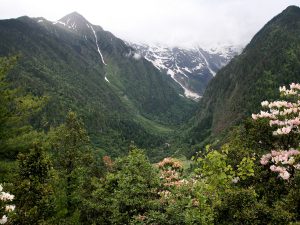
The minivan hit a pothole on the mountain switchback and my stomach dropped, but the driver just laughed and downshifted. Through the windshield, the Bei River curled like a jade ribbon between limestone peaks dusted with morning mist. We were heading north from Guangzhou, leaving the factory sprawl behind for Qingyuan’s karst country, where the air smells of wet stone and tea oil. Three hours later I was standing ankle-deep in a cold underground stream, headlamp beam catching stalactites that had been dripping since the Tang dynasty. That first trip taught me Qingyuan isn’t a day trip from the delta — it’s a place you sink into, county by county, letting the geography set the pace.
Getting oriented in the prefecture
Qingyuan sits on the northern rim of the Pearl River Delta, a prefecture-level city that stretches from subtropical lowlands up into the Nanling Mountains. The administrative map reads like a stair step: Qingcheng District anchors the urban core where high-speed rail and expressways converge; northeast lie Yingde and Fogang, each about an hour by car; further north, Lianzhou and Yangshan climb into cooler elevations; the two autonomous counties, Lianshan and Liannan, tuck against the Hunan border where Zhuang and Yao villages terrace the slopes. Most visitors land in Qingcheng first — the bullet train from Guangzhou South takes thirty-seven minutes — then fan out. Rent a car if you plan to hit multiple counties; the mountain roads are well paved but public buses run on village schedules that can leave you waiting at a township junction until the afternoon.
Water worlds: caves, rivers, and a lake that changes color
The underground river at Lianzhou is the showpiece. You board a flat-bottomed boat at the cave mouth and glide into darkness broken only by colored lights the park installed — tacky at first glance, until you realize they highlight flowstone formations that resemble dragons, lotus blossoms, and a Buddha’s hand. The ride lasts twenty minutes; the air stays a steady eighteen degrees year-round. Bring a light jacket even in summer. Upstream in Qingxin District, the Baojing Palace cave system near Yingde trades the boat for a walking path: three kilometers of illuminated chambers where you climb steel staircases past rimstone pools that mirror the ceiling. I went during the plum rain season and the dripping echoed like a drum circle.
Above ground, Huanghua Lake in Fogang spreads behind a dam, its water shifting from emerald to turquoise depending on the sun angle and mineral runoff. Weekends bring families from Guangzhou renting paddle boats and grilling sausages on the shore. For quiet, arrive at dawn when mist clings to the forested islands and the only sound is a kingfisher diving. The Bei River itself runs through Qingcheng — hire a bamboo raft near the old bridge for a slow drift past banyan roots and fishermen casting nets from sampans.
Mountain time: peaks, tea, and minority villages
Shikengkong in Yangshan County tops out at 1,902 meters, the highest point in Guangdong. The summit trail starts from a parking lot at 1,200 meters — three hours up stone steps through cloud forest where rhododendrons bloom in spring. I made the mistake of wearing city sneakers; the final ridge is slick with moss and loose shale. Proper hiking shoes, a wind shell, and two liters of water are non-negotiable. At the top, a stone marker declares the provincial roof. On clear days you can see the Pearl River Delta shimmering two hundred kilometers south.
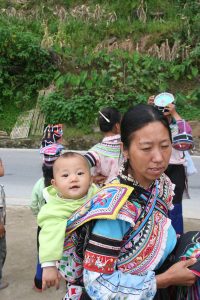
Lower down, Yingde’s tea plantations roll across hills like a quilt. The area produces Yingde Black Tea, a Dianhong-style leaf with a honeyed aroma and zero astringency. Visit a family-run farm in the autumn harvest — the farmer will spread fresh leaves on bamboo trays to wither, then hand-roll them until the edges curl. You can buy vacuum-sealed bricks directly; a jin (five hundred grams) of mid-grade leaf costs about the same as a decent restaurant lunch. In Lianshan and Liannan, Zhuang and Yao villages cling to terraces. Market day falls every sixth day on the lunar calendar; women in indigo headscarves sell smoked bacon, glutinous rice cakes, and silver jewelry hammered from old coins. Ask before photographing — some elders believe cameras steal a fragment of the soul.
Eating through the counties
Qingyuan cuisine leans salty, smoky, and sour — preservation flavors from a time before refrigeration. In Qingcheng, order a clay pot of chicken stewed with ginger, star anise, and dried tangerine peel; the broth turns amber and gelatinous. Yingde specializes in stuffed tofu puffs: golden triangles split open and packed with minced pork, water chestnut, and fermented black bean, then braised until the edges caramelize. Up in the mountains, Yao oil tea is a ritual more than a drink. The host roasts tea leaves in a wok with ginger, garlic, and puffed rice, pours boiling water through a bamboo strainer, and serves it in tiny bowls with sides of pickled radish, fried peanuts, and glutinous rice balls. You sip three bowls for luck, slurping loudly to show respect.
- Qingyuan chicken (清远鸡) — free-range birds, yellow skin, firm meat; best poached and dipped in ginger-scallion oil
- Yingde black tea (英德红茶) — tight twisted leaves, copper liquor, natural sweetness
- Yao oil tea (瑶族油茶) — savory tea soup with puffed rice, peanuts, pickles
- Stuffed tofu puffs (酿豆腐) — crisp shell, juicy pork center, dark soy glaze
- Bamboo-tube rice (竹筒饭) — glutinous rice, cured pork, shiitake cooked over coals inside fresh bamboo
Sleeping, seasons, and practical slips
Qingcheng has chain hotels near the high-speed rail station — clean, predictable, and loud during holiday weeks. For character, book a riverside guesthouse in a renovated village courtyard: tiled roofs, wooden shutters, a courtyard where the host dries persimmons in autumn. In the mountain counties, options shrink to county-town business hotels or village homestays. The latter often share a bathroom down the hall; confirm hot water timing before you unpack. Spring (third to fifth lunar month) brings rhododendrons and tea harvest; autumn (eighth to tenth month) offers clear skies for hiking and the Yao Panwang Festival, when villages stage drum dances and bull fights. Summer is hot, humid, and prone to afternoon thunderstorms that wash out mountain roads. Winter rarely freezes in the lowlands but Shikengkong can see rime ice — pack layers.
Common missteps: assuming English signage exists beyond the city center (it doesn’t), skipping cash for rural vendors (QR codes fail in valleys with no signal), and trying to “do” Lianzhou caves, Yingde tea, and Shikengkong in one day from Guangzhou (you’ll spend twelve hours in a car and see nothing). Pick two adjacent counties, stay overnight, and let the rhythm settle. The driver who laughed at that pothole? He later stopped at a roadside stall, bought me a warm sweet potato wrapped in newspaper, and said, “Slow down. The mountains aren’t going anywhere.” He was right.