The minibus rattles to a halt on a dusty pull-out just outside Yeping Village. Mist clings to the ridgelines, and the air smells of wet pine and woodsmoke. An elderly woman in a blue Mao suit waves a paper fan, selling bottled water and sticky rice cakes wrapped in bamboo leaves. I hand her a five-yuan note, tear the leaf open, and watch steam curl into the cool morning. This is Ruijin in early winter — quiet, green, and heavy with stories that do not shout.
Getting There and Getting Around
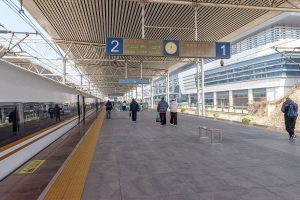
Ruijin sits in the far southeast of Jiangxi, where the province brushes against Fujian and Guangdong. The nearest airport is Ganzhou Huangjin, about ninety minutes by car. High-speed trains stop at Ruijin Station, a tidy new building on the outskirts; from there, a taxi to the central sites costs twenty minutes and roughly thirty yuan. Buses from Ganzhou’s main station run every hour or so, winding through tea terraces and bamboo groves. Once in town, the red tourism sites are scattered across several townships. A hired driver for the day — usually a local who knows every pothole — runs about three hundred yuan and saves hours of waiting for rural buses. If you prefer two wheels, electric scooters can be rented near the station, but the hills are steep and the roads narrow; brake hard before the hairpin turns.
The Core Sites: Yeping, Hongjing, and the Memorial
Start at Yeping Village, where the First National Congress of the Chinese Soviet Republic convened in a grey-brick hall with a tiled roof. The original wooden benches remain, scarred by decades of use. A guide — often a descendant of a Red Army veteran — will point out the chair where Mao Zedong sat and the podium where the constitution was read. Walk ten minutes uphill to the former Central Government compound: low buildings arranged around a courtyard, each room labeled with hand-painted signs. The accounting office still holds an abacus; the communications room displays a hand-cranked generator. In the Memorial of the Chinese Soviet Republic, glass cases protect a faded red flag stitched from cotton scraps, a set of lead type for printing currency, and a pair of cloth shoes worn on the Long March. Photography is allowed without flash. Spend two hours here before the tour groups arrive at ten.
Hongjing: The Wells and the Banyan
Five kilometers west, Hongjing Village feels older. A massive banyan shades a square where villagers once gathered for land redistribution meetings. The famous “Red Well” — dug by soldiers and locals in 1933 — still yields sweet water; a stone stele beside it lists the names of those who carried stones up the slope. Nearby, a row of thatched huts served as the first Red Army hospital. Inside, wooden beds are draped with mosquito nets, and a cabinet holds herbal medicine jars labeled in faded ink. An old man tends the gate; he will pour you a cup of well water in a chipped enamel mug and tell you his grandfather carried wounded comrades down these paths on a bamboo stretcher. Listen. Do not rush.
Food on the Road: Hakka Flavors in the Hills
Ruijin’s cuisine is Hakka — hearty, salty, and built for labor. Lunch at a farmhouse near Hongjing usually means a round table, a lazy Susan, and dishes that keep coming.
- Steamed pork belly with preserved mustard greens (梅干扣肉) — fat melting into the greens, dark soy glaze clinging to each slice.
- Salt-baked chicken (盐焗鸡) — skin golden, meat juicy, cracked open at the table with a cleaver.
- Stir-fried river snails with fermented black bean and chili — suck the meat from the shell, spit the spiral onto the plate.
- Tofu stuffed with minced pork and pan-fried until the edges lace brown.
- Rice wine, warm in a ceramic jug, sweet and low in alcohol.
If you cook at a guesthouse kitchen, buy fresh pork belly at the morning market in Ruijin town — look for skin that snaps when pressed. Slice two centimeters thick, blanch, then deep-fry until the skin puffs. Soak preserved mustard greens overnight, rinse three times. Layer pork and greens in a bowl, steam over high heat for ninety minutes. Invert onto a plate. The fat should tremble like jelly.
Restaurant ordering tip: point to the “nongjia cai” (farmhouse dishes) section of the menu. Avoid the “red tourism set meals” advertised near the ticket gates — they are reheated, overpriced, and bland. Beginners mistake “spicy” for “Hakka”; true Hakka heat comes from fermented bean paste and white pepper, not fresh chili.
Walking the Long March Departure Trail
In the tenth lunar month, the hills turn gold with ripening persimmons. That is when the Long March began. A marked trail runs from the former Central Military Commission site in Yunshishan down to the river crossing at Shazhouba. The full hike takes six hours; most visitors do the first two kilometers — a stone-paved path through camellia forest, past a sentry post carved into a boulder. Wear trail shoes. The steps are uneven, slick with moss after rain. At the ridge, you can see the winding river below and, on a clear day, the blue roofs of Fujian villages across the border. No vendors on the trail. Carry water and a packet of roasted peanuts.
Staying Overnight: Guesthouses and Courtyard Homes
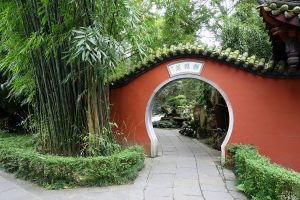
Ruijin town has chain hotels near the station, but the better sleep is in a renovated Hakka courtyard house in Yeping or Shazhouba. Thick rammed-earth walls keep rooms cool in summer, warm in winter. Hosts often serve breakfast — congee with pickled radish, steamed buns, fried dough sticks — on a stone table in the courtyard. Ask the host to wake you for the 6 a.m. flag-raising at the Memorial square; a honor guard of local students marches in step to a crackly recording of “The East Is Red.” It lasts five minutes. Afterwards, the square empties, and you have the grey bricks to yourself.
What Locals Expect and What Newcomers Get Wrong
Ruijin is not a theme park. Families live in the villages where the congress met; children ride scooters past the Red Well. Speak softly inside the old halls. Do not climb on the stone steles for photos. If a guide offers to sing a revolutionary song, listen — it is usually a family tradition, not a performance. Tipping is not expected, but buying a bag of dried bamboo shoots or a hand-stitched cloth shoe from the village cooperative puts money directly in local pockets. The biggest mistake: treating the sites as checkboxes. Allocate a full day for Yeping and Hongjing alone. The second mistake: skipping the hills. The revolution was fought on these slopes; the terrain explains the history more than any plaque.
Seasonal Rhythms and Practical Details
Spring brings azaleas on the ridges and the Qingming tomb-sweeping crowds. Summer is hot, humid, and alive with cicadas; afternoon thunderstorms soak the trails in minutes. Autumn — the ninth and tenth lunar months — offers crisp air, persimmon orchards heavy with fruit, and the clearest views across the provincial borders. Winter is quiet; some farmhouse kitchens close, but the sites stay open. Ticket for the main scenic area (Yeping, Hongjing, Memorial, Yunshishan) is a single pass, valid for two days. Buy at the visitor center in Yeping; bring your passport. Toilets are squat-style at the older sites; carry tissue. Mobile signal drops in the valleys; download offline maps before you leave town.