Why this village is worth the trip
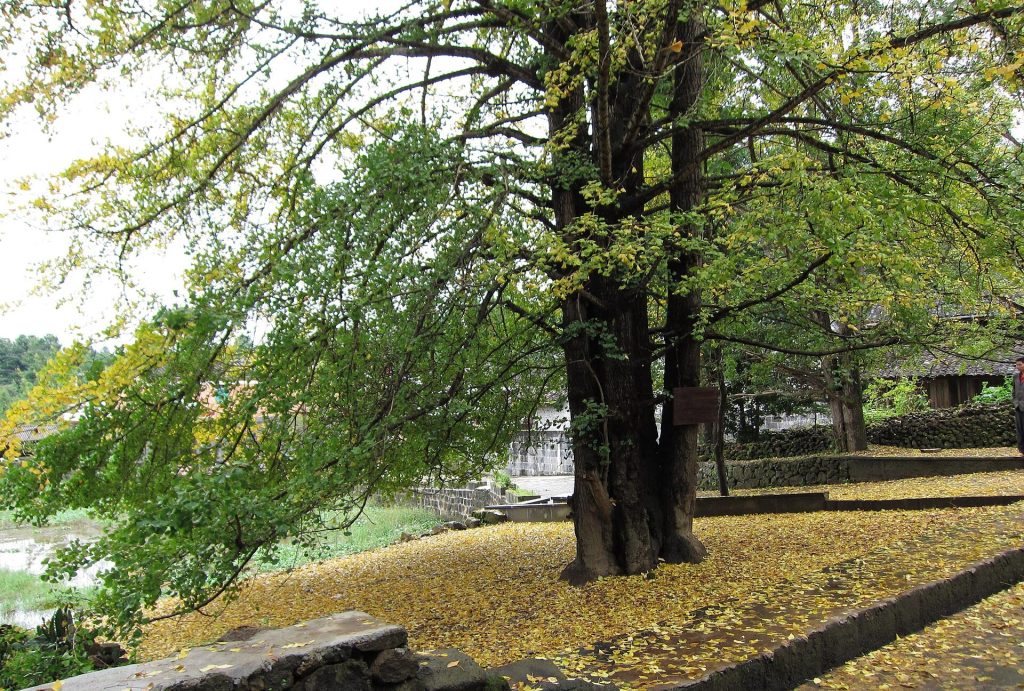
Every late autumn, a farming village in the far west of Yunnan turns gold. Tengchong Ginkgo Village (腾冲银杏村), officially Jiangdong Ginkgo Village (江东银杏村) in Gudong Town (固东镇), is a place where ginkgo trees do not line a park avenue. They grow in people’s courtyards, beside their kitchens and over their stone walls. When the leaves fall, whole lanes and farmyards are covered in yellow.
The village is often called “China’s first ginkgo village”. According to a Tengchong government feature, it has more than 10,000 mu (about 670 hectares) of natural ginkgo woodland and more than 30,000 ginkgo trees, over 1,200 of them more than a century old. The oldest, known locally as the “ginkgo king”, is said to be more than 1,300 years old. Film fans may recognise the scenery: the government piece notes that the martial arts film Wu Xia (released in English as Dragon), starring Donnie Yen, Tang Wei and Takeshi Kaneshiro, was shot here.
This guide is for travellers planning a visit in November or early December 2026.
When to go: the golden weeks
Ginkgo leaves do not all turn on the same day, and the timing shifts from year to year with temperature and rain. Provincial media give a clear general window. A 2024 Yunnan Net report, republished by the Yunnan rural affairs portal, says that November to early December is the most beautiful season in the village, when the leaves fill the air and cover the ground.
Practical advice for 2026:
- Mid-November to early December is the safest target if you want peak gold and falling leaves.
- Early November often still has green in the canopy. You get yellow-and-green trees and fewer people.
- Late in the season, the trees thin out but the ground is often at its most golden.
- Check before you travel. Search the village name in Chinese (腾冲银杏村) on social apps for recent photos, or ask your guesthouse host. Hosts are usually happy to send a picture from that morning.
Weekends and late November are the busiest times. If you can, visit on a weekday and stay overnight so you can walk the lanes in the early morning and at dusk, before and after the day trippers.
What you will see
The village is not one sight but a cluster of hamlets. According to the Tengchong government, the scenic area lies about 37 km north of Tengchong city, next to the national volcanic geological park, and takes in four natural villages: Chenjiazhai, Baxin, Jiangyun and Sihe.
What makes it special:
- Trees inside farmyards. Families build low walls from dark volcanic stone and plant ginkgo in front of and behind their homes. The Yunnan Net report sums it up as “the village in the forest, the trees in the homes”.
- Traditional houses. Many buildings use earth-and-timber construction with grey tile roofs and white walls, along narrow, winding lanes.
- Courtyards open to visitors. Some families open their gold-carpeted courtyards for photos, often alongside a farmstay or restaurant. Ask before entering a private yard, and expect some to charge a small fee.
- Morning mist and wood smoke. On cool mornings the light through the yellow leaves is lovely, and the lanes are quiet.
Wear comfortable shoes. Fallen leaves can hide uneven stones and wet patches.
Tickets and opening
The village operates as a scenic area during the ginkgo season. Ticket prices, any shuttle-cart fees and opening hours can change each year, and we could not find a current official price list for 2026. Check the latest details on the day through your booking app or with your guesthouse, and bring your passport, which is needed for real-name ticketing at many Chinese attractions.
Eating in the village: the ginkgo feast
Locals have turned the tree into a cuisine. The Yunnan Net report describes a ginkgo banquet (银杏宴), with dishes such as:
- Ginkgo nuts stewed with free-range chicken (银杏炖土鸡)
- Ginkgo nuts stewed with pork intestine
- Stir-fried ginkgo nuts
- Ginkgo flower omelette, made in spring
The report notes that the village says “if you haven’t eaten the ginkgo feast, you haven’t been to Ginkgo Village”. Ginkgo nuts are always served cooked. Enjoy them as part of a meal rather than snacking on large quantities, which is the usual advice in China too.
Tengchong is also known for its rice noodles and local hams. If you are new to Yunnan food, our guide to Yunnan steam-pot chicken is a good start.
Where to stay
Staying in the village is part of the experience. The same report says farmstay restaurants have grown from 8 households to 168, and guesthouse beds from about 20 to 1,632. Expect simple, family-run rooms, often with a courtyard full of ginkgo.
Tips:
- Book ahead for weekends and the second half of November.
- Ask about heating and hot water. Mornings and nights are cool in late autumn.
- Use a translation app. Hosts may not speak English, but they are used to visitors from all over China.
- Alternatively, stay in Tengchong city and visit on a day trip. The city has more international-style hotels.
Getting there
By air. The easiest route is to fly to Tengchong Tuofeng Airport from Kunming or another Chinese city, then take a taxi, a ride-hailing car or a pre-booked driver for the roughly 37 km to Gudong. Our DiDi guide for visitors explains how to book rides in English.
By train and coach. At the time of writing there is no direct train to Tengchong. The nearest trains run to Baoshan, which has been on the Dali–Ruili railway since the Dali–Baoshan section opened in July 2022 (Xinhua). From Baoshan, an express coach line runs to Tengchong. In 2024 the Baoshan government listed a one-way fare of 58 yuan, with several departures a day and tickets sold through the “保山交通集团” WeChat account or at the bus station. Check current times before you go. Book rail tickets on 12306 (see our 12306 guide).
From Tengchong city to the village. Hire a car or driver for the day. That way you can combine the ginkgo village with the volcanoes on the way.
Visa note: check the Yunnan rules carefully
If you plan to use China’s 240-hour visa-free transit, read the rules for Yunnan closely. The National Immigration Administration limits transit travellers to permitted areas in each province. In Yunnan, the published permitted area covers nine prefectures and cities, including Kunming, Dali and Lijiang, and Baoshan (which includes Tengchong) is not on that list. Transit visitors should not plan a Tengchong trip without a visa or another valid entry status.
Many nationalities can now enter China visa-free for up to 30 days, which does not have the same area limits. Check our 30-day visa-free countries list and our visa-free transit guide.
A relaxed three-day plan
1. Day 1: Fly into Tengchong. Soak in a hot spring and visit Heshun Ancient Town.
2. Day 2: Drive north to the ginkgo village, stopping at the volcano park on the way. Check into a farmstay, eat a ginkgo feast and walk the lanes at sunset.
3. Day 3: Get up early for misty lanes and golden courtyards, then return to Tengchong.
Our Tengchong travel guide covers the hot springs, volcano park and old town in more detail. For more autumn colour, see our ginkgo walks in Chinese cities.
Respectful visiting
- Remember that this is a working village. Keep voices down early in the morning.
- Do not climb trees, shake branches to make leaves fall, or pick up handfuls of leaves from private yards.
- Ask before photographing people up close.
- Take your rubbish with you.
FAQ
When is the best time to visit Tengchong Ginkgo Village?
Provincial media describe November to early December as the most beautiful season. Mid-November to early December is the safest window for peak gold, but timing varies each year.
Where exactly is the ginkgo village?
It is Jiangdong Village in Gudong Town, about 37 km north of Tengchong city in Baoshan, western Yunnan.
How do I get there from Kunming?
Fly from Kunming to Tengchong Tuofeng Airport, then drive about 37 km north. Or take a train to Baoshan and an express coach to Tengchong.
Can I stay in the village?
Yes. There are well over a hundred family-run farmstays. Book early for weekends in late November.
Can I visit on 240-hour visa-free transit?
Baoshan, which includes Tengchong, is not in Yunnan’s published permitted area for transit travellers. Use a visa or another valid entry status.
Lovely China was founded in 2025 to help English-speaking travellers and expats plan calmer, better-informed trips in China. Spotted an outdated detail? Email [email protected].
Cover photo: wanghongliu / Wikimedia Commons (CC BY-SA 3.0). A ginkgo tree and fallen leaves in Jiangdong Village, Gudong, Tengchong.