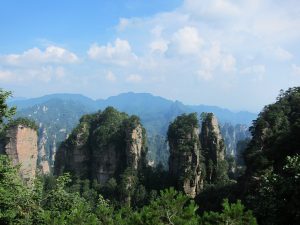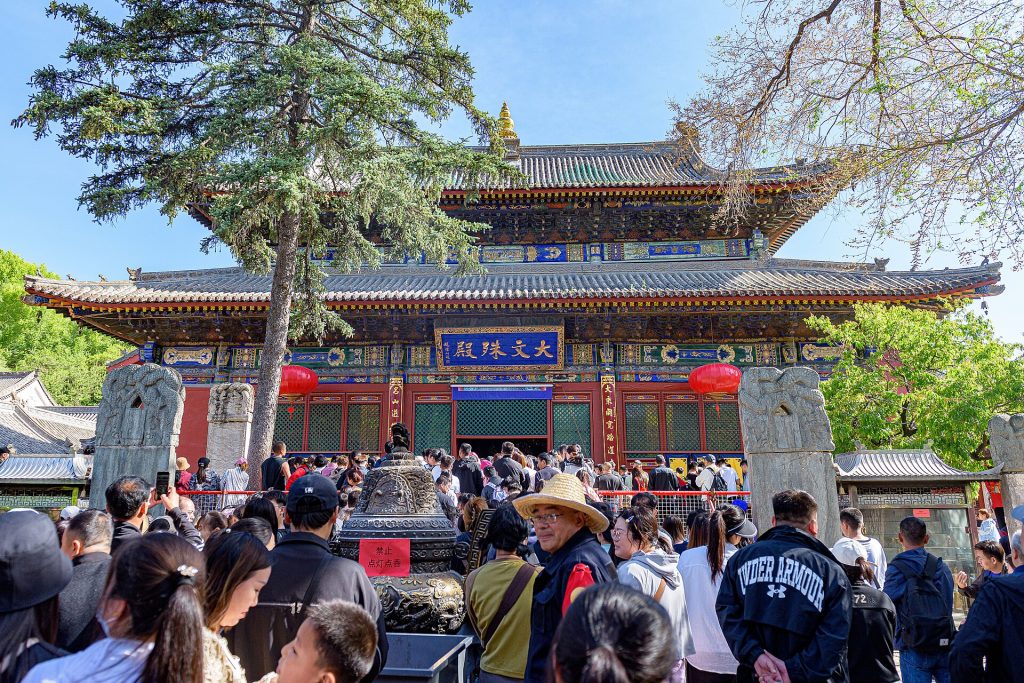
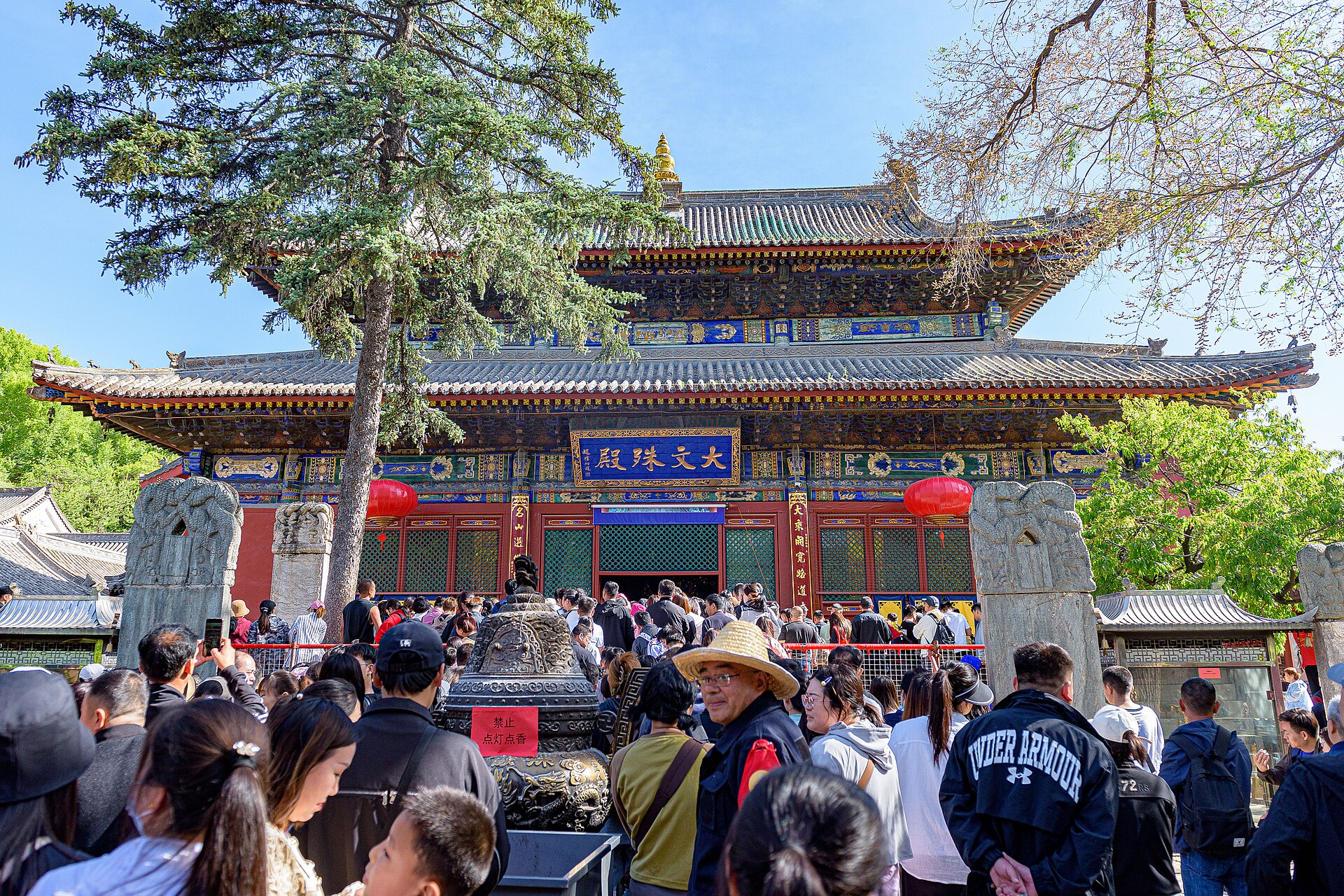
The minibus shuddered around a hairpin bend, and the valley dropped away. Below, the grey tiles of Xiantong Temple caught the late light, and beyond them the five flat summits stood in a row like the fingers of a giant hand pressed against the sky. I had been on the road since before dawn, first a high‑speed train to Taiyuan, then a rattling bus up the mountain road. My calves were tight, my pack smelled of dried tofu, and the air at 2,500 metres tasted thin and cold. A group of nuns in grey robes passed me, prayer beads clicking, moving faster uphill than I could on the level. That first glimpse — stone stupas, fluttering sutra streamers, the smell of pine and yak butter — told me why people keep coming back.
Getting there without losing a day
Most foreigners fly into Taiyuan Wusu or Datong Yungang. From Taiyuan, the long‑distance bus station near the railway hub runs coaches to Taihuai town every hour or so; the ride takes four to five hours and climbs steadily through cornfields, then pine forest. Datong buses leave from the west station and take about the same time. If you prefer rail, the slow train stops at Shahe (marked Wutai Shan on tickets). From Shahe you still need a taxi or a shared minibus — about forty minutes of switchbacks — to reach the cluster of temples. In high season the minibus queue can stretch twenty minutes; in the off‑season you may wait half an hour for a driver to fill his seats. Buy the park entry ticket at the gate near Taihuai; keep the receipt, because rangers check it at the trailheads for the plateaus.
Where to sleep: monk guesthouses, family courtyards, or a heated room
Taihuai sits in the bowl between the peaks. The cheapest beds are in temple guesthouses — Xiantong, Pusading, and Tayuan all open a few dorm rooms to pilgrims. You register with your passport, lights out at ten, and breakfast is a bowl of millet porridge and steamed buns. A step up: family courtyards tucked down the lanes behind the main street. The host will lend you a thick quilt, a hot water bottle, and point you to the communal shower block. In autumn the courtyard persimmon trees drop orange fruit onto the stones. For a private bathroom and reliable Wi‑Fi, book one of the mid‑range hotels on the ring road; they fill fast during the lunar fourth month pilgrimage surge, so reserve a week ahead.
One day in town: the core temples on foot
Start early at Xiantong, the oldest complex. The copper hall smells of sandalwood; the bronze bell hangs silent until a monk strikes it at noon. Walk north along the flagstone lane to Tayuan, where the Great White Stupa rises like a chalk pillar — circumambulate clockwise, three times if you can. Next, Pusading sits on a terrace; its roof tiles are glazed yellow, a privilege once reserved for imperial temples. Inside, a statue of Manjusri rides a blue lion, eyes half‑closed. Finish at Luohou, a smaller hall where elderly nuns chant the Heart Sutra in a side room. The whole loop is flat, about three kilometres, and takes two hours if you pause for tea at the stall selling roasted barley flour cakes.
Plateau hiking: choose your summit
The five plateaus — East, South, West, North, Central — each hold a small temple at the rim. You cannot do all five in one day unless you hire a four‑wheel‑drive shuttle that runs the ridge road. Most hikers pick one or two. East Plateau (Wanghai Peak) gives the sunrise view; the path from Taihuai climbs stone steps through birch forest, two hours up, one hour down. South Plateau (Jinxiu Peak) is gentler, a grassy saddle dotted with wild rhododendron in early summer; the round trip is four hours at a relaxed pace. North Plateau (Yedou Peak) is the highest at just over 3,000 metres — wind bites even in July. Bring a wind‑proof layer, gloves, and a thermos. The trailhead for North Plateau sits behind Bishan Temple; a minibus drops you there for a few yuan. Central Plateau (Cuiyan Peak) is the shortest climb, thirty minutes from the road, and offers a quiet courtyard where you can sit with a thermos and watch clouds spill over the edge.
Eating: vegetarian halls and mountain stalls
Every major temple runs a dining hall (素斋) at eleven and five. You queue with a metal tray, receive rice, braised tofu, stir‑fried mountain greens, and a bowl of clear radish soup. No meat, no garlic, no onion — just clean flavour. Eat silently, return the tray. Outside the gates, vendors grill corn on charcoal, sell steamed buns stuffed with pickled mustard stem, and pour hot millet tea into paper cups. If you hike a plateau, pack a vacuum‑sealed bag of roasted peanuts, a few dates, and a chocolate bar; there are no shops on the ridges. Water: refill your bottle at the temple kettle stations — boiled, safe, free.
What trips people up
- Assuming the weather stays mild. Afternoon thunderstorms roll in fast; the temperature can drop ten degrees in twenty minutes. Carry a packable rain shell and a fleece even in July.
- Wearing city sneakers on the stone steps. The stairs are uneven, slick with moss, and endless. Light hiking boots with grip save ankles.
- Skipping the entry ticket check at the plateau trailheads. Rangers turn back hikers without the stub; the shuttle bus also demands it.
- Expecting English signage. Most boards are Chinese only. Photograph the map at the visitor centre, or download an offline map with the temple names in characters.
- Trying to visit during the lunar fourth month (usually May or June) without booking ahead. Pilgrims fill every bed, buses run standing‑room only, and the stupa queue stretches an hour.
When the last bus rattles down the mountain and the valley lights flicker on, the stupas glow amber against the dusk. You hear the low hum of a wooden fish, the clack of beads, the wind in the pines. That sound stays in your pack long after you leave.