Why go to Xishuangbanna in winter
When northern China switches on its heating and Beijing reaches for down coats, there is one corner of the country where you can still sit outside in a T-shirt. Xishuangbanna (西双版纳), the Dai Autonomous Prefecture at the southern tip of Yunnan, sits south of the Tropic of Cancer on the northern edge of the tropics. It borders Laos to the southeast and Myanmar to the southwest, according to the Yunnan provincial yearbook.
Winter is when Xishuangbanna is at its most comfortable. The rainy season is over, the heat of spring has not yet arrived, and the rainforest is still green. For expats in China, it is the classic warm-weather escape between November and February. For visitors from abroad, it pairs naturally with Kunming, or with a rail trip to Laos.
Winter weather: what to expect
The best description of Xishuangbanna’s climate comes from the China Meteorological Administration’s Yunnan station on weather.com.cn. Its key points, using Jinghong (景洪), the prefecture seat, as the reference:
- “Long summer, no winter.” Winter is mild and frost-free. January is the “coolest” month, with an average temperature of 15.8°C in Jinghong.
- “Half the year rain, half the year sun.” The rainy season usually starts in late May, so the months from late autumn to spring are the drier, sunnier half of the year.
- Big day–night swings. Days can be warm and sunny, while nights and early mornings are noticeably cooler.
- Fog is a winter feature. Jinghong averages about 120 fog days a year, and fog is most frequent and thickest in winter. Mornings often start grey and misty, then clear to sunshine by late morning.
What that means for your trip:
- Pack summer clothes plus a warm layer. A fleece or light jacket for early mornings and evenings is enough for most people.
- Do not judge the day by the morning. If you wake up to fog, plan indoor or forest activities first, and save viewpoints for the afternoon.
- Sun protection matters. Once the fog lifts, the sun is strong.
Where to go
The provincial yearbook lists the prefecture’s most popular attractions. These are the ones that suit a winter trip best.
Xishuangbanna Tropical Botanical Garden
Run by the Chinese Academy of Sciences, the Xishuangbanna Tropical Botanical Garden (XTBG) near Menglun (勐仑) is the highlight for many visitors. According to the garden’s official visitor information, it is open all year and has three entrances:
- West Gate: visiting hours 8:00–18:00
- Suspension Bridge entrance (by the river in Menglun town): 7:30–18:30
- East Gate: a working entrance, used by vehicles of guests staying in the garden hotel
The garden covers more than 1,100 hectares. The West Garden, about 300 hectares, is the main visitor area. The official page estimates more than four hours on foot or more than three hours by tour vehicle. Winter mornings in the forest, with mist hanging in the trees, are beautiful. Book tickets through the official channels listed on the garden’s website, and check current prices there.
Wild Elephant Valley and Asian elephants
Xishuangbanna has China’s largest wild Asian elephant population, according to the yearbook. Wild Elephant Valley (野象谷) is a rainforest scenic area north of Jinghong, with its own station on the China–Laos railway. Sightings of wild elephants are never guaranteed.
Safety comes first. Wild elephants are dangerous. Never leave marked paths to approach them, never feed them, and follow every warning from rangers and local authorities, especially if you are driving rural roads at dawn or dusk.
Jinghong, the Mekong and Gaozhuang
Jinghong sits on the Lancang River, the Chinese name for the upper Mekong. The Gaozhuang Xishuangjing (告庄西双景) district, with its golden stupa, lantern-lit lanes and night market, is the city’s busiest evening area. It is a good place to try Dai grilled fish, sticky rice and tropical fruit.
Dai culture and temples
Many Dai people practise Theravada Buddhism, and you will see temples with layered, sweeping roofs throughout the region. The Dai Ethnic Garden (傣族园) near Ganlanba combines working Dai villages and temples. Dress modestly in temples, take your shoes off where asked, and do not touch monks or sit with your feet pointing at a Buddha image.
Tea mountains around Menghai
Xishuangbanna is one of the homelands of Pu’er tea. The yearbook records more than 7,600 hectares of ancient tea gardens in the prefecture. The CMA article mentions a cultivated “tea king tree” about 800 years old at around 1,400 m on Nannuo Mountain. The tea villages around Menghai (勐海) are cooler than Jinghong and make a lovely day trip in the dry season. Our autumn tea habits guide is a good primer.
Getting there
By train from Kunming. The China–Laos railway has transformed access. According to Kunming Information Port, the fastest trains from Kunming to Xishuangbanna take a little over three hours, compared with about eight hours by bus before the railway. Stations along the route include Wild Elephant Valley, Xishuangbanna, Ganlanba, Mengla and Mohan, and Xishuangbanna station is right next to Jinghong’s Gasa airport. Book on 12306 (our 12306 booking guide explains how) and buy early for weekends and holidays.
By air. Xishuangbanna Gasa Airport in Jinghong has flights from Kunming and many other Chinese cities.
From Laos. The China–Laos railway continues south from the Mohan border port to Laos. Cross-border trains run between Kunming and Vientiane.
Visa notes for 2026–27
Xishuangbanna works well for visa-free trips:
- 240-hour visa-free transit. Yunnan is one of the provinces in China’s 240-hour transit scheme. According to the National Immigration Administration, eligible travellers from 55 countries can enter through designated ports and stay in permitted areas for up to 10 days, provided they are travelling on to a third country or region. Yunnan’s permitted area includes Kunming and Xishuangbanna, and the Mohan railway port is one of the province’s designated entry ports. A trip such as Laos → Xishuangbanna → Kunming → onward flight can fit the rules. Check the details in our visa-free transit guide.
- 30-day visa-free entry. Many nationalities can now enter China for up to 30 days without a visa. See our 30-day visa-free countries list.
Always confirm the current rules for your nationality and port before you travel.
When to go in winter 2026–27
- November to February is the classic winter-escape season.
- Chinese New Year is peak time, when domestic travellers flock to warm destinations. Prices and crowds rise. Check the dates in our 2027 public holidays guide and book early or travel either side.
- New Year (1 January) and weekends are also busy.
- Early December and early January often give the best balance of weather and crowds.
If you want the famous Water-Splashing Festival (Dai New Year), that is in April, not winter, and it is much hotter then.
Suggested five-day winter plan
1. Day 1: Train from Kunming to Jinghong. Evening at Gaozhuang night market.
2. Day 2: Wild Elephant Valley in the morning, then the riverside in Jinghong.
3. Day 3: Xishuangbanna Tropical Botanical Garden in Menglun. Stay overnight in the garden hotel or nearby for an early misty walk.
4. Day 4: Dai villages and temples around Ganlanba.
5. Day 5: Tea mountains around Menghai, then fly or take the train back to Kunming.
Start or finish in Kunming with our Kunming first-visit guide. For a broader overview, read our Xishuangbanna travel guide.
Practical tips
- Mosquito repellent is still useful in forest areas, even in the dry season.
- Carry your passport. You need it for trains, hotels and real-name attraction tickets.
- Set up mobile payment before you go. Our Alipay and WeChat Pay guide explains how.
- Respect protected areas. The botanical garden’s rules ban picking flowers and fruit, climbing vines and trees, entering ponds and catching animals.
FAQ
Is Xishuangbanna warm in winter?
Yes. It is frost-free, and January, the coolest month, averages about 15.8°C in Jinghong according to the China Meteorological Administration. Days are often warm and sunny once the morning fog lifts.
When is the dry season in Xishuangbanna?
The rainy season usually begins in late May. Late autumn, winter and early spring are the drier, sunnier half of the year.
How long is the train from Kunming to Xishuangbanna?
The fastest China–Laos railway trains take a little over three hours. Check 12306 for current timetables.
Can I visit Xishuangbanna on 240-hour visa-free transit?
Xishuangbanna is inside Yunnan’s permitted area, and Mohan railway port is a designated entry port, if you meet the onward-travel rules for an eligible nationality.
Will I see wild elephants?
Possibly, but sightings are never guaranteed. Keep your distance and follow all ranger instructions.
Lovely China was founded in 2025 to help English-speaking travellers and expats plan calmer, better-informed trips in China. Spotted an outdated detail? Email [email protected].
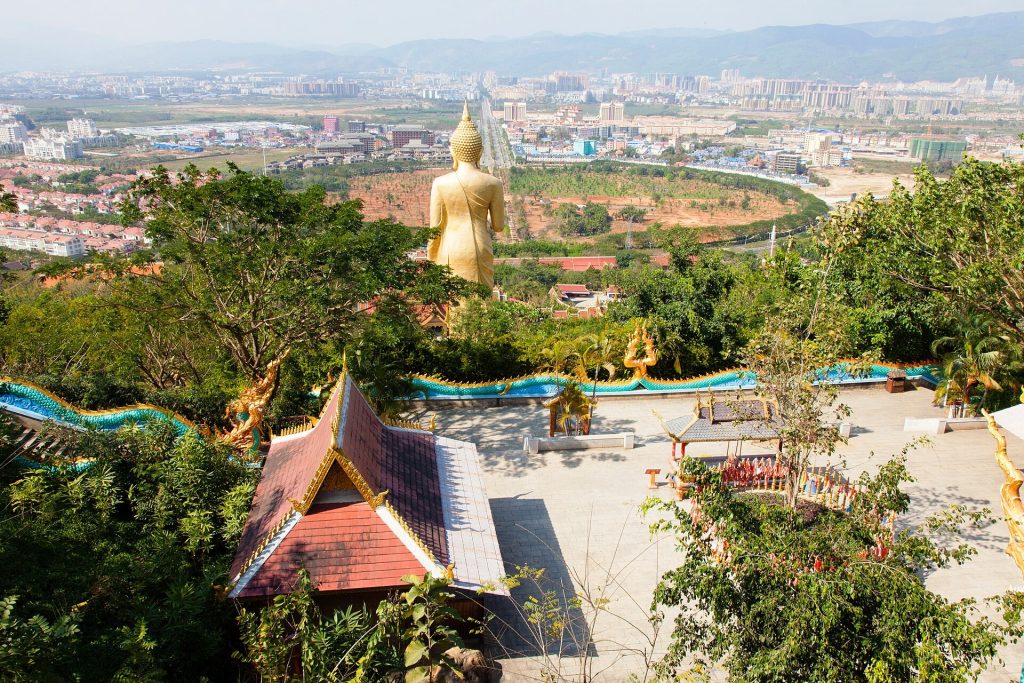
Cover photo: Chlukoe / Wikimedia Commons (CC BY-SA 4.0). Jinghong, Xishuangbanna, seen from a temple area above the city.