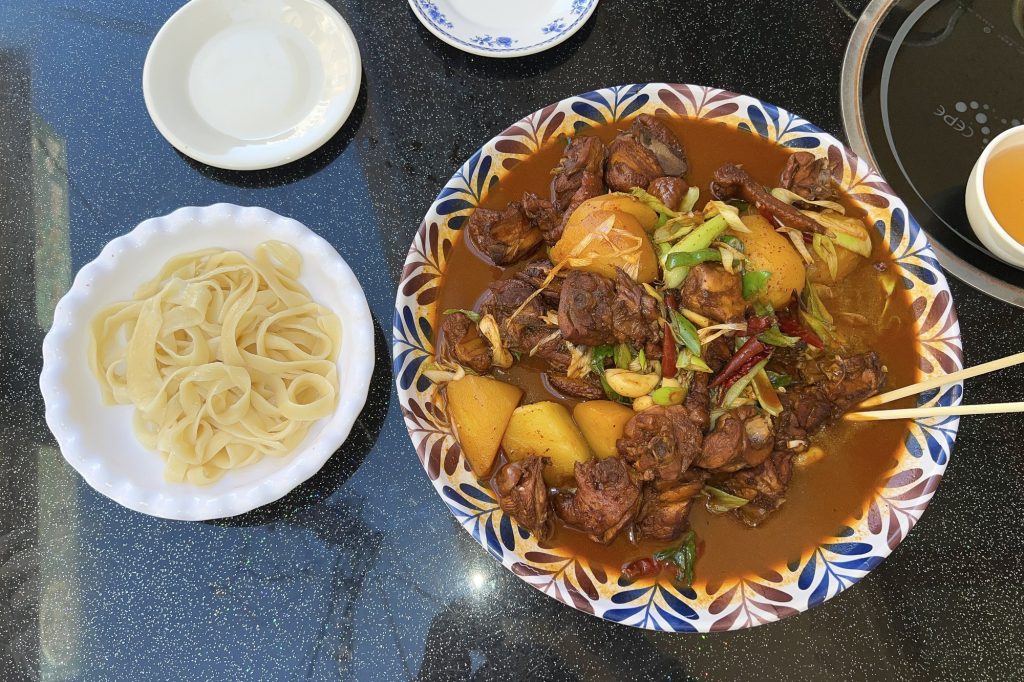
What dapanji actually is
Big plate chicken—大盘鸡 (dàpánjī)—is a Xinjiang-origin classic that became a mainland favorite: bone-in chicken pieces stewed with potato, bell pepper, onion, dried chili, and spices, served on a large platter and often finished with wide hand-pulled noodles that soak up the sauce. The name is literal—da pan means big plate.
It is communal food. One mid-size plate feeds a small group. Solo diners can ask for a 小份 (xiǎo fèn, small portion) when shops offer it. English menus may say “Xinjiang chicken,” “big plate chicken,” or “dapanji.” Look for 大盘鸡.
This guide helps English-speaking travelers and expats order without surprises: heat, bones, noodle timing, sharing manners, and payment habits.
How it should taste and look
Expect:
- Glossy, reddish-brown sauce that is savory, lightly sweet, and chili-forward
- Soft potato chunks that carry sauce like sponges
- Chicken on the bone in most authentic versions—eat carefully
- Optional wide noodles added late so they do not turn to mush
Aromatics often include dried chili, garlic, ginger, and a warm spice mix that can hint at cumin depending on the kitchen. Numbness from Sichuan pepper is usually lighter than in classic Sichuan mala dishes, but dried chili heat can still be strong. Shops outside Xinjiang adjust sweetness, oil, and color—some plates look brighter red than they taste.
If you already like Xinjiang laghman noodles, dapanji is the stew-and-share cousin: same broader flavor family, different format. Laghman is a noodle bowl; dapanji is a platter that may become a noodle platter halfway through.
Sizes and how much to order
Restaurants often list 小 / 中 / 大 (small / medium / large). Rough mental model for first-timers:
- 小份: cautious choice for one hungry person or two light eaters, especially if you will add noodles
- 中份: common for two to three people with a side vegetable
- 大份: groups, or two people who want leftovers and noodles
When in doubt, order medium and add a cold dish rather than starting with the largest plate. You can always order more; you cannot un-order a mountain of chili chicken.
Spice levels and how to ask
Default dapanji in many restaurants is medium-hot by local standards and “quite hot” for many visitors. Steer clearly:
- 不辣 — not spicy
- 微辣 — mild
- 少放干辣椒 — fewer dried chilies
- 不要花椒 — no Sichuan pepper if you are sensitive to numbness
Point at the menu photo while saying 微辣. On QR menus, put the note in the comment field—QR menu tips for foreigners.
Dried chilies in the plate are often more decorative-hot than people expect, but the oil they flavor is real. Do not chew every pod “to be polite.”
Noodles: when and how
Many tables order 皮带面 or other wide noodles to add into the plate after the chicken and potatoes have been eaten down. Staff may ask:
- 加面吗? — “Add noodles?”
Say 加面 if you want them, 不加面 if you only want chicken and vegetables. Noodles turn the dish into a full meal and are part of the classic experience for many diners. Some places serve noodles on the side. Either way, leave stomach space—the sauce is the point.
If you skip noodles, order rice (米饭) so the sauce has somewhere to go.
A calm first-timer ordering script
1. Find 大盘鸡 and choose size: 小份 / 中份 / 大份 if listed.
2. For two people, a small or mid plate plus greens is usually enough; for four, go larger or add sides.
3. State heat: 微辣 or 不辣.
4. When asked about noodles, say 加面 for the classic finish.
5. Order a cold vegetable, cucumber salad, or simple greens for contrast.
6. Pay by app when done—Alipay / WeChat Pay for visitors.
Pocket line: 来一份中盘大盘鸡,微辣,加面。
If the server confirms “with skin-on bone-in chicken,” that is normal—not a mistake.
What to order with it
Dapanji is rich and oily by design. Balance with:
- Plain rice if you skip noodles
- Light greens or cold dishes
- Yogurt drinks or non-spicy sides at Xinjiang-style restaurants
- Shared flatbreads if the restaurant offers them
Avoid stacking another heavy chili stew in the same meal. Save Sichuan projects such as kung pao chicken or boiled fish for another night. One big plate is enough theater.
Regional and restaurant notes
Xinjiang restaurants in major cities: Often the best introduction—expect cumin-chili aroma, wide noodles, and staff used to explaining sizes.
Home-style Chinese restaurants: May offer a sweeter, less aromatic “big plate chicken” adaptation. Still enjoyable; heat and spice mix vary.
Tourist banquet rooms: Portions can be oversized and oil-heavy. Confirm size before ordering and do not be shy about 微辣.
Compared with hotpot nights: Dapanji is a single shared stew, not a boiling broth session. For broth-base literacy on another evening, see hot pot broth bases explained.
Bones, sharing, and etiquette
- Use serving chopsticks or the communal spoon if provided—the same hygiene habit as shared-chopsticks etiquette.
- Bones go on the bone plate or a corner of your own dish—not back into the main platter.
- It is normal to get sauce on the noodles and chase every bit with chopsticks.
- Stretching across the table is common; just avoid double-dipping personal chopsticks into the shared plate when serving tools exist.
- No tipping expected (tipping guide).
Common first-timer mistakes
- Ordering a large plate for two people and running out of stomach before noodles arrive.
- Expecting boneless fillet chicken like a Western “chicken plate.”
- Adding extra chili oil on top of an already chili-heavy stew.
- Forgetting to say 微辣 in a spice-proud kitchen.
- Fishing dried chili pods into your mouth by accident and deciding the whole cuisine is impossible.
Practical timing and leftovers
Dapanji takes longer than a stir-fry. If you are on a tight museum schedule, order earlier in the meal, not as an afterthought. Leftovers reheat reasonably if you separate noodles from stew when possible; noodles left soaking overnight turn soft. Many groups simply finish the noodles at the table—that is the design.
Reading the plate like a local
Before you dig in, scan the platter: potato pieces should be cooked through, peppers soft but not grey, and sauce thick enough to coat a noodle later. If the chicken looks pale and the sauce watery, eat what you can and remember the shop for next time—Xinjiang-style kitchens vary widely outside their home region.
Sauce strategy matters. Early in the meal, take chicken and potato with a little sauce. Midway, keep more sauce in the plate for the noodles. At the end, it is normal for the group to compete politely for the last sauce-coated strands. That competition is part of the fun, not poor manners.
If someone at your table avoids spice entirely, ask the kitchen for 不辣 even when others want heat. Splitting into two plates is sometimes possible in patient restaurants; more often you compromise on 微辣 and let chili-tolerant friends add table chili oil to their own rice.
Drinks and pacing
Tea, beer, or yogurt drinks all appear at Xinjiang tables depending on the restaurant’s style and your group’s habits. Pace yourself: dapanji looks like “just one dish” and then quietly fills everyone. Order the vegetable side early so it arrives before the platter and gives you something cool to alternate with.
Conversation pauses when the noodles hit the plate. That is normal. Noodle distribution takes a minute of chopsticks logistics. Use the serving tools if staff bring them with the noodles.
Who should skip or modify
- Diners who cannot manage bones may ask whether boneless versions exist; many shops will say no.
- Very low-oil diets will find this dish heavy—share a small portion rather than forcing a large plate.
- Chili-sensitive travelers should lead with 不辣 and still remove visible dried pods.
- If you need a gentler chicken introduction first, a simpler stir-fry night may be wiser before your first big plate.
Bottom line
Order a sized dapanji, set heat to mild if unsure, say yes to wide noodles, and treat it as a shared centerpiece. It is hearty Xinjiang comfort food—best with friends, napkins, and a plan for the sauce-soaked noodles at the end. Once you know the size words and the 加面 question, the dish stops feeling intimidating and starts feeling like a reliable group dinner anywhere Xinjiang kitchens cook on the mainland. Bring an appetite, name your heat level early, and leave room for the noodles—that is the whole skill.