What shuizhu yu actually is
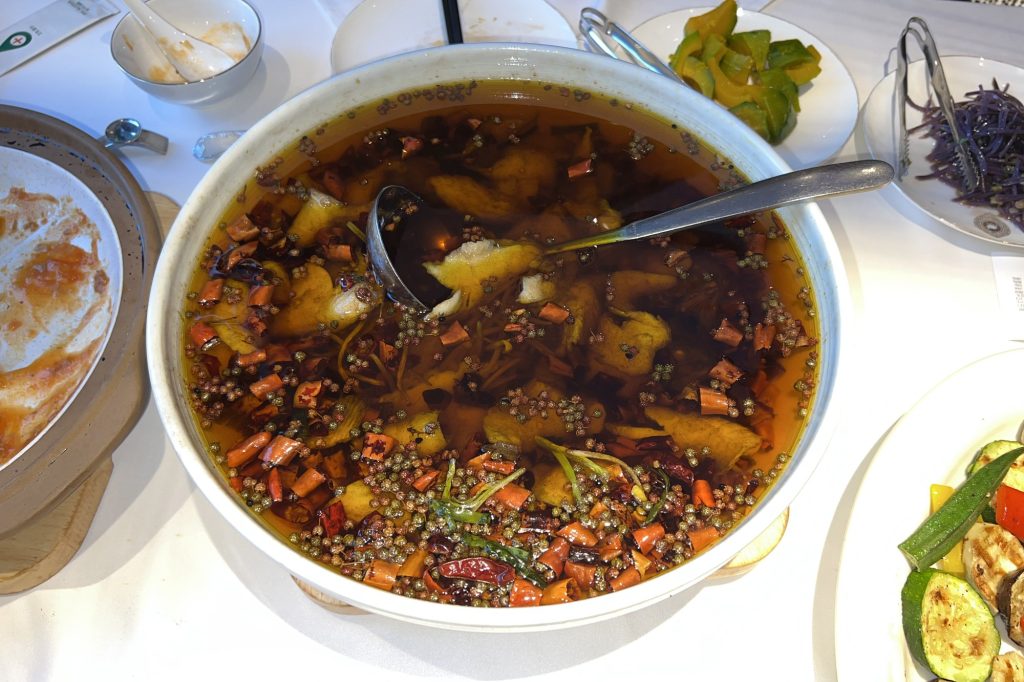
Shuizhu yu—水煮鱼 (shuǐzhǔ yú)—literally “water-boiled fish,” is a Sichuan classic that looks more dramatic than the name suggests. Tender fish slices arrive in a wide bowl under a blanket of chili oil, dried chilies, and Sichuan pepper, usually resting on a bed of bean sprouts, cabbage, or other vegetables. The fish is poached until just cooked; the oil and spices are the theater on top.
English menus may say “boiled fish in chili oil,” “Sichuan fish,” or “fish filets in hot chili oil.” Look for 水煮鱼. It is a shareable main, not a delicate steamed fish banquet course.
This guide is for English-speaking travelers and expats who want a calm first order: how spicy it really is, how to eat around the oil, what to pair with rice, and how to ask for milder versions without losing the dish’s character.
How it should taste and feel
Expect:
- Soft white fish slices that flake easily with chopsticks
- A savory, numbing-spicy broth under a red oil layer
- Vegetables below that taste like they have been to a chili spa
- Aroma of chili and Sichuan pepper more than “fishy” smell when the kitchen is good
The fish itself is often mild; the excitement is the seasoned oil and broth. If the fish smells strongly off, stop—freshness matters more here than bravado. Good shuizhu yu smells spicy and savory, not ammonia-sharp.
Compared with sour cabbage fish (suancai yu), shuizhu yu leans hotter and oilier, while suancai yu leans pickled-sour and often feels slightly lighter in the sour direction. Both are Sichuan fish celebrations; they are not the same bowl.
Spice, numbness, and customization
Default shuizhu yu in Sichuan restaurants can be assertive. First-timers should set expectations out loud:
- 微辣 — mild
- 不辣 — not spicy (you will still see red oil in many kitchens; “not spicy” is relative)
- 少油 — less oil (sometimes honored, sometimes smiled at)
- 少放花椒 / 不要花椒 — less / no Sichuan pepper if numbness bothers you
- 不要豆芽 — no bean sprouts if you dislike them (ask what vegetable bed they use)
On QR menus, type the spice note in the comment box—QR menus for foreigners.
Table strategy: lift fish and vegetables out of the oil; do not drink the oil like soup unless you know yourself well. Rice is not optional for most visitors—it is the cooling partner.
Fish types and menu wording
Shops may offer grass carp or other freshwater fish, sometimes with a choice of fillet style. Ask if you need boneless as much as possible (尽量没有刺), understanding that freshwater fish can still hide small bones. Eat slowly on the first few slices.
Some menus list 水煮肉片 (boiled pork slices) or 水煮牛肉 using the same method. Those are cousins. If you want fish, keep the character 鱼 in view.
A calm first-timer ordering script
1. Find 水煮鱼 on the menu; confirm it is the chili-oil style, not plain steamed fish.
2. Order one bowl for two to three people with plenty of rice; solo diners should check for small portions.
3. Say 微辣 or 不辣 clearly.
4. Order 两碗米饭 (two bowls of rice) or more for the table.
5. Add a simple green vegetable stir-fry for relief between spicy bites.
6. Pay by app—Alipay and WeChat Pay.
Pocket line: 来一份水煮鱼,微辣,多米饭。
How to eat it without drama
- Use chopsticks to take fish slices onto your rice bowl or plate.
- Include some vegetables from the bottom—they are part of the dish.
- Blow on hot oil-coated pieces; the oil holds heat.
- Spit tiny bones discreetly onto a bone plate or tissue if needed.
- Do not stir the entire bowl into a red whirlpool unless the table agrees—you will coat everything in sediment.
Shared service chopsticks help when several people reach into one bowl—same idea as hotpot shared-chopsticks etiquette.
What to order with it
Shuizhu yu is rich. Balance with:
- Lots of rice
- Mild greens (stir-fried lettuce, bok choy, or similar)
- A cold dish if the table wants contrast
- Soup that is not spicy, if offered
Avoid ordering mapo tofu, another oil-chili fish, and hotpot in the same meal unless your group is on a deliberate spice tour. One shuizhu yu centerpiece is enough for most first-timers.
Regional and restaurant notes
Chengdu / Chongqing and Sichuan restaurants nationwide: Closest to the classic oil-forward presentation.
Outside Sichuan: Heat and oil levels vary; some kitchens sweeten the profile. Still ask for 微辣.
Banquet settings: Portions can be huge. Confirm size. Tourist restaurants sometimes use more oil for visual effect—eat the fish, leave excess oil without guilt.
Etiquette and practical tips
- It is fine to leave chili oil behind; you ordered fish, not an oil shot.
- No tipping—tipping in Chinese restaurants.
- If your lips tingle from Sichuan pepper, that is expected numbness, not an allergic emergency—for most people. True allergy symptoms are different; know your own body.
- Wear clothes you do not mind lightly perfuming with chili oil aroma.
- Napkins help. Oil finds wrists.
Common first-timer mistakes
- Ordering “not spicy” and still being shocked by red oil visuals.
- Drinking large spoonfuls of the top oil layer.
- Skipping rice.
- Eating too fast and meeting a bone.
- Pairing with two other chili bombs “because we are in Sichuan.”
Allergies and caution
Fish allergy is an obvious stop. Chili oil may be cooked with bean pastes and spices—ask if you have complex allergies. Sichuan pepper numbness can feel strange the first time; start with 少放花椒. If you are unsure about spice tolerance, choose fish-fragrant eggplant on another night and graduate to shuizhu yu when ready.
Oil, broth, and what stays on the table
The red top layer is mostly chili oil and spice sediment. Underneath sits a savory broth that has already seasoned the fish. Diners disagree about how much broth to spoon onto rice. A practical first-timer approach: take fish and vegetables first; add a little broth to rice if you want more salt and spice; leave most of the pure oil behind.
If the table includes children or spice-averse friends, ask the restaurant whether a milder pot can be made, or order a second non-spicy protein. Splitting one ultra-spicy shuizhu yu across mixed tolerances creates stress. Clear communication before the order lands is kinder than apology after tears.
Restaurants sometimes offer a choice of vegetable beds—bean sprouts, lettuce stem, cabbage. Bean sprouts add crunch and soak flavor quickly; leafy beds taste cleaner to some visitors. Neither choice is “wrong.” If you dislike raw-to-cooked sprout texture, ask what else they can put underneath.
Solo dining vs groups
Shuizhu yu is engineered for sharing. Solo travelers can still order it in restaurants that list a small portion, or accept leftovers. Ask 有小份吗? before committing to a banquet-size bowl. If no small portion exists, share with a friend or choose a smaller Sichuan stir-fry on a solo night and save boiled fish for a group.
Groups should assign one person to watch spice requests so three different diners do not give three conflicting instructions to the server. One clear line—微辣—beats a debate at the table edge.
Leftovers and next-day reality
Fish leftovers are possible but never as delicate as the first serving. If you take oil-heavy leftovers, separate rice and store promptly. Reheating tends to push fish toward dryness while the oil remains aggressive. Many tables simply finish the fish and leave oil—that is acceptable.
Why visitors love it anyway
Despite the fiery look, the fish itself is a soft, clean protein once you navigate the oil. The dish photographs well, feeds a group, and teaches Sichuan pepper numbness in a controlled setting. It also pairs naturally with the rice-centric rhythm of Chinese meals: spice on top, starch underneath, greens on the side. Learn those three layers and most Sichuan restaurant dinners become easier to decode—including cousins like kung pao chicken on a milder night.
Bottom line
Order shuizhu yu with an explicit mild request, bring rice, lift fish out of the oil, and share it as a centerpiece. It looks fierce and eats beautifully when you treat the chili oil as a seasoning layer rather than a beverage. Once you learn that one habit, Sichuan boiled fish becomes a repeatable celebration instead of a dare.