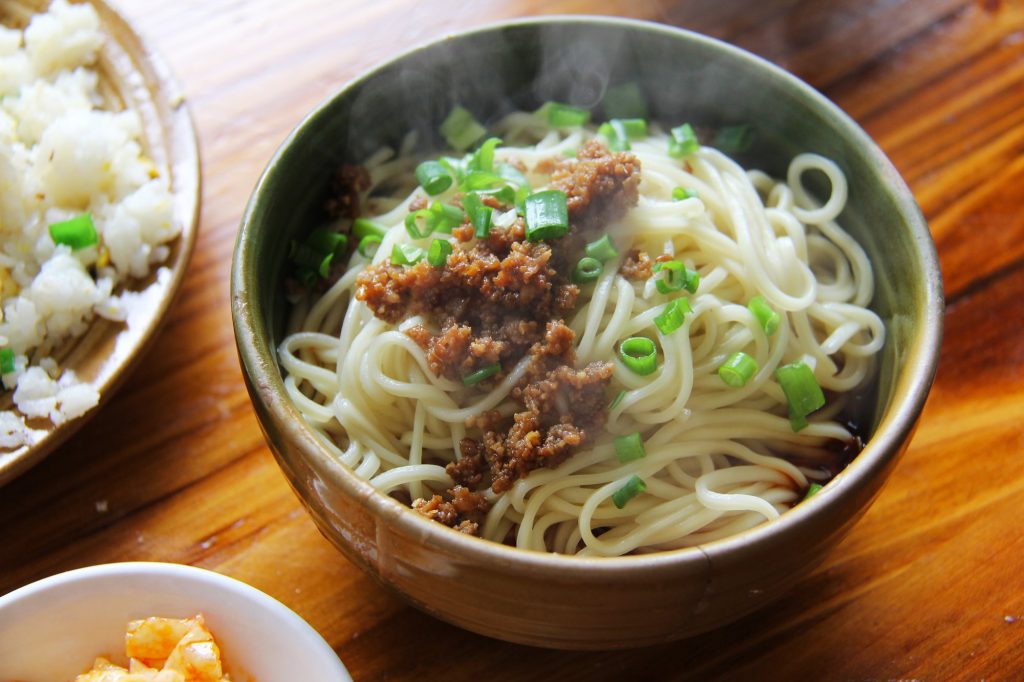
What dan dan noodles actually are
Dan dan noodles—担担面 (dàndàn miàn)—are a Sichuan classic: wheat noodles mixed with a savory, spicy, numbing sauce, usually topped with minced preserved vegetables and fried minced pork (or a meaty chili crisp). The name nods to vendors who once carried poles (担) with baskets of noodles and toppings. Today you order at counters, QR screens, and Sichuan restaurants—not from a shoulder pole—but the flavor idea remains: bold sauce, springy noodles, and a finish you stir yourself.
English menus say “dan dan noodles,” “dandanmian,” or “noodles with spicy minced pork.” Point at 担担面 when translations invent poetry. Photo help: reading Chinese menus with photo translation apps.
This guide is for English-speaking travelers and expats who want a first bowl without accidental nuclear spice: dry vs soupy styles, how to stir, what “mild” means, and how it differs from other Sichuan noodles.
Dry bowl vs soupy bowl
Traditional Chengdu-leaning dan dan is often a mostly dry / sauce-coated bowl with little broth—you mix toppings through the noodles. Some restaurants and northern adaptations serve a soupier version. Neither is “fake”; ask which you are getting:
- 干拌担担面 — dry-mixed style
- 带汤 — with more soup
If you hate oily sauce pooling, ask for 少油 (less oil) or 微辣. If you fear dryness, a soupy house style may feel friendlier.
Compare with Chongqing xiaomian: related chili-oil noodle culture, different topping grammar and city pride. Compare with Guilin mifen: rice vs wheat, usually lighter spice baseline.
How a typical shop works
1. Order at counter or scan QR—see QR menus for foreigners.
2. State spice level up front.
3. Receive noodles with toppings perched on top—stir before judging.
4. Eat while hot; sauce clings best in the first minutes.
Canteen trays may pre-mix. Sit-down Sichuan places may present a prettier unmixed stack for photos—still stir.
Prices vary by portion and toppings—check the menu, skip memorized RMB claims.
Spice, numbing, and toppings
Core flavors: chili oil, Sichuan peppercorn, soy/savory depth, minced pork, and often 芽菜 / 榨菜-style preserved vegetable crunch.
Phrases:
- 微辣担担面 — mild dan dan
- 少花椒 — less numbing peppercorn
- 不要辣 — no spicy (you may still get fragrant oil)
- 加肉 — extra minced meat if offered
- 不要葱 / 不要香菜 — no scallion / no cilantro
- 清淡一点 — lighter overall
Taste after mixing. Unmixed bowls look milder than they are; the red oil hides under toppings until you stir.
A calm first-timer script
1. Order 一碗微辣担担面.
2. Add 少花椒 if numbing bothers you.
3. When the bowl arrives, stir thoroughly from the bottom.
4. Add vinegar only if the shop’s table vinegar fits your taste—small splashes.
5. Drink tea or soy milk; keep water nearby.
6. Pay by scan—Alipay and WeChat Pay guide.
Pocket line: 来一碗微辣担担面,少花椒。
If staff ask large or small bowl, start small. You can always order a second.
How to eat and what to pair
- Stir until every strand looks evenly stained.
- Mix in toppings gradually if the meat pile looks huge.
- Pair with plain cucumber or non-spicy small dishes if sharing a table.
- Avoid stacking dan dan with mapo and shuizhu on night one unless your group is spice-trained—see mapo tofu for first-timers and shuizhu yu for oil-bath contrast.
Drinks: weak tea, soy milk, beer, water. Ice-cold sweet drinks are common but do not erase peppercorn buzz.
Chengdu pride vs nationwide menus
Chengdu / Sichuan restaurants: Sauce intensity and peppercorn presence are often higher; preserved vegetable aroma is a quality cue.
Other cities: Sweeter sauces, more peanuts, or soupier bowls appear. Peanut paste versions show up in some modern shops—ask if you have peanut allergy.
Overseas “dan dan”: Frequently peanut-heavy and milder. Recalibrate in China rather than arguing with a non-Sichuan kitchen.
Etiquette and practical tips
- Solo bowls are normal; this is everyday food.
- Do not tip in ordinary noodle shops.
- Slurping is fine.
- Shared condiment jars: use clean spoons.
- Peak lunch lines in office districts move fast—have your phrase ready.
- For stall hygiene judgment, see street food safety.
Common first-timer mistakes
- Tasting before stirring, then declaring the bowl “bland” or “randomly spicy.”
- Ordering 特辣 to impress coworkers on day one.
- Expecting soup-heavy comfort when the house style is dry.
- Confusing dan dan with any chili oil noodle without checking 担担面.
- Leaving the minced pork untossed and eating plain noodles plus a meat lump separately.
Allergies and diet notes
Wheat, soy, chili, and usually pork are core. Peanut appears in some house recipes—ask (有花生吗?). Sesame paste or oil may show up in fusion bowls. Broth or sauce bases are rarely vegetarian by default even if toppings look plant-heavy. Cilantro and scallion are easy refusals; fermented ingredients and chili oil are not.
Autumn travel note (2026)
Spice-forward bowls feel different in humid early autumn queues before Mid-Autumn (Fri 25 Sep 2026) and Golden Week (1–7 Oct 2026). Hydrate, carry tissues, and do not schedule a hiking climb immediately after your first 特辣 experiment. Makeup workdays 20 Sep and 10 Oct (国办发明电〔2025〕7号) shuffle lunch rushes—arrive slightly off-peak when you can.
Sauce components you may taste (without needing a lab)
You do not need chef training, but naming what you taste helps you reorder:
- Chili oil heat — burn and fragrance
- Sichuan peppercorn — tingling numbness
- Savory soy / salty depth — the brown backbone
- Preserved vegetable — salty-sweet crunch
- Minced pork — fried savory bits
- Optional vinegar brightness or a hint of sweetness in some houses
If one note dominates painfully, say which to reduce next time (少油辣 vs 少花椒 are different requests). Vague “too spicy” may only get you a slightly smaller chili ladle while peppercorn stays fierce.
When dan dan is a side vs the whole meal
In a multi-dish Sichuan dinner, small bowls of dan dan can appear as one of several noodles or as a finale. In a noodle shop, the bowl is the meal. Match your order to the context: do not eat a giant restaurant “share” portion alone after three other mains. Conversely, do not expect a tiny side bowl to replace lunch when that is all you ordered.
Office workers often combine dan dan with a simple side dish or tea egg in canteen settings. Travelers can copy that rhythm: one noodle bowl, one light side, done.
Peanut versions and modern café dandan
Some newer shops advertise sesame-peanut dan dan aimed at milder palates. Ask whether peanut is in the base sauce if you have allergies, and taste expectations: peanut-forward bowls can taste closer to overseas versions than to a spare Chengdu counter bowl. Neither is wrong—just order the style you want. If the menu shows a photo with a thick beige paste, you are probably in peanut/sesame territory rather than pure chili-oil minimalism.
First week in China: where dan dan fits
If you are new to Chinese cities, dan dan is a strong week-one lunch once you can say 微辣. It teaches chili oil, peppercorn, and mixing rituals without requiring a full hotpot table or a buffet tray. After one calm bowl, Sichuan restaurant menus with mapo, fuqi feipian, and shuizhu feel less like a wall of red photos. Keep gongbao jiding for a sweet-heat contrast night, and return to dan dan when you want a fast solo bowl between errands.
Lovely China (founded 2025) publishes practical food guides for English visitors—questions welcome at [email protected].
Bottom line
Order 微辣 dan dan, stir from the bottom, respect peppercorn, and treat the first bowl as calibration. Once you know a shop’s mild, you can climb. Dan dan noodles are one of Sichuan’s clearest everyday lessons: sauce technique, mixing ritual, and heat management in a single inexpensive bowl.