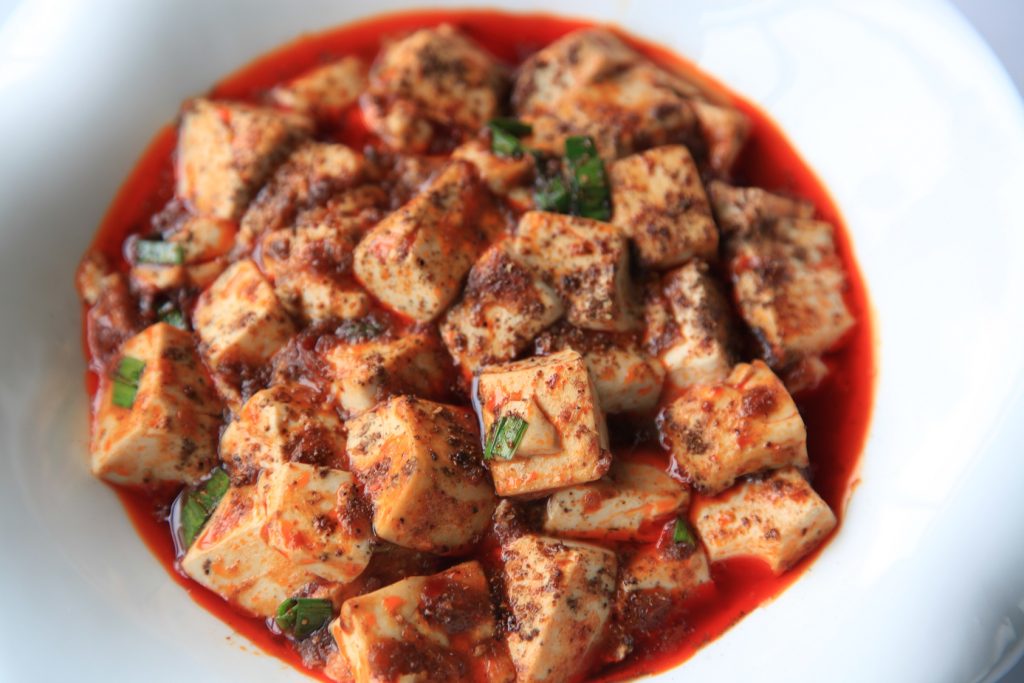
What mapo tofu actually is
Mapo tofu—麻婆豆腐 (mápo dòufu)—is a Chengdu classic: soft tofu cubes in a glossy, chili-red sauce with minced meat (usually pork or beef), fermented broad-bean chili paste (豆瓣酱), Sichuan peppercorn, and often a finishing of ground peppercorn on top. The name is traditionally linked to a Qing-era Chengdu cook nicknamed “Pockmarked Grandma”; you do not need the folklore to order well—you need the characters and a spice plan.
English menus say “mapo tofu,” “mapo doufu,” or “spicy tofu.” Point at 麻婆豆腐 when translations wander. Photo help: reading Chinese menus with photo translation apps.
This guide is for English-speaking travelers and expats ordering mapo as a shared dish or a solo rice bowl: what “authentic heat” feels like, how to ask for milder versions, how to eat soft tofu without destroying it, and how restaurant versions differ from home cooking.
What you should taste (and what you should not expect)
Good mapo balances spicy, numbing, savory, and a little sweet-salty depth from doubanjiang. The tofu should be soft but intact—silken or soft cubes that quiver, not firm grilling tofu. The sauce should coat, not drown the tofu in a chili oil swimming pool (though some restaurants lean oily).
It is not bland “mild tofu in brown gravy” unless you specifically ordered a tourist-mild plate. It is also not the same dish as plain 豆腐脑 dessert-style tofu pudding—different texture culture; if you want pudding, see douhua tofu pudding for first-timers.
How restaurants serve it
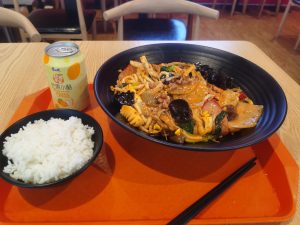
In a sit-down Sichuan restaurant, mapo tofu usually arrives as a shared plate meant for rice. In casual canteens and some chains, it may be a set with rice (盖浇 style). QR-order shops often bury it under “tofu dishes”—search the Chinese name—see QR menus for foreigners.
Portion size is typically for sharing among two to four with other dishes. Solo diners can finish a small plate with one bowl of rice; large “chef’s mapo” may be too much alone.
Prices and set inclusions vary by city and venue—check the menu, do not rely on remembered blog figures.
Spice, numbing, and how to customize
Useful phrases:
- 微辣麻婆豆腐 — mild mapo tofu
- 不要太辣 — not too spicy
- 少放花椒 — less Sichuan peppercorn
- 不要花椒 — no peppercorn (you lose the classic “ma,” but some prefer it)
- 多放蒜苗 — extra garlic sprouts / leek garnish if you like
- 清淡一点 — lighter overall
Chengdu neighborhood spots may still interpret “mild” as assertive. Coastal hotel restaurants often soften heat automatically for mixed tables. Say the words anyway.
If you already know you struggle with mala oil dishes, calibrate on another night with yuxiang eggplant or gongbao jiding before diving into full mapo.
How to eat it without wrecking the tofu
- Scoop with a spoon or wide spatula motion; stabbing with chopsticks turns cubes to mush.
- Spoon sauce and tofu onto rice; mix lightly in your bowl.
- Eat soon—soft tofu cools and firms oddly as oil congeals.
- Leave some sauce if it is too intense; finishing every drop is not a moral duty.
Pair with plain rice, not another heavy chili oil main in the same bite cycle. Cucumber salad, plain greens, or egg dishes cool the table. Drinks: weak tea, soy milk, beer, or water. Sweet milk tea fights poorly with doubanjiang.
Pay habits: many places are scan-first—see Alipay and WeChat Pay for foreign visitors.
A calm first-timer ordering script
1. Order 麻婆豆腐 plus 米饭.
2. Add 微辣,少花椒 if you are new to mala.
3. Add one mild vegetable dish and optionally a non-spicy protein so the table is not only chili oil.
4. When the plate arrives, taste a small tofu cube with rice before declaring heat levels.
5. Ask for extra rice rather than forcing the sauce alone.
Pocket line: 来一份微辣麻婆豆腐,少花椒,一碗米饭。
If the server asks beef or pork mince, either is normal; vegetarian “mapo” exists in some shops but is often a different sauce logic—ask whether doubanjiang and oil are meat-free.
Chengdu classic vs everywhere else
Chengdu / Sichuan restaurants: Expect stronger doubanjiang aroma, visible peppercorn, and soft tofu. House styles vary; “Chen Mapo”–inspired plates are a tourist pilgrimage, not the only valid bowl.
Other Chinese cities: “Mapo” may be sweeter, less numbing, or thickened. Mall food courts sometimes serve firmer tofu for easier scooping—less traditional, still edible.
Overseas Chinese restaurants: Often adapted milder and sometimes cornstarch-heavy. Use China trips to recalibrate expectations rather than arguing with a Paris or Sydney plate.
Compared with buffet mala xiangguo, mapo is a single composed dish—no ingredient bar, more tofu focus, less DIY.
Etiquette and practical tips
- Shared plates: take a portion to your rice bowl; do not hover chopsticks endlessly over the communal dish.
- Do not tip in ordinary restaurants.
- Cilantro or garlic sprouts on top are common; say 不要香菜 if needed (mapo more often uses garlic sprouts than cilantro, but garnishes vary).
- Lunch sets in office districts can be faster and milder than evening banquet tables.
- If you are spice-sensitive, sit near water and rice, not at the far end of a lazy Susan spinning chili oil dishes past you all night.
Common first-timer mistakes
- Ordering mapo as the only dish with no rice.
- Expecting firm tofu steaks.
- Calling any spicy tofu “mapo” when the menu says 家常豆腐 (home-style tofu)—related family, different seasoning.
- Mixing it in the same mouthful with another heavy mala dish and blaming mapo alone.
- Assuming hotel “mild mapo” equals Chengdu street heat—or the reverse.
Allergies and diet notes
Fermented chili bean paste, soy, and often meat mince are core. Sesame may appear as garnish oil. Shellfish is uncommon in classic mapo but cross-contact happens in busy woks. True vegan mapo requires explicit kitchen confirmation; many “vegetable mapo” plates still use lard or meat-based doubanjiang residues. Soft tofu is soy—obvious but worth stating for soy allergies.
If peanut allergy is a concern, ask about house oil and garnishes; peanut is not classic in mapo but kitchen practices vary.
Pairing a Sichuan table without overdoing mala
If mapo is your anchor dish, build the rest of the table with contrast:
- One cold starter (cucumber, wood ear, or bang bang chicken if you tolerate sesame-chili cold plates—see bang bang chicken)
- One mild stir-fried green
- One non-chili protein or egg dish
- Rice for everyone, refilled early
Avoid stacking mapo with shuizhu yu and a heavy dry pot on the same lazy Susan unless your group truly wants an oil-forward night. Alternating heat and clean flavors keeps conversation possible.
For a different Sichuan oil experience on another evening, shuizhu yu teaches broth-bath pacing; mapo teaches sauce-and-tofu pacing. Learning both makes restaurant menus less intimidating.
Soft tofu grades and what “too firm” means
Menus rarely print tofu grades, but your mouth will notice:
- 嫩豆腐 / 内酯豆腐 — soft / silken styles closest to classic mapo mouthfeel
- 老豆腐 — firmer; some canteens use it because it travels better on delivery bikes
- Pre-fried tofu cubes — common in non-Sichuan “mapo-like” plates; crunchy edges, different dish psychologically
If a plate arrives with rubbery cubes in neon-red cornstarch gravy, you received a distant cousin. It can still taste fine; just reset the “Chengdu textbook” expectation. Asking 是嫩豆腐吗? (is it soft tofu?) before ordering helps in borderline shops.
Delivery mapo congeals faster than dine-in. If you must take away, reheat gently and accept texture loss—restaurant first visits are better in person.
When mapo appears on breakfast or canteen lines
University canteens and office lunch lines sometimes ladle mapo over rice as a single tray compartment. Heat is often moderated; portions are fixed. This is a low-stakes way to taste the flavor family before a dedicated Sichuan dinner. Lines move fast—have your phrase ready, pay, and step aside. For broader breakfast context beyond tofu, regional counters vary wildly; mapo itself is more lunch/dinner than dawn food in most cities.
Bottom line
Order mapo with rice, keep the first plate 微辣 / 少花椒, scoop gently, and judge the dish after a few bites mixed with rice—not after a solo chili-oil spoonful. Once you know a restaurant’s baseline, you can request the fuller Chengdu heat. Mapo tofu is one of the clearest windows into Sichuan savory-mala cooking: compact, rice-friendly, and endlessly repeatable when you control the spice knobs up front.