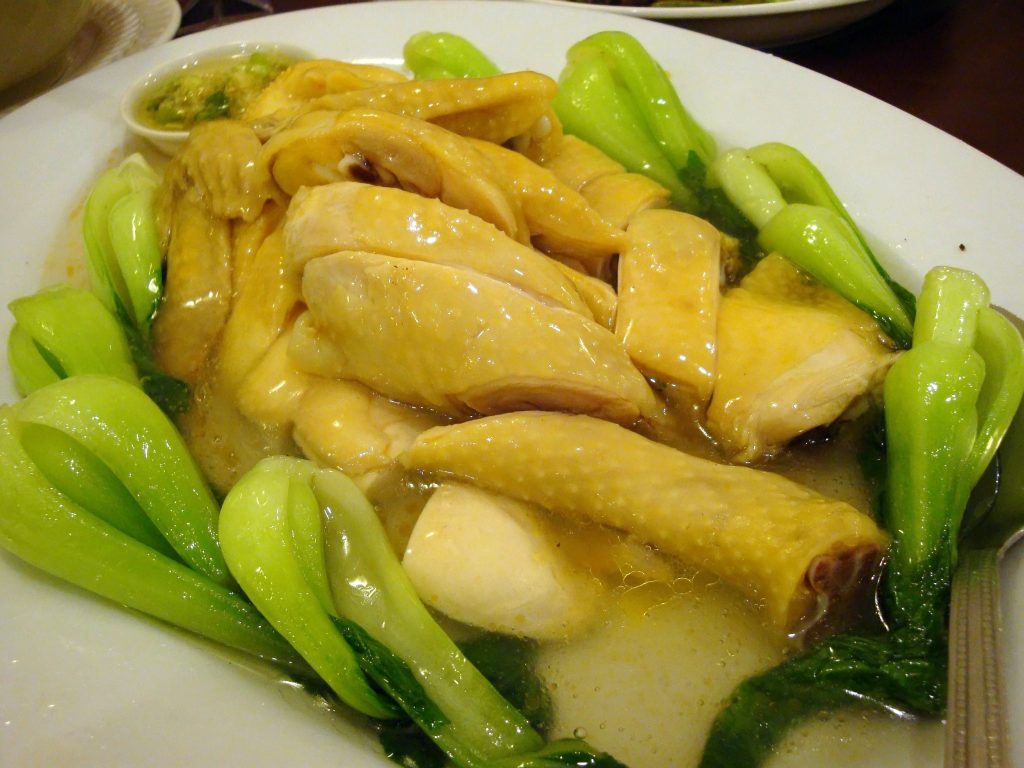
What white cut chicken is
White cut chicken (白切鸡 / 白斩鸡, baiqie ji) is a Cantonese classic: a whole chicken gently poached (not aggressively boiled), chilled or rested so the skin turns slightly jelly-smooth, then chopped into pieces and served with a ginger-scallion oil dip. The meat should taste clean and chicken-forward, not covered in heavy brown sauce. For English-speaking first-timers, it is one of the clearest introductions to Cantonese “original flavour” cooking alongside dim sum brunch, Cantonese roast meats, and Guangzhou yum cha.
It is not crispy fried chicken, not soy-sauce chicken (though related in the wider Cantonese chicken family), and not Hainanese chicken rice — even if dipping sauces and poaching ideas overlap in the broader southern conversation. Good baiqie ji shows pale skin with a subtle gloss, moist breast and thigh, and a dip that smells of fresh ginger and spring onion.
Mid-Autumn Festival falls on Friday 25 September 2026 (short holiday roughly 25–27 September). National Day Golden Week runs roughly 1–7 October 2026, with a makeup workday on Saturday 10 October 2026 per State Council notice 国办发明电〔2025〕7号. Popular Cantonese restaurants and roast-meat specialists crowd on holiday weekends — go early or book.
How it should taste and feel
Skin should be tender with a delicate bite; meat should be juicy, not dry stringy breast from overcooking. A faint pinkish hue near the bone can be normal in gently poached birds — ask staff if you are unsure, rather than panicking from supermarket-chicken habits. The ginger-scallion sauce should taste bright and aromatic; if it is only oil and salt, ask for a fresher dip when possible.
Serve with rice. Many tables add greens and a light soup. The chicken is the quiet star — do not bury it under five heavy fried dishes unless you are a large group.
How to order without guessing
Useful phrases:
- 白切鸡 (baiqie ji) — white cut chicken
- 半只 / 一只 — half bird / whole bird
- 姜葱蓉 / 姜葱酱 — ginger-scallion dip
- 多一点姜葱 — extra ginger-scallion sauce
- 不要太油 — less oily dip if adjustable
- 配白饭 — with rice
Point to the roast-meat or cold-cut display if the shop shows chickens behind glass. Confirm whether the bird is served warm, room temperature, or chilled — styles vary. Prices depend on bird size and restaurant grade; check the menu.
Payments: Alipay / WeChat Pay. Maps: SIM / eSIM. For city pacing, see Guangzhou first visit in early autumn.
Dip etiquette and sharing
- Use serving chopsticks for shared platters when provided.
- Dip pieces into the ginger-scallion sauce; do not pour the entire sauce bowl over the plate unless that is house style.
- Bones are normal — use the bone plate.
- Hands may be needed for some pieces; wash or use wet tissues politely.
- Photograph, then eat — chicken quality is about moisture, not only visuals.
Cantonese dining can feel relaxed at neighbourhood shops and more formal in banquet restaurants. Follow the host if you are a guest.
Where to try (venue types)
Look for Cantonese restaurants and siu mei (roast meat) specialists with steady local turnover. Hotel Cantonese restaurants often deliver a careful first plate for travellers. Market-adjacent cooked-food areas can be excellent if hygiene and turnover look good — use common sense. Tourist clusters vary; aroma and queues beat empty multilingual halls.
Pair thoughtfully with cheung fun or wonton noodles on other meals rather than stacking every Cantonese greatest hit in one lunch.
Common mistakes
- Expecting crispy skin like fried chicken
- Skipping the ginger-scallion dip and calling the chicken “bland”
- Ordering a whole bird for one diner without checking size
- Combining white cut chicken plus multiple heavy roast meats plus claypot rice in one sitting
- Rushing to a long metro transfer with greasy fingers and no tissues
- Judging all Cantonese food from one overcooked tourist plate
First-timer checklist
1. Order half or whole based on table size.
2. Ask for ginger-scallion dip (and extra if you love it).
3. Eat with rice and a green vegetable.
4. Watch bones; use serving tools.
5. Keep Mid-Autumn / Golden Week queue slack.
FAQs
Is it spicy? No; aroma comes from ginger and scallion.
Served hot or cold? Often warm to room temperature; ask the shop.
Kids? Often popular — mild flavour, bone caution needed.
Safe pink near bone? Gentle poaching can look different from Western roast chicken; ask staff if concerned.
Same as soy sauce chicken? Different seasoning and colour — soy sauce chicken is a cousin, not identical.
Pairing Guangzhou days without overload
A classic mistake is morning dim sum feast, lunch white cut chicken banquet, afternoon dessert, night hotpot. Pick a lane: white cut chicken as a clean protein lunch after walking, or yum cha as the main event. Autumn in Guangzhou can still feel humid and warm — hydrate and pace outdoor walks.
Rainy afternoons suit indoor Cantonese meals. Carry a light layer for strong AC.
Allergies, dietary notes, and polite refusals
Chicken is inherent. Ginger, scallion, oil, and possible soy in dips matter for allergies. Sesame appears in some house sauces — ask. This is not vegetarian. Gluten may appear in soy-based dips.
Polite scripts: 半只, 多一点姜葱, 我不要这个. Tipping norms differ; pay via Alipay or WeChat.
Holiday crowds and practical extras
Near Mid-Autumn and Golden Week, build slack. Delayed metro plus full restaurant plus timed ticket is the stress triangle. Screenshot 白切鸡. Confirm handwritten numbers. Carry tissues, sanitiser, and a power bank. Drink water. Schedule breaks with kids or older relatives.
Lovely China was founded in 2025 to publish practical English guides for travellers and expats. Questions or a broken link: [email protected].
Skin texture, bird quality, and leftovers
Great baiqie ji depends on bird quality and precise poaching time. Neighbourhood specialists who sell many chickens daily often taste fresher than quiet banquet rooms that only fry the name on a poster. If your first plate is dry, try another specialist rather than abandoning the dish forever.
Leftovers can work for hotel rooms with rules — ask for packing. Bones and sauce travel messily; pack carefully. A second-day cold chicken snack is common for locals; follow your own food-safety comfort.
Roast-meat counters vs sit-down Cantonese rooms
Some travellers first meet white cut chicken at a siu mei counter beside char siu and roast duck. That can be a fine takeaway half-bird with rice. Sit-down Cantonese restaurants may present chopped chicken on a platter with greens and a clearer dipping ritual. Neither format is “wrong” — choose based on time and whether you want table service.
If you buy takeaway, eat while the chicken still tastes moist. Hotel rooms with rules may allow packing; ask staff. Keep sauce containers upright. For a fuller Cantonese day without overload, save claypot rice for another meal.
English menus sometimes translate baiqie ji as “white chopped chicken,” “poached chicken,” or “cold chicken.” Point to the Chinese characters if the English sounds confusing. Staff are used to travellers asking whether the bird is meant to be eaten with the ginger-scallion sauce — yes, usually.
Humidity in Guangzhou autumn still sneaks up on walkers. After outdoor temple or river walks, a clean chicken-and-rice lunch is easier on the stomach than another deep-fried snack stack. Keep water handy and avoid rushing into a metro transfer while juggling bones and bags.
Before you go (quick mental rehearsal)
Know the Chinese name, choose half or whole, use the ginger-scallion dip, keep rice ready, and leave buffer before trains. Lovely China founded 2025 — [email protected].