Yum cha is the meal — dim sum is the food
In Guangzhou, people do not only “get dumplings.” They go for yum cha (饮茶) — literally drinking tea — which is a social morning (and sometimes afternoon) meal where teapots stay busy and small dishes arrive in rounds. Dim sum (点心) is the constellation of those dishes: shrimp dumplings, siu mai, rice rolls, buns, cakes, and the odd adventurous plate that tests your courage.
If you treat yum cha like fast food, you will leave confused and still hungry for the ritual. If you treat it like a paced tea session with food in supporting roles, Guangzhou opens up.
This guide is for first-timers who want to order without panic: how tea works, how carts and tick sheets differ, what to choose first, and which etiquette gestures actually help.
When to go
Traditional yum cha energy is strongest in the morning. Many locals aim for early seats; popular teahouses fill as the morning wears on. Afternoon dim sum sessions exist at many restaurants with a sometimes shorter list. Evening “dim sum only” culture is less classic than morning tea, though modern venues vary.
Weekend mornings are the most atmospheric and the most contested. If Mid-Autumn (Friday 25 September 2026, holiday roughly 25–27 September) or Golden Week (~1–7 October) overlaps your Guangzhou stay, expect fuller dining rooms — arrive earlier or pick a weekday. Teachers’ Day (Thursday 10 September) is mainly a school/gift day; teahouses still run, but campus-adjacent flower shops will feel busier than your steamer basket.
Tea first: choose, pour, refill
When you sit, tea is not an afterthought. Servers typically ask what you drink. Common starting points:
- Pu’er (普洱): earthy, stands up to richer bites.
- Oolong (乌龙): flexible middle path.
- Jasmine (茉莉): fragrant and approachable.
- Chrysanthemum (菊花): the usual caffeine-light / floral option (sometimes blended).
Tea is often charged as a per-person tea cover or similar line item — read the menu. Guangzhou has pushed clearer tea-cover norms in recent years; you should still check what is listed rather than assuming a free bottomless mystery pot.
Etiquette that actually helps:
- Offer to pour for others nearby before topping up your own cup when it is practical.
- When someone pours for you, a light two-finger tap on the table is the classic quiet thank-you.
- Lid ajar on the teapot is a common signal for a refill — venues differ; watching the next table works better than a speech.
How ordering works (cart, sheet, QR, or server)
Do not assume every Guangzhou teahouse still runs romantic pushcarts. You may meet any of these systems:
Pushcart
Servers wheel trays or baskets between tables. See something you want, make eye contact, point, and let them stamp or mark your table card. Keep the card accessible at the edge of the table.
Paper tick sheet
A checklist of dishes — sometimes with pictures, sometimes dense Chinese. Tick quantities, hand the sheet over, wait for steamers. This is increasingly common and often calmer for first-timers.
QR code / phone menu
Scan, tap photos, submit. Translation quality varies; screenshots and pointing still save you.
Verbal order
Show Chinese names from a note on your phone if pronunciation fails. Nobody awards points for perfect tones on an empty stomach.
Whatever the system, order in rounds. Send a first flight of four to six items for two people, eat while hot, then add what you are missing. A table of twelve steamers at once turns into cold wrappers and regret.
A first-timer table that teaches the cuisine
For two people, a balanced first round might include:
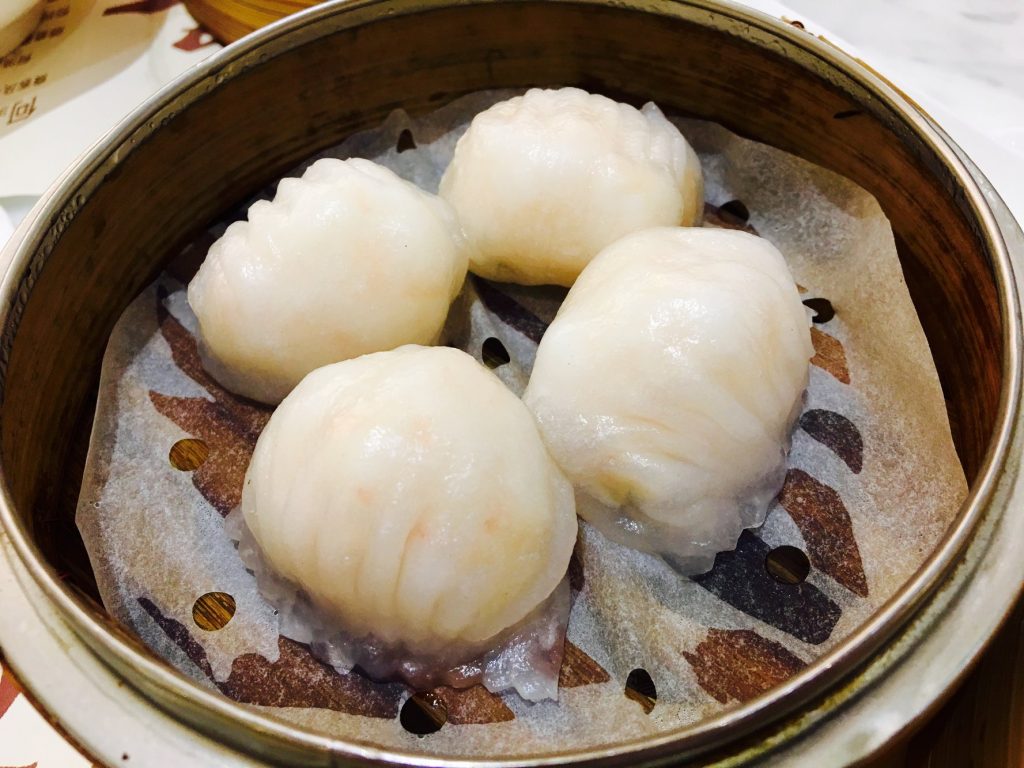
- Har gow (虾饺) — translucent shrimp dumplings; the classic test of a kitchen’s wrapping.
- Siu mai (烧卖) — open-topped pork (often with shrimp) dumplings.
- Char siu bao (叉烧包) — barbecue pork buns (steamed or baked versions exist; steamed is the yum cha default in many rooms).
- Cheung fun / rice noodle rolls (肠粉) — silky sheets, often with shrimp, beef, or fried dough; sauce matters.
- One crisp or pan-fried item — spring roll, taro dumpling, or pan-fried radish cake if available.
- One vegetable or lighter plate if the menu offers greens or stuffed peppers — balance matters.
Optional courage: chicken feet (凤爪) are a Cantonese yum cha staple. Try one piece before you commit a whole basket to pride.
Sweet finish later: egg tarts, mango pudding, or sesame rolls — after savoury rounds, not instead of tea.
You do not need exact prices from a stranger’s blog. Read the sheet in front of you; portion counts per basket vary by house.
Spice, sauce, and sharing rhythm
Cantonese dim sum is not Sichuan heat. Flavours lean toward clean seafood, subtle marinade, and texture. Chilli oil or mustard may appear as optional dips — taste before you drown a har gow.
Sharing rules of thumb:
- Take one piece first when a basket is small; check whether others want more.
- Do not spear every dumpling as a private stash.
- Keep chopsticks out of vertical “incense stick” poses in rice or bowls.
Payment and pacing
Yum cha is social time. Locals often linger; tourists who sprint through three baskets in twenty minutes miss the point. Budget roughly one to two hours if the room is comfortable.
Pay according to the venue: stamped card tally, QR bill, or cashier. Check for tea cover and any service charge before you panic about the total. Tipping culture is not a US-style default — follow local cues, not airport advice.
Mobile pay helps. Have Alipay or WeChat Pay ready so you are not hunting cash while the next cart rolls away.
Where this fits on a wider China food trip
If your China loop also includes Shanghai soup dumplings or Beijing roast duck, keep the techniques separate in your head. Xiaolongbao are not har gow; Peking duck is not a morning tea sport. Cross-link your curiosity without merging the rituals — our xiaolongbao and Peking duck guides stay in their cities for a reason.
Guangzhou yum cha pairs beautifully with a slow morning before a Pearl River evening. It pairs poorly with a packed itinerary that demands you “finish breakfast” in twelve minutes flat.
Panic-prevention checklist
- Arrive earlier than your ambition.
- Sit, choose tea, breathe.
- Identify the ordering system before you wave at random food.
- First round: shrimp dumpling + siu mai + bun or rice roll + one contrast texture.
- Eat hot, order more, leave space for a sweet.
- Tap thanks for poured tea; keep the pot alive.
- Pay the tea cover without drama.
Reading the room like a guest
Guangzhou teahouses range from historic banquet-scale rooms to neighbourhood spots where regulars claim the same corner every week. In grand rooms, expect more ceremony and longer walks between carts or kitchens. In smaller rooms, the tick sheet may arrive faster than your translation app loads.
Either way, you are a guest in a morning ritual that belongs to the city. Keep voices moderate, give elderly diners space in aisles, and do not rearrange shared tables without asking. If a dish arrives wrong, show the sheet or photo calmly — most kitchens would rather fix a steamer than watch you leave hungry.
Dietary notes without drama
Vegetarian and seafood-allergy travellers should ask early. Many dumplings hide pork even when the topping looks like shrimp. Rice rolls may use meat stock in sauces. Egg tarts contain egg and dairy depending on the bakery style. Point to ingredients, use a translation card, and accept that some classic baskets will not convert cleanly — build your table around what the kitchen can confirm.
If you are travelling onward to festival weeks, remember that Mid-Autumn hospitality elsewhere may involve mooncakes and family dinners more than morning tea — different ritual, different pace. Keep yum cha for Guangzhou mornings when you can.
Bottom line
Ordering dim sum in Guangzhou without panic is mostly about respecting yum cha as tea-led time. Learn the local ordering system in the first three minutes, send a small varied round, and let the table teach you what to add next. Do that, and the steamers stop feeling like a test — they feel like Guangzhou saying good morning.