The minibus from Chengdu deposits you on a stretch of asphalt where the air turns cool and damp. Porters in blue jackets shout over the hiss of idling engines, stacking cardboard boxes of instant noodles and vacuum-packed tofu onto luggage racks. A massive copper bell hangs under a tiled roof at the square’s edge — its clapper silent now, but the metal still catches the morning light. This is Baoguo, the gateway town at the foot of Mount Emei, where the pilgrimage trail begins and the tourist machine hums at full volume.
Getting There and Moving Around
Most travelers arrive by long-distance bus from Chengdu’s Xinnanmen station or by high-speed train to Emeishan railway station, then transfer to a local bus or taxi for the final ten kilometers. The ride from the rail station takes twenty minutes on a road that climbs through bamboo groves and tea terraces. Once in Baoguo, your feet do the work. The town stretches along a single spine road; guesthouses, ticket windows, and restaurant kitchens all face this artery. A public shuttle runs from the main square to the park’s formal entrance every fifteen minutes, but the walk is only eight hundred meters on a flat, paved path beside a stream. Save the shuttle for the return trip when your calves are screaming.
The Temple Cluster and Museum
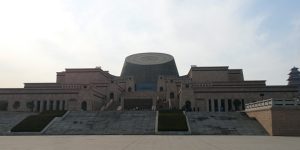
Baoguo Temple sits at the cluster’s heart, its roof ridges curled like claws against the sky. Inside the main hall, a bronze Huayan Pagoda rises seven tiers, each level cast with hundreds of miniature Buddhas — light a stick of incense and the smoke curls through the open lattice doors. Shanjue Temple, a short uphill walk, holds a Ming-dynasty jade Buddha the size of a toddler, its surface worn smooth by generations of palms. Fuhu Temple hides behind a screen of camellias; its claim to fame is a bronze bell dated to the Song dynasty, its inscription still legible despite centuries of monsoon rain. Leiyin Temple and Chunyang Palace are quieter, often empty except for an elderly nun sweeping fallen petals. The Mount Emei Museum, a modern glass box beside the ticket plaza, displays fossilized rhino teeth, ancient monastic seals, and a topographical model of the entire mountain that helps you visualize the climb ahead.
Eating Before the Ascent
Restaurants line the main road, their menus laminated against grease and steam. A bowl of hand-pulled noodles in pork-bone broth costs roughly ten to twelve yuan; the noodles should snap with a slight chew, the broth opaque and sweet from hours of simmering. Cold dishes arrive first — smashed cucumber with garlic, wood-ear fungus in vinegar, peanuts fried until the skins split. Order a plate of stir-fried seasonal greens, usually baby bok choy or mustard leaf, finished with a splash of Shaoxing wine. If you want protein, ask for “hongshao rou” — braised pork belly cut into cubes, skin intact, dark as mahogany and melting on the tongue. Vegetarians can request “su cai” versions; most kitchens keep tofu and mushroom stock on hand.
- Hand-pulled wheat noodles
- Pork femur bones, ginger, scallion
- Soy sauce, rock sugar, star anise
- Baby bok choy or mustard greens
- Garlic, dried chili, Shaoxing wine
- Pork belly, skin on, cut into 3-cm cubes
- Fermented bean paste, dark soy, rock sugar
Simmer bones with ginger and scallion for four hours until the broth turns milky. Pull noodles by hand, drop into boiling water for thirty seconds. Ladle broth over noodles, top with blanched greens and a spoonful of braised pork. For the pork, sear cubes until fat renders, add fermented bean paste, then cover with water, dark soy, and rock sugar. Braise ninety minutes until the sauce clings thick and glossy.
Hot Springs, Ski Slopes, and Seasonal Extras
After a day on the mountain, the hot-spring resorts clustered near the park entrance fill with hikers soaking in outdoor pools scented with sulfur and pine. The water runs forty-two degrees Celsius; stay no longer than twenty minutes, then rinse under a cool shower. In the depths of winter, usually the twelfth lunar month through the first month, the Leidongping ski resort opens its slopes at 2,400 meters. The runs are short and the lifts slow, but the view of snow-dusted firs against a gray sky is worth the bus ride up the winding mountain road. Bring your own goggles — rental fogging is a given.
Stocking Up and Common Missteps
Convenience stores and roadside stalls sell vacuum-packed bamboo shoots, spicy bean curd sticks, and bottles of electrolyte water at a markup of twenty percent over Chengdu prices. Buy snacks here if you forgot them, but don’t load your pack — the mountain’s own vendors appear every kilometer. A frequent error: arriving at the ticket window without cash. The park entry fee and the sightseeing bus ticket often require physical renminbi; mobile payment terminals sometimes fail in the mist. Another mistake is assuming English menus exist beyond the first two restaurants. Learn the characters for beef, chicken, egg, and “no chili” (bu yao la), or carry a photo of the dish you want. Finally, don’t underestimate the altitude gain. The town sits at 500 meters; the Golden Summit tops 3,000. Spend your first night in Baoguo, drink hot water, and let your lungs adjust before you chase sunrise on the peak.