The minibus shudders to a halt on a wide boulevard where the streetlights are just flickering on. Dust coats the windshield, the kind that settles in your throat after an hour on the desert highway. A vendor near the station waves a skewer of lamb, the fat sizzling over charcoal, and the smell cuts through the diesel fumes. This is Bayanhot, the administrative heart of Alxa Left Banner, where the Gobi brushes against the Yellow River irrigation zone. You are not passing through; you have arrived.
Getting There: The Sky Road and the Dust Road
Most travelers touch down at Alxa Left Banner Bayanhot Airport, a compact terminal that feels more like a bus station than an aviation hub. Flights arrive from Hohhot, Xi’an, and Tianjin on small turboprops that bank hard over the dunes before lining up with the runway. In winter, ice on the tarmac can delay departures for hours; pack a novel and a thermos. If you are coming overland, the G6 Beijing–Lhasa Expressway cuts a straight line through the gravel plains. The drive from Yinchuan takes about four hours if the wind isn’t pushing sand across the lanes. Long-distance sleeper buses pull into the station on Xinhua Road just before dawn, depositing passengers into a scrum of unlicensed taxis. Negotiate the fare before the door closes—thirty yuan to the city center is standard, fifty if the driver claims the meter is broken.
Moving Around: Two Wheels and Shared Rides
The town spreads along a grid wide enough for camel caravans, so walking between sights can mean forty minutes under a sun that reflects off the pale concrete. Electric scooters are the local currency of motion. Rental shops cluster near the People’s Hospital; hand over your passport and a two-hundred-yuan deposit, and you get a silent machine with a basket for water bottles. Helmets are optional but the traffic police stationed at the main intersection love stopping foreigners for a chat and a fine. If you prefer four wheels, the green-and-yellow taxis cluster at hotel entrances. Drivers rarely speak Mandarin beyond directions, so have your destination written in Chinese characters on your phone. For the temples on the outskirts, hire a private car for the half-day—drivers know the unmarked turnoffs that GPS misses.
Seeing the Sacred: Two Temples, Two Moods
Guangzong Temple sits in a shallow valley eight kilometers south of town, its white walls glowing against the dun hills. The complex was raised in the mid-eighteenth century, flattened during the upheaval of the Cultural Revolution, and rebuilt brick by brick starting in the early eighties. You enter through a gate flanked by stone lions missing noses, then climb a stairway of ninety-nine steps—each one numbered in faded red paint. The main hall houses a gilded Maitreya that survived the wrecking balls because a monk hid it in a well. Incense smoke curls thick enough to taste. Monks in crimson robes debate sutras in a side courtyard; they will not pose for photos, but a respectful bow earns a nod.
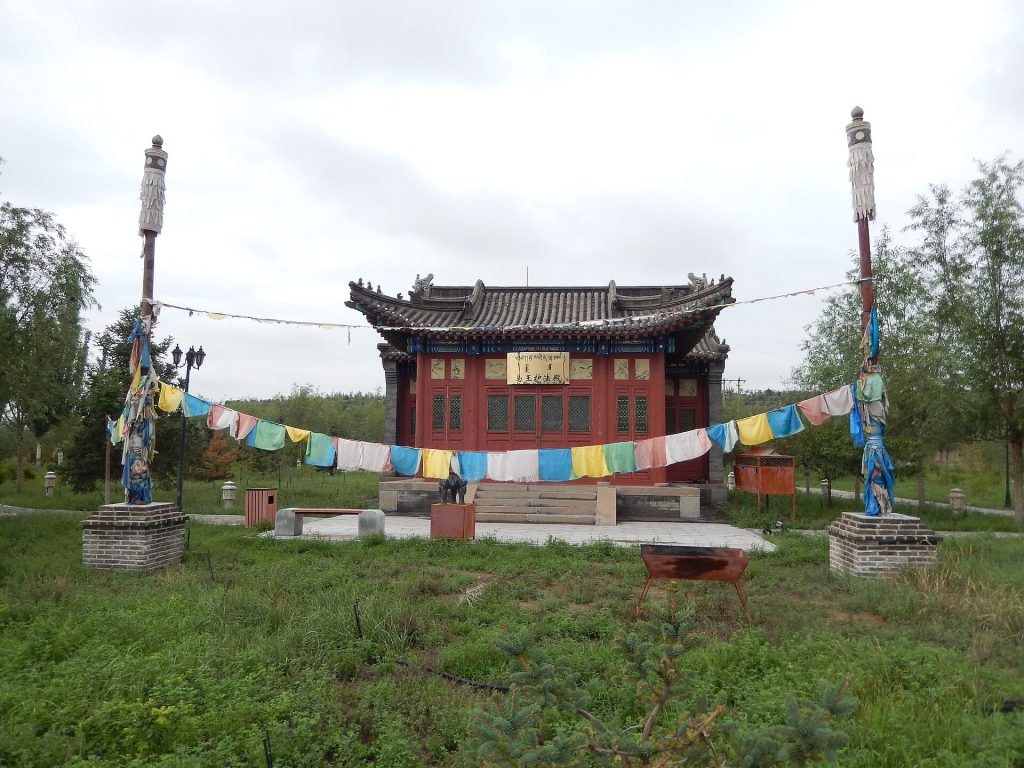
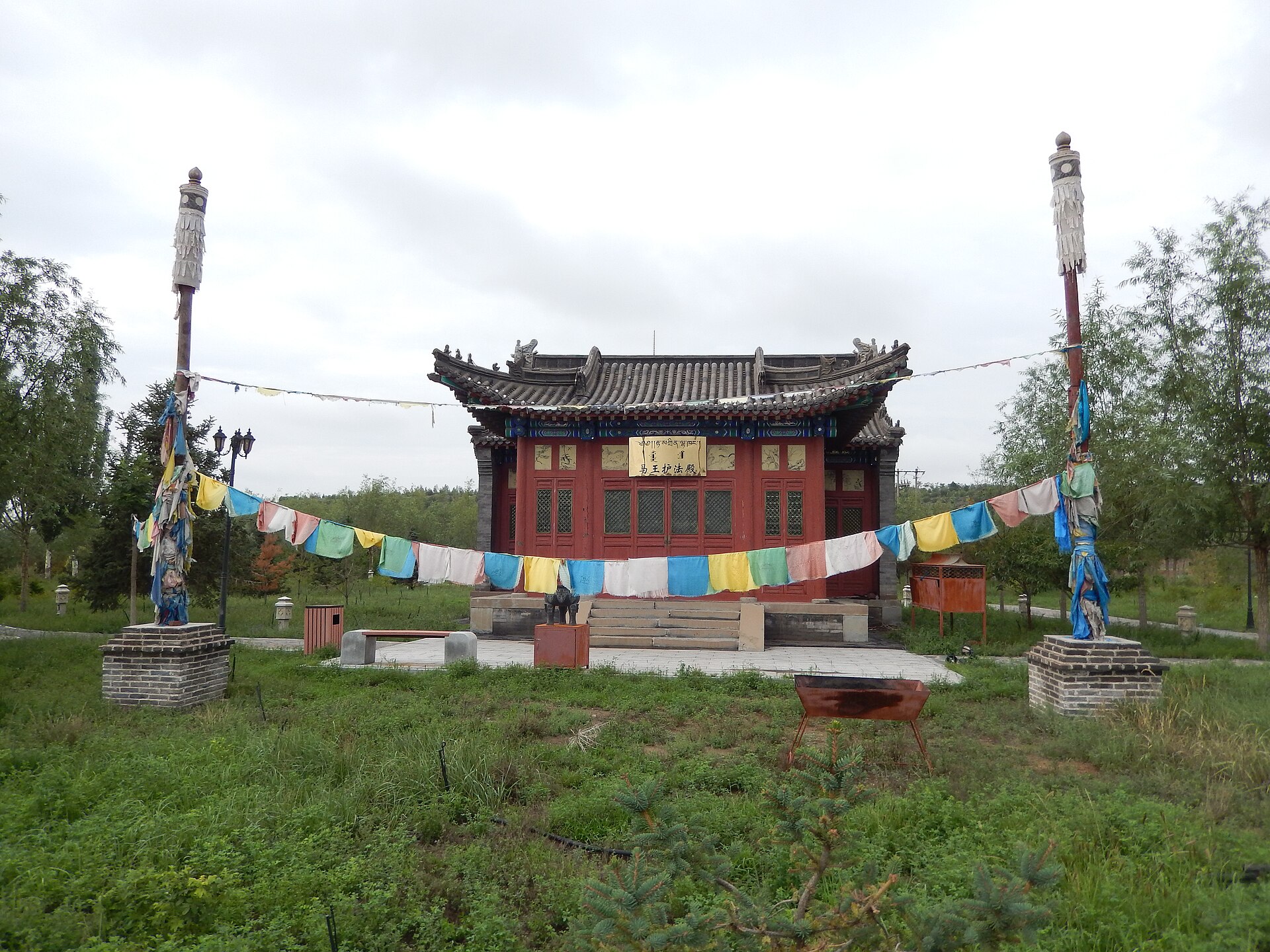
Yanfu Temple, by contrast, lives inside the urban fabric on Minzu Road. Its Tibetan-style roof bristles with copper finials that catch the last light. Inside, the air is cooler, scented with juniper and yak butter. Murals depict wrathful deities trampling ignorance, their pigments still vivid because the hall was locked and forgotten for two decades. A senior lama sits near the entrance spinning a prayer wheel; drop a five-yuan note in the box and he will tie a red protection string around your wrist. Visit both in the same afternoon—Guangzong for the landscape, Yanfu for the intimacy—but remove your hat and step over the threshold, not on it.
Eating: Lamb, Noodles, and the Muslim Quarter
Dinner in Bayanhot revolves around three cuisines that share a kitchen logic: fire, flour, and fat. Mongolian households serve boiled mutton on a wooden platter, the meat so tender it falls off the bone before your chopsticks close. Dip it in a sauce of fermented bean curd, minced garlic, and chili oil. Han-style restaurants specialize in hand-pulled noodles slapped against the counter until they sing; order the beef broth version with a side of pickled radish. The Hui quarter, centered around the green-domed mosque on Jiefang Road, does lamb kebabs dusted with cumin and sesame, flatbread baked against the tandoor wall, and a cold jelly made from mung bean starch tossed in vinegar and chili.
- Boiled mutton platter: shoulder cut, bone-in, salted water, scallion knots, ginger slices — simmer ninety minutes, serve with dipping sauce of fermented bean curd, garlic, chili oil, vinegar.
- Hand-pulled beef noodles: high-gluten flour, water, ash water — knead, rest, pull into strands, boil thirty seconds, ladle beef stock, top with braised beef, cilantro, chili oil.
- Hui-style kebabs: leg of lamb, cubed, marinated in cumin, salt, pepper, onion juice — thread on steel skewers, grill over charcoal, dust with extra cumin and sesame.
- Liangfen (mung bean jelly): mung bean starch, water — whisk, boil until thick, pour into tray, chill, cut into strips, dress with garlic water, vinegar, soy sauce, chili oil, crushed peanuts.
A beginner’s mistake is ordering “Mongolian hot pot” expecting the Sichuan version. Here the broth is clear water with a few goji berries and dates; the flavor comes entirely from the meat and your dipping bowl. Another trap: asking for rice with the boiled mutton. Locals eat the meat plain or wrapped in flatbread; rice arrives only at breakfast.
Sleeping and Connecting: Practical Rhythms
Hotels cluster near the government compound on Xinhua Road. The three-star places have reliable hot water and heavy curtains that block the early summer sunrise. Receptionists may not speak English, but the check-in kiosk scans passports and prints a registration slip in seconds—no need to visit the police station yourself. Wi-Fi works in the lobby; in rooms it drops when the wind shifts the sand against the external antenna. Buy a local SIM at the China Mobile counter inside the telecom hall on Minzu Road: show passport, pick a fifty-yuan data package, and you are online before you leave the counter. Cash is still king at street stalls and taxi meters; the nearest ATM that accepts foreign cards is the Agricultural Bank branch opposite the main post office.
Leaving: Where the Road Goes Next
When the season turns toward the Mid-Autumn Festival, the poplars along the river turn gold and the tour groups thin. Head west on the S218 toward Ejin Banner if you want the strange forests of Euphrates poplar that glow like torches in late autumn. Northbound, the road climbs into the Helan Mountains where rock art panels hide in dry washes—hire a guide in Bayanhot who knows the unmarked trails. South drops you back onto the expressway toward Yinchuan and the high-speed rail. Whatever direction you choose, fill the tank and the water jerrycan before the city limits sign fades in the rearview mirror. The Gobi does not forgive improvisation.