The minibus shudders to a halt on a gravel shoulder outside Enyang Ancient Town, and the door folds open onto a lane paved with worn flagstones. Steam rises from a stall where a woman ladles rice noodles into bowls the size of washbasins, chili oil floating like amber on top. A cluster of elderly men plays cards at a wooden table, slapping tiles down between sips of tea. There is no tour group, no English signage, just the rhythm of a city that moves at its own pace in the fold of the Daba Mountains.
Getting There Without a Headache
Bazhong sits in northeastern Sichuan, where the province brushes against Shaanxi. The airport at Enyang District handles a handful of daily flights from Chengdu, Chongqing, and Xi’an, but the terminal is modest — think single baggage carousel and a coffee cart that closes by early afternoon. A taxi into Bazhou district takes twenty minutes on the expressway; the airport bus runs less frequently and drops you at the Jiangbei Passenger Center, a sprawling lot where you’ll need a local bus or ride-hail to reach your hotel.
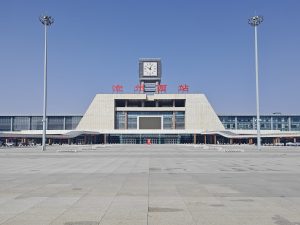
The railway station in Bazhou district is the more reliable anchor. High-speed services from Chengdu East now slice the journey to roughly two and a half hours, while slower K-trains from Chongqing North trundle through the hills in four. Buy tickets on the 12306 app or at the station windows; bring your passport, as the machines sometimes reject foreign IDs. If you drive, the G5 and G65 expressways converge near the city, but mountain fog in autumn can close stretches without warning — check the traffic app before you leave the plains.
Where to Sleep: Old Streets or New Towers
Two neighborhoods make sense for a first stay. Enyang Ancient Town preserves Ming- and Qing-era courtyards along the Ba River; guesthouses here occupy restored timber frames with courtyards where cats nap on stone steps. You’ll hear the river at night and smell frying dough sticks at dawn. The trade-off: steep stairs, spotty Wi-Fi, and bathrooms that may share a corridor.
Bazhou district’s city center clusters around People’s Square and the riverfront park. Chain hotels — Jinjiang, Atour, local brands — offer elevators, reliable hot water, and English-speaking front desks. You’re walking distance from the night market on Hongjiang Road and a ten-minute ride to the train station. Book a room facing away from the main boulevard if you value quiet; construction cranes dot the skyline year-round.
Moving Around: Apps, Buses, and Your Feet
Didi works, but drivers often cancel short hops during peak hours. The city bus network fans out from three main hubs: Jiangbei Passenger Center, the railway station, and Enyang Bus Station. Routes 1, 8, and 16 connect the district cores; fare is two yuan, cash or transit card. Stops announce only in Mandarin — count stops or watch for landmarks like the red pagoda at Nankan Grottoes.
Shared e-bikes (Meituan, Qingju) blanket the flat riverside avenues. Scan the QR, unlock, and ride the dedicated lanes along the Ba River promenade. Avoid the steep alleys of Enyang on two wheels; the stone slopes are slick after rain. For the grottoes at Nankan or the forest park at Kongshan, hire a private car for the day — negotiate 300 to 400 yuan round-trip, including wait time. Drivers know the mountain switchbacks; you don’t.
Eating: Noodles, Smoke, and the Chili Test
Bazhong cuisine leans heavy on smoke, vinegar, and the numbing heat of Sichuan peppercorn. Breakfast starts with mianpi — wide, translucent wheat sheets steamed and sliced, tossed with garlic water, chili oil, crushed peanuts, and cilantro. The best bowls arrive from a cart near the East Gate of Enyang before 8 a.m.; the vendor pulls the sheets from a bamboo steamer, snaps them with chopsticks, and hands you a plastic stool.
Lunch demands yangyu baba, mashed potato patties fried until the crust crackles like dry leaves. Vendors press the mash into iron molds, flip them over charcoal, and brush each side with fermented bean paste. Eat them hot, dipped in a sauce of black vinegar, soy, and minced ginger. Dinner shifts to hotpot — not the Chengdu red-oil inferno, but a clear broth simmered with pork bones, dried chili, and wild mountain herbs. You cook thin slices of beef, lotus root, and hand-rolled tofu skin at the table.
- Mianpi (steamed wheat sheets) — wheat starch, water, garlic, chili oil, peanuts, cilantro, black vinegar, soy sauce.
- Yangyu baba (potato patties) — potatoes, salt, fermented bean paste, oil for frying, dipping vinegar.
- Bazhong hotpot base — pork bones, dried chili, Sichuan peppercorn, ginger, scallion, star anise, wild herbs (optional).
To approximate mianpi at home: mix wheat starch and water into a thin slurry, steam in a wide tray until set, cool, then slice into ribbons. Toss with the aromatics above. The texture hinges on the starch ratio — too much and it turns gummy; too little and it tears. Restaurant ordering tip: point to the picture menu and hold up fingers for spice level — one finger mild, three “lao la” (old spicy), five “you will cry.” Beginners order “wei la” (slightly spicy) and still reach for the yogurt drink.
Sights Worth the Detour
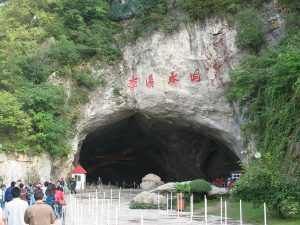
Nankan Grottoes sit fifteen kilometers south of Bazhou, carved into a sandstone cliff beside the Han River. Over a thousand Buddhist figures span the Tang to the Song dynasties, many still bearing traces of pigment. The main cave opens at 8:30 a.m.; arrive early to catch light slanting across the bodhisattva faces. Wear shoes with grip — the stone steps are polished by centuries of pilgrims.
Enyang Ancient Town deserves a full afternoon. Wander the riverfront lane where merchants once unloaded salt and tea onto wooden boats. The former guildhalls now house tea shops; sit for a pot of jasmine and watch the light shift across the water. Don’t skip the shadow puppet museum tucked behind the opera stage — the curator demonstrates the leather figures if you ask politely.
Kongshan National Forest Park rises north of the city, a basin of fir and bamboo threaded with boardwalks. In late spring, rhododendrons turn the ridges pink; in late autumn, maples blaze red against the limestone. The cable car saves knees but queues build on holidays. Hike the ridge trail from the upper station to the Glass Viewing Platform — two hours round-trip, moderate grade, phones away for the exposed sections.
Cultural Beats and Common Missteps
Locals speak a Sichuan dialect thick with retroflex consonants; Mandarin works everywhere, but a few dialect phrases earn smiles. “Haode” (good) replaces “hao.” “Mozhe” means “delicious” — say it after the first bite of mianpi and the vendor may slip you an extra spoonful of chili oil.
Market etiquette: at the morning produce market on Jiefang Road, vendors display vegetables in pyramid stacks. Touch only what you intend to buy; pointing with a pen or phone is fine, fingers are not. Bargaining is expected for dried goods (mushrooms, wood ear, Sichuan pepper) but not for fresh produce — the posted price per jin (500 grams) is final.
Temple visits: Nankan and the smaller caves at Guniangshan are active worship sites. Remove hats, silence phones, and step over — never on — the threshold sill. Incense bundles sell at the gate; three sticks, one for heaven, earth, and ancestors. Light them at the communal burner, not the individual braziers before each statue.
Newcomers often schedule too tight. The mountain roads, the spontaneous tea invitations, the sudden rain that stalls a bus for an hour — these are not interruptions; they are the texture of the place. Leave blank half-days. Sit at a riverside stall with a bowl of noodles, watch the boats drift, and let the city set the tempo.