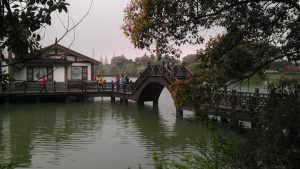
The minibus shuddered to a halt on a dusty shoulder of the G72 expressway, the door folding open with a pneumatic hiss. Steam rose from a roadside stall where a woman in a faded floral apron ladled rice noodles into blue enamel bowls, the broth rich with pork bone and star anise. Across the two-lane road, a cluster of grey-tile roofs huddled behind a screen of banyan trees — Binyang county town, unannounced by any grand archway, just the smell of fermented bean curd and the clatter of mahjong tiles drifting from an open doorway. I shouldered my pack and walked toward the bridge spanning the Zuo River, the water the color of strong tea after weeks of spring rain.
Getting There and Moving Around
Most travelers arrive via Nanning, the regional hub seventy kilometers to the southwest. High-speed trains from Guangzhou South or Guilin North pull into Nanning East in three to four hours; from the station, a taxi to the long-distance bus terminal takes twenty minutes. Buses for Binyang leave every half hour from the Langdong terminal, the ride lasting just over an hour on the expressway. If you prefer the wheel, the G72 Quan-Nan Expressway cuts straight through karst foothills — allow ninety minutes from Nanning airport, longer if fog clings to the ridges in early spring.
Inside the county, the network is simple. Two main arteries — Binzhou Avenue and Xingbin Road — form a loose grid. Electric scooters are the default; rental shops near the bus station hand over a helmet and a key for thirty yuan a day, no license check required. Didi works, but drivers often cancel short hops. For villages beyond the ring road — like the lotus ponds of Sili or the cannon dragon rehearsal grounds in Xinjing — hire a private car for the day; two hundred yuan covers driver, fuel, and the patience to wait while you photograph water buffalo knee-deep in paddy mud.
When to Show Up
The sweet spot falls between the third and eighth lunar months. Spring brings the rape flowers — whole valleys gone yellow as turmeric — and the air stays cool enough to hike the limestone ridges behind Wangling Park without soaking your shirt. Autumn, after the Mid-Autumn Festival, clears the humidity; the lotus harvest peaks then, and you’ll see farmers poling flat-bottomed boats through ponds thick with seed heads. Summer is furnace-hot and prone to torrential downpours that turn village lanes into canals. Winter is mild but grey, the kind of damp cold that seeps into concrete guesthouse walls. If your calendar locks you into the Dragon Boat Festival period, book months ahead — the Cannon Dragon Festival swells the population threefold.
What to Do: Streets, Stones, and Fire
Start at the old west gate, where a section of Ming dynasty city wall still stands, bricks mortared with glutinous rice paste. Climb the watchtower steps for a view over rooftops strung with laundry and the river bending south. From there, walk east along Binzhou Avenue toward the Confucian Temple — rebuilt in the Republic era but still smelling of sandalwood and ink. Students rub the stone tortoise’s head for exam luck; you can rub your palms on the cold bronze bell and make a quieter wish.
Half an hour by scooter north lies the Binyang Gunlong (Cannon Dragon) Heritage Hall in Xinjing village. No glass cases here — just a dirt courtyard where elders assemble the dragon’s bamboo spine, stuffing its belly with firecrackers the length of a forearm. Visit in the tenth lunar month, before the festival, and you’ll hear the crack of test explosions echoing off the hills. Ask the master craftsman, a man named Wei with fingers blackened by gunpowder, to show you the fuse timing; he’ll hand you a spent casing as a souvenir.
For quiet, head to the lotus ponds of Sili township at dawn. The rice-and-lotus interplanting system — praised by Yuan Longping himself — means you wade through calf-deep water between rows of rice stalks, lotus leaves broad as umbrellas brushing your shoulders. Farmers harvest seed pods with curved knives, tossing them into woven baskets. Stay long enough and an auntie will wave you over for a bowl of lotus root starch soup, thick and sweet, stirred with a chopstick.
Eating: What Lands on the Table
Binyang food leans salty, sour, and fermented — flavors built to cut through humidity. The signature dish is suanye (sour fermented vegetables), usually mustard greens or radish, jarred for months until the brine turns amber. It arrives as a side with everything: steamed fish, braised pork belly, even stirred into instant noodles at 2 a.m. Another staple is luosifen — river snail rice noodles — but the Binyang version skips the heavy chili oil, letting the snail broth speak. You’ll find it at the alley stall behind the People’s Hospital, where the broth simmers in a dented aluminum pot since before dawn.
At a proper restaurant — look for the red lanterns over a tiled facade on Xingbin Road — order family-style:
- Steamed river fish with fermented black beans and shredded ginger — flesh sliding off the bone, skin gelatinous.
- Braised pork belly with preserved mustard greens (meicai kourou) — fat rendered translucent, greens melting into sweet-salty ribbons.
- Stir-fried lotus root slices, crisp as apples, tossed with garlic chives and dried shrimp.
- Cold tossed pig ear, sliced paper-thin, dressed in chili oil, vinegar, and crushed peanuts.
- A clay pot of rice cooked with cured sausage and dried shrimp, the bottom crust (guoba) scraped out in shards.
Vegetarians: ask for suanye tofu — soft bean curd simmered in the sour brine until it drinks the flavor. Skip the “tourist set menus” advertised with English photos; they drown everything in sugar and MSG. The real kitchen speaks Zhuang-accented Mandarin and points at the day’s market haul chalked on a blackboard.
Sleeping: Where to Lay Your Head
County town options cluster near the bus station and along Binzhou Avenue. The Jinjiang Inn clone (green sign, third floor above a hotpot place) delivers clean sheets, hot water that actually stays hot, and a desk clerk who speaks passable English — two hundred yuan for a double. Two blocks back, a family-run guesthouse in a renovated courtyard house charges half that; the owner, Auntie Liang, leaves a thermos of ginger tea on your windowsill each morning. No elevator, steep stairs, squat toilet — but the courtyard fills with jasmine scent at dusk.
For village stays, ask at the Xinjing heritage hall. Several dragon-team families take guests during the off-season: a spare room on the second floor of a stilt house, shared bathroom, meals eaten at the family table. You’ll wake to roosters and the smell of woodsmoke. Pay cash, negotiate directly, and bring small gifts — cigarettes for the men, hair clips for the girls. No booking platforms list these.
What Newcomers Get Wrong
First, they treat Binyang as a day trip from Nanning. It isn’t. The rhythm here is slow — shops close for a three-hour lunch nap, the best food appears after sunset, and the dragon rehearsals happen when the elders finish field work. Stay two nights minimum.
Second, they point cameras at faces during the Cannon Dragon Festival without asking. The dragon dancers are in trance-state, shoulders bruised from the frame’s weight, ears ringing from explosions. A nod and a raised lens cap earns permission; a flash in the eyes earns a shove.
Third, they expect menus. Most places don’t have them. Learn four phrases: “What’s fresh today?” “Less oil.” “No MSG.” “Make it spicy.” Point at what the table next to you is eating. The cook respects the attempt.
Fourth, they skip the morning market. The one behind the old cinema opens at 5 a.m. — live eels in blue basins, baskets of lotus shoots still dripping pond water, stacks of banana-leaf-wrapped sticky rice dumplings. Eat breakfast there: a bowl of rice noodle soup, a dumpling, a plastic stool. That’s the town.
Last, they pack light rain jackets. Bring a poncho that covers your pack, quick-dry trousers, and shoes you don’t mind ruining in red mud. The karst drains fast but the paths stay slick for days. And carry cash — WeChat Pay works in town, but the lotus pond auntie and the dragon master only take red notes.