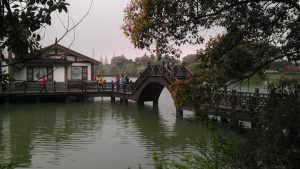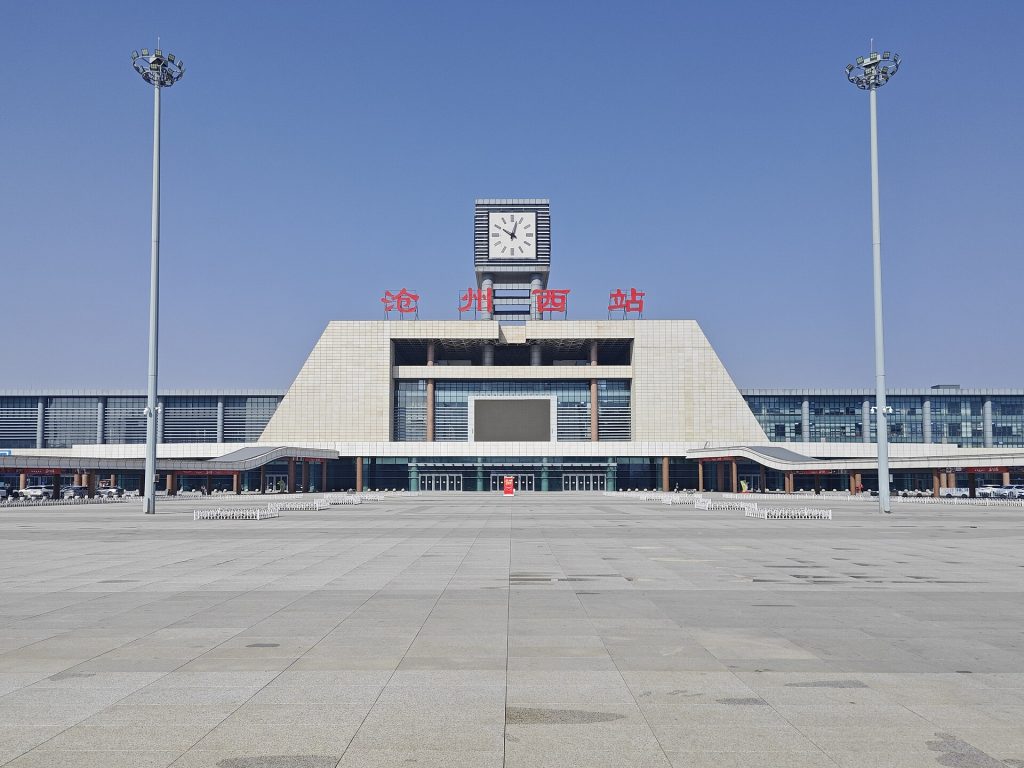
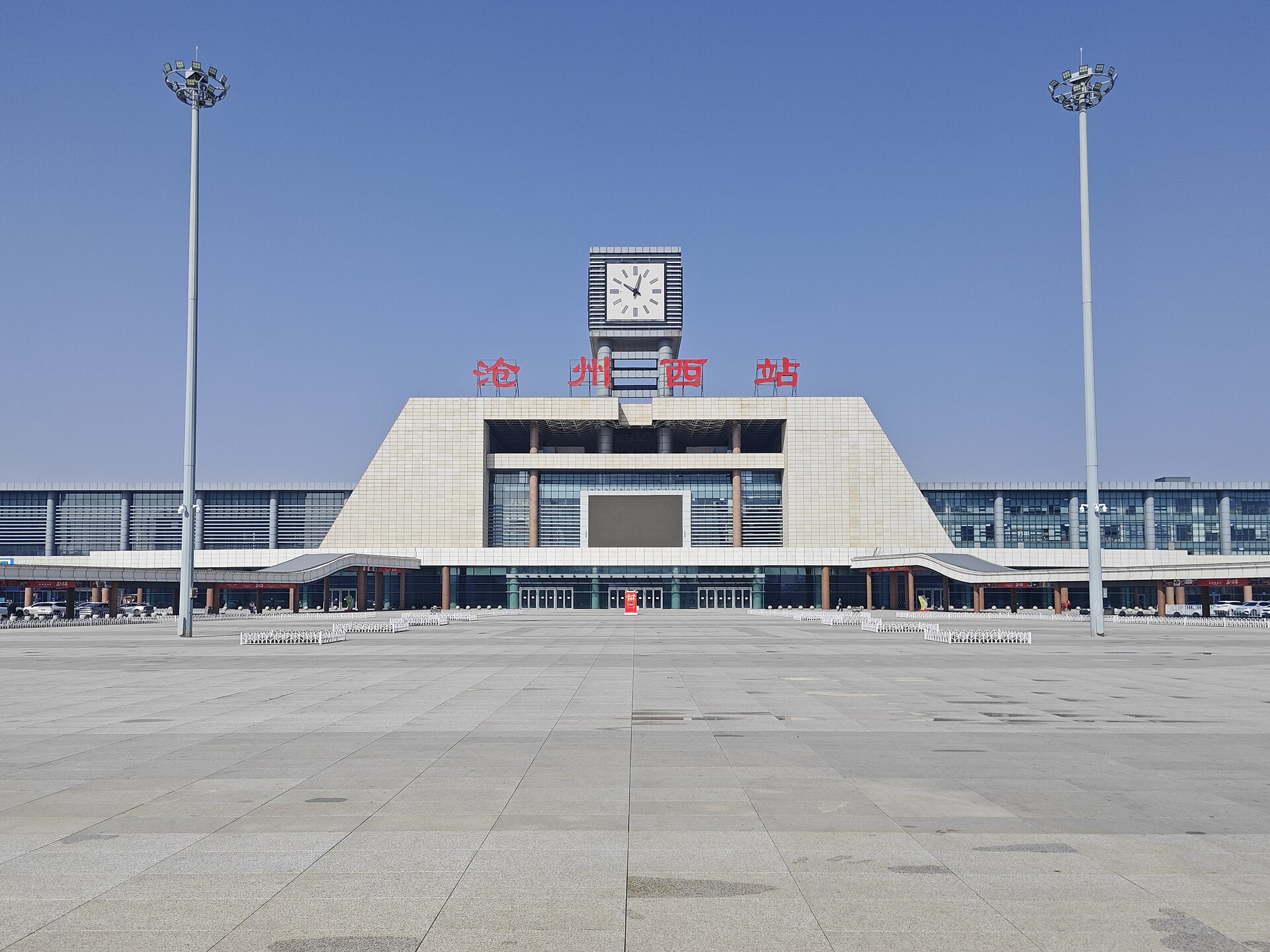
The train slows as it crosses the Grand Canal bridge, the water below thick with silt and the late-autumn light catching the willow branches that trail into the current. On the platform, a vendor lifts the lid of a steamer basket, and the scent of cumin-dusted lamb skewers rolls across the tracks. You step down onto Cangzhou soil with a backpack and a vague plan to see some martial arts, maybe catch an acrobatics show, and eat whatever the locals point to. The city does not announce itself with neon or skyscrapers; it reveals itself in the rhythm of the canal, the clang of iron rings in a courtyard gym, and the way a bowl of hand-pulled noodles arrives at your table before you’ve finished sitting down.
Finding Your Feet in the Canal City
Cangzhou sits on the flat plain between Beijing and Tianjin, a stretch of land where the Grand Canal has dictated the pace of life for centuries. The train station sits south of the old core, and the most useful landmark is the canal itself — follow the water north and you hit the historic streets; follow it south and you reach the newer university districts. Taxis are plentiful, but the drivers often speak only the local dialect. Have your destination written in characters on your phone. The public bus network is dense and cheap, though the route maps at stops are rarely in English. If you are staying more than two days, buy a rechargeable transit card at any convenience store near a major intersection; it saves the fumble for exact change.
Accommodation clusters around the railway station and the Wanda Plaza area. The former puts you closer to the canal parks and the martial arts museums; the latter offers newer hotels and easier access to the high-speed rail line if you are continuing to Jinan or Qingdao. Noise carries in the older lanes — early-morning vendors, late-night card games — so ask for a room facing the courtyard rather than the street if you sleep light.
Martial Arts: Watching, Learning, and Not Looking Like a Tourist
This is the city that produced more wushu styles than any other in China — bajiquan, piguaquan, liuhequan, and dozens more. The Cangzhou Martial Arts Museum, tucked beside the canal park, displays weapons, lineage charts, and grainy footage of masters from the last century. It takes an hour to walk through, but the real education happens in the training halls behind the main building. In the cool of early morning, you will see grey-haired coaches correcting the stance of teenagers, the snap of a spear thrust echoing off tiled walls.
If you want to try a class, do not walk into a random school expecting a drop-in session. Most legitimate places operate on a semester basis or require an introduction from a current student. Your best bet: ask your hotel front desk to call the Cangzhou Wushu Association. They sometimes arrange a two-hour “experience session” for visitors — basic stances, a simple fist form, and a demonstration by a coach. Wear loose trousers and flat-soled shoes. Leave the silk pajama suits at home; they mark you as someone who bought the costume before learning the posture.
- What to bring: water bottle, towel, socks with grip (the floors are polished concrete).
- Etiquette: bow to the coach on entering, address them as “Shifu” only if they invite you to, never step on the training weapons rack.
- Common mistake: filming the entire class. Ask permission first; some lineages consider their forms closed teaching.
Acrobatics in Wuqiao: The Show Behind the Curtain
Forty minutes by local bus southeast of the city center, Wuqiao County smells of popcorn and sawdust. The main theater is a Soviet-era concrete block, but inside, the troupe runs three shows daily during peak season. The acts — chair stacking, jar juggling, contortion on a single pole — are world-class, but the real privilege is the backstage tour if you can arrange it. A few theaters allow visitors to watch the warm-up: a seven-year-old folding herself into a chest, a teenager balancing a teetering tower of bowls on his forehead, the coach tapping a rhythm on a wooden block.
Tickets are sold at the door, but weekends sell out by noon. Buy the mid-row seats; the front rows get the spray from the water-spitting act, and the back rows lose the facial expressions that carry half the storytelling. Photography is officially banned during the performance, though ushers tolerate silent phones. Flash will get you ejected. After the show, linger near the stage door. Performers sometimes sign programs or pose for a quick photo if you approach respectfully and do not block their exit to the dormitory bus.
Eating: The Hui Table and the Canal Kitchen
Cangzhou has the largest Hui population in North China, and the food reflects it. Halal signs — green script on white — hang over noodle shops, lamb restaurants, and bakeries. The signature dish is lurou huoshao: a crisp, sesame-seeded flatbread split open and stuffed with braised donkey meat (or beef, if you ask) that has simmered since dawn in a broth of star anise, cassia bark, and dried tangerine peel. The meat should pull apart in shreds, the bread shatter at the first bite, the fat glisten without being greasy.
Ordering in a busy Hui restaurant works on rhythm. Find a table, grab the paper menu and a pencil from the metal holder, tick your quantities, hand it to the waiter who shouts the order to the kitchen. No small talk. Dishes arrive fast: cold cucumber smashed with garlic and vinegar; lamb ribs grilled over charcoal until the edges char; a bowl of hand-pulled noodles in clear broth with a single spoon of chili oil floating like a sunset. Eat the noodles first — they soften in seconds. Tear the flatbread by hand, dip it in the braising liquid, chase each bite with a sip of sour plum juice.
- Must-try dishes: lurou huoshao (braised meat in flatbread), yangrou paomo (lamb soup with torn bread), youmian wozi (oat noodles steamed in a honeycomb mold), sanzi (fried dough twists, best bought from a street cart at dusk).
- How to order: point to the picture menu, hold up fingers for portions, say “bu yao la” if you cannot handle spice — though the kitchen may ignore you.
- Home method for lurou huoshao: simmer 1 kg beef shank with 30 g star anise, 20 g cassia, 10 g dried tangerine peel, 50 ml dark soy, 30 g rock sugar, 2 L water for three hours. Cool in broth. Shred. Pan-fry store-bought huoshao until crisp. Stuff. Eat standing at the counter.
- Beginner mistakes: asking for a fork (tear the bread), ordering rice at a noodle shop (they will bring you a sad bowl of steamed grains), tipping (not expected, confuses the staff).
The Grand Canal Walk: Where History Meets Laundry
The Cangzhou section of the Grand Canal runs straight as a ruler through the city. The municipal government has paved a promenade along the western bank — wide enough for electric scooters, dotted with pavilions, and lit at night by red lanterns. In the early morning, the path belongs to retirees: a man practicing calligraphy with a water brush on the stone, a woman shaking out a quilt over the railing, a knot of card players slapping tiles on a folding table. By midday, the tour boats appear, loudspeakers crackling with recorded history. Skip the boat. Walk the ten kilometers from the Iron Lion of Cangzhou in the north to the canal culture park in the south. You will pass under stone arches where barge trackers once hauled grain, past a warehouse converted into a calligraphy gallery, and through a market where farmers sell winter cabbages from the back of tricycles.
The Iron Lion itself — cast in 953, pocked by centuries of weather and a few cannonballs — sits in a small plaza surrounded by snack stalls. Vendors sell sugar paintings: a dragon spun from molten maltose in thirty seconds, handed to you on a bamboo stick. It cracks before you finish the tail. That is the point.
Seasonal Rhythms and Unwritten Rules
Visit in the ninth lunar month, when the autumn wind off the Bohai Sea carries the scent of drying persimmons and the acrobatics festival fills Wuqiao with troupes from across the province. Spring brings the martial arts tournament — thousands of practitioners in matching tracksuits filling the stadium, the air thick with the liniment smell of dit da jow. Summer is brutal: thirty-five degrees, humidity you can chew, and the canal reeks of algae. Winter bites dry and cold; the canal freezes solid enough for locals to drive motorcycles across it, though the practice is officially forbidden.
Locals do not expect foreigners to speak dialect, but they notice effort. Learn three phrases: “zhe ge duoshao qian” (how much), “bu yao xiangcai” (no cilantro), and “xiexie” delivered with a slight nod. Do not point at people. Do not step over a training weapon left on the ground. If an elder offers you a sip of their tea, accept with both hands. The city runs on reciprocity — you watch their morning sword form, they let you photograph the lion statue without the “no photography” sign mattering. You eat their donkey sandwich with gusto, the vendor slips you an extra piece of crisp bread skin. That is the transaction. No contract, no receipt, just the weight of the flatbread warm in your palm.