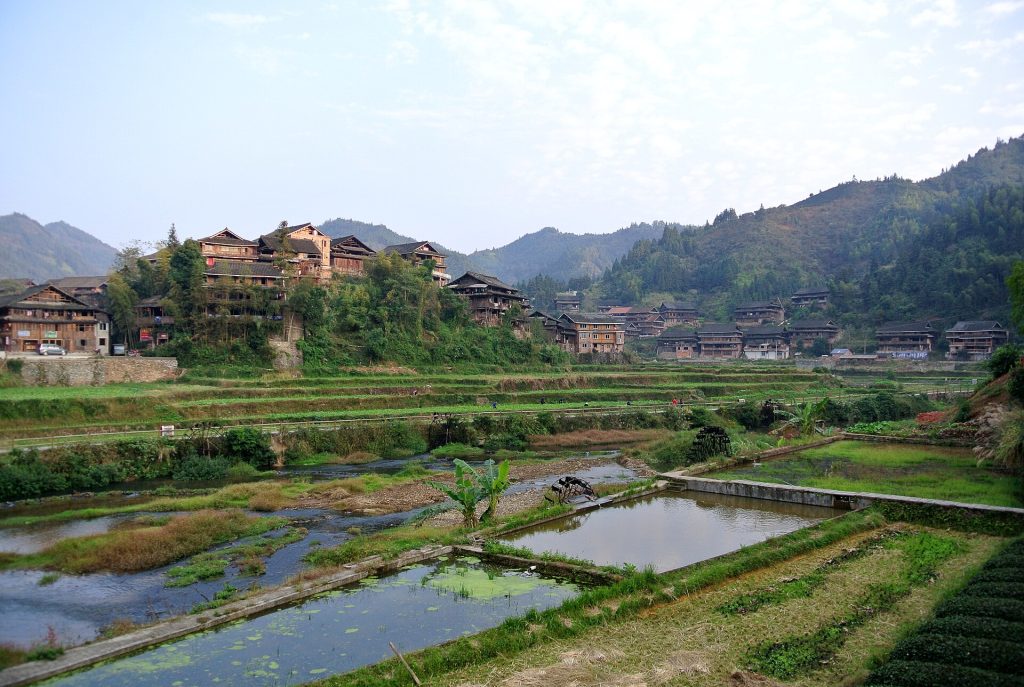
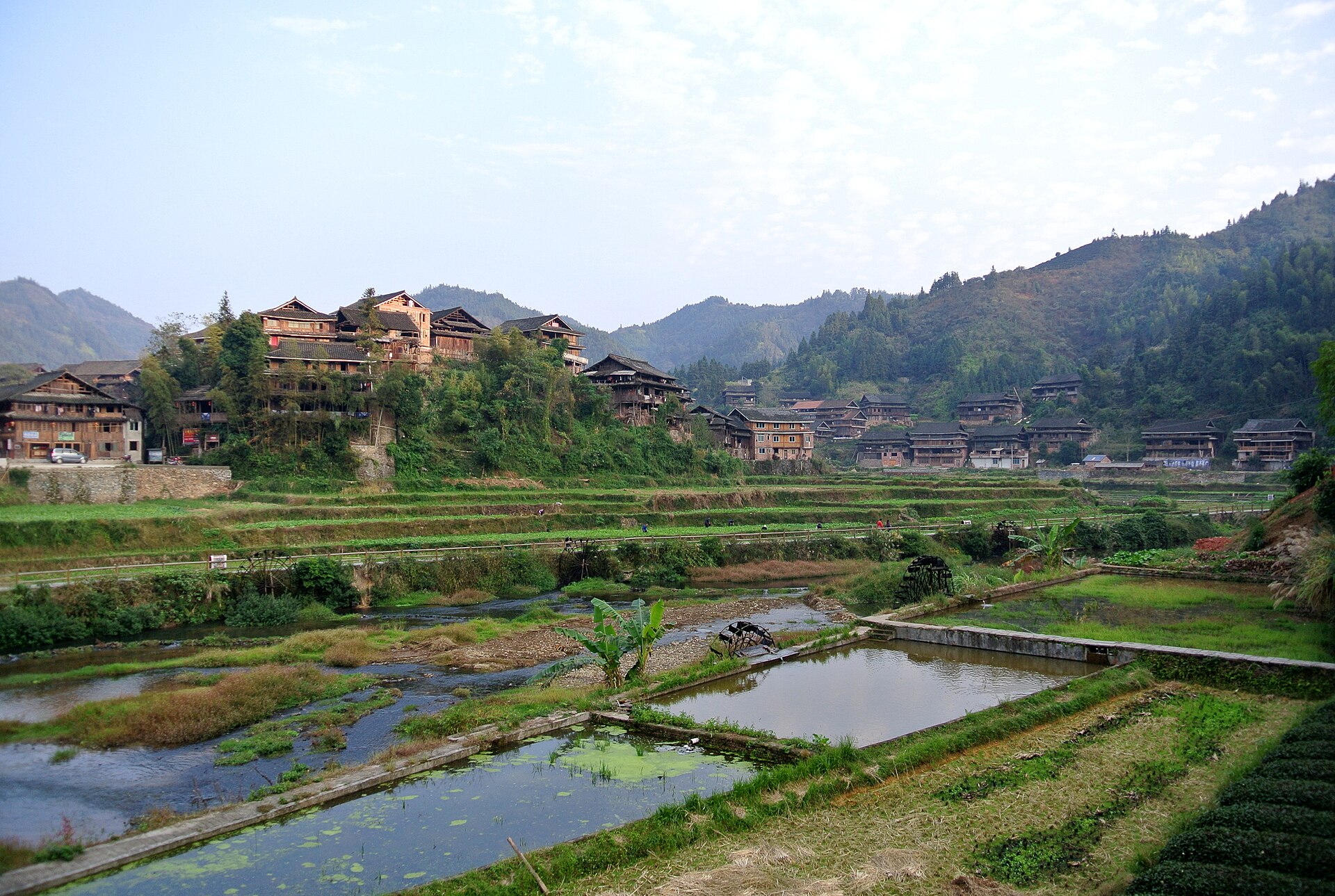
The wooden planks of Chengyang Bridge feel cool under bare feet even at noon. Mist clings to the tiled eaves, and the Linxi River slides past, the color of weak tea. A woman in indigo headscarf crosses with a bamboo basket of greens, her rubber sandals silent on the centuries‑old beams. No ticket booth, no turnstile — just the bridge, the water, and the eight Dong villages strung along the banks like beads on a cord.
Getting There and the First Steps
Most travelers arrive in Sanjiang County by bus or train, then catch a minibus from the station forecourt. The ride takes about thirty minutes on a two‑lane road that threads through rice paddies and tea bushes. Drivers honk at water buffalo more often than at cars. Ask for “Chengyang Fengyu Qiao” — the wind‑and‑rain bridge — and they will drop you at the stone archway where a handful of vendors sell fried tofu and plastic rain ponchos. If you come on a weekend in the harvest moon season, the minibus fills fast; leave before the rooster crows to claim a seat.
- Sanjiang to Chengyang minibus: departs every 20 minutes from the lot beside the train station.
- Shared taxi: negotiable, usually leaves when four passengers gather.
- Bicycle rental in Sanjiang: 30 yuan a day, paved shoulders most of the way.
Walking the Bridge and the Drum Towers
The bridge itself is a corridor of timber and tile, 64 meters long and three stories high. Inside, the air smells of camphor wood and woodsmoke. Benches line the sides; elders sit cracking sunflower seeds, spitting shells into the river through gaps in the floor. Climb the narrow stair to the second level — your thighs will burn — and you can see the whole valley: terraced paddies stepping up the hills, the eight drum towers rising like lighthouses in a green sea. Each tower belongs to a village clan. The one in Ma’an has a bronze drum the size of a washbasin; on festival evenings the boom rolls across the water and shakes the rice stalks.
- Enter the bridge from the north bank; the south stair is steeper and slick after rain.
- Drum towers are unlocked during daylight; slip off shoes before stepping onto the upper floors.
- Photography is welcome, but do not point a lens at the altar tablets inside the tower shrines.
Village Rhythm: Meals, Markets, and Mistakes
Life in Pingtan and Yanzhai moves by the sun. Breakfast is rice porridge with pickled radish and a bowl of sour fish soup — the broth sharp with fermented tomatoes and wild pepper. Lunch appears on a low table in a courtyard: glutinous rice steamed in bamboo tubes, stir‑fried river snails, and a plate of bitter greens blanched in lard. Dinner is communal. A family may invite you to share oil‑tea, a salty broth of puffed rice, peanuts, and chopped scallions sipped from wooden bowls. Refuse the first bowl politely; the host will insist, and the second bowl seals the welcome.
- Market day falls every fifth day on the lunar calendar; the square fills with indigo cloth, silver jewelry, and live carp.
- Carry small change — 1 and 5 yuan notes — for snacks and ferry crossings.
- Do not step on the threshold of a drum tower; locals consider it the spine of the building.
- Never point chopsticks at the bronze drum; it is a sacred object, not a decoration.
Escaping the Crowds: Trails and Waterways
By mid‑morning the bridge and the three main villages thicken with tour groups waving flags. Walk ten minutes upstream along the paved footpath that hugs the river. The noise drops to birdcall and the slap of water on stone. A narrow bamboo raft waits at a muddy bank; the poleman charges a few yuan for a half‑hour drift past waterwheels still turning. Further on, a footbridge of woven rattan sways over a side stream — cross it and you reach Dazhai, where the only sound is a loom clacking in a courtyard house. Stay for tea brewed in a blackened clay pot; the host will not ask for money, but a packet of good tobacco or a bar of soap is remembered.
- Raft departure: look for the blue plastic barrel tied to a willow root.
- Rattan bridge: single file, hold the hand ropes, do not bounce.
- Trail to Dongzai village: 40 minutes uphill, shaded by camellia trees; bring water.
Staying the Night: Wood, Fire, and Quiet
Guesthouses are family rooms in stilt houses. You sleep on a hard mattress under a mosquito net, the floorboards creaking when the wind rises. The bathroom is a squat toilet and a bucket shower heated by a gas coil. Power cuts happen when the mountain storms roll in; hosts light candles and the conversation shifts to ghost stories and the old songs that tell how the bridge was built without a single nail. Wake before dawn. The mist hangs low, the river is glass, and the drum towers stand silent. That hour alone is worth the journey.
- Book through the Sanjiang tourist office or ask the minibus driver to call ahead.
- Bring a headlamp, a power bank, and a light sleeping bag liner for chill nights.
- Pay in cash at checkout; mobile signal is patchy inside the valley.
Seasonal Pulse and Practical Wisdom
Spring brings the planting festival: villagers in embroidered jackets parade a paper ox through the paddies, then feast on rice cakes dyed red with gardenia. Summer is hot and wet; leeches appear on the trails — tuck trousers into socks and carry salt. Autumn harvest paints the terraces gold; the air smells of drying rice and woodsmoke. Winter is quiet, sometimes frosty; the bridge eaves drip icicles, and the drum towers echo with the slow beat of a single drum calling the clan to the ancestral hall. Whenever you come, move slowly. Speak softly. Accept the bowl of oil‑tea. The bridge has stood a hundred winters; it will still be here when you leave.
- Best light for photography: early morning or late afternoon when the sun slants under the eaves.
- Carry a reusable water bottle; refill at the spring behind the Ma’an drum tower.
- Learn three Dong phrases: “Gaox” (hello), “Dox” (thank you), “Ngaix” (delicious).
- Respect the “no shoes” rule in every tower and household — leave them at the door.