The overnight train from Changsha shuddered to a halt just before dawn. Steam hissed from the couplers and the platform lights cut yellow cones through the mist. I dragged my pack down the metal stairs onto the concrete of Jishou Station, the air already thick with the scent of wet stone and chili oil from a noodle cart firing up for the first shift. There was no tourist desk, no English signage, just a knot of taxi drivers shouting destinations — Fenghuang, Dehang, Aizhai — and a row of plastic stools where locals slurped rice noodles before heading to work. This is how most people arrive in the prefecture capital: not as a destination, but as a threshold.
Getting There and Moving On
Jishou sits in a fold of the Wuling Mountains, roughly halfway between Changsha and the Guizhou border. The high‑speed line now slices through the limestone karst, dropping you at Jishou East in under three hours from the provincial capital. Older trains still pull into the central station, which is closer to the bus terminals and the old town lanes. From either station, the real journey begins on the highway network that fans out to the scenic zones.
- High‑speed rail to Jishou East — fastest link from Changsha, Guangzhou, or Wuhan.
- Conventional train to Jishou Station — cheaper, central, convenient for early buses.
- Long‑distance bus from Changsha West or Zhangjiajie — runs hourly, drops at the downtown terminal beside the river.
- Private driver or shared minivan — negotiated at the station forecourt; expect to pay per seat for Fenghuang (about 40 minutes) or Dehang (about 30 minutes).
Inside the city, public buses numbered 1 through 15 connect the university, the railway stations, and the Qianzhou New District government quarter. Taxis start at a flag‑fall of a few yuan and most rides across town stay under twenty. Didi works, but drivers often cancel short hops during peak student hours. If you plan multiple day trips, hiring a driver for the whole stay saves hours of waiting at bus depots.
Where to Sleep: River Noise vs. Highway Quiet
Accommodation clusters in two zones. The old town hugs the Wanrong River, where wooden stilt houses lean over the water and night markets stay alive until midnight. Guesthouses here occupy renovated Tujia courtyards; rooms are narrow, floors creak, and the call to prayer from the nearby mosque mingles with karaoke from the riverside bars. Light sleepers should ask for a rear courtyard room.
Qianzhou New District, across the bridge, feels like a different city — wide boulevards, chain hotels, and the prefecture government complex. Business hotels here have reliable hot water, elevators, and front‑desk staff who can read an English passport. Prices jump on weekends when university families visit. Book a week ahead for the spring festival or the October holiday; otherwise, walk‑ins usually find a bed.
- Old town courtyard guesthouse — character, river view, shared bathroom common.
- Mid‑range chain (Hanting, Jinjiang Inn) in Qianzhou — predictable standards, English check‑in.
- Budget youth hostel near Jishou University — dorm beds, communal kitchen, travel‑board for ride‑shares.
- Boutique hotel in a restored diaojiaolou (stilt house) — premium price, private balcony over the water.
Eating in the Capital: Rice Noodles, Sour Fish, and Late‑Night Skewers
Jishou does not serve tourists; it feeds students, officials, and factory workers. The breakfast queue at the alley stall behind the railway station forms at six. A bowl of rice noodles arrives in a cloud of pork‑bone broth, topped with pickled long beans, fried soybeans, cilantro, and a spoonful of chili oil that glows like amber. You customize heat with vinegar and garlic paste from communal jars. Eat fast — the next customer is already tapping the bowl.
Lunch leans toward sour fish hotpot (suan tang yu). A whole grass carp simmers in a broth soured with wild tomatoes, fermented chili, and mountain pepper. The meat falls off the bone, sweet against the lip‑puckering liquid. Locals dip steamed rice cakes into the pot, then chase it with a plate of stir‑fried cured pork and bamboo shoots. Dinner migrates to the night market on Renmin Road: lamb skewers dusted with cumin, grilled tofu skins brushed with garlic sauce, and sticky rice balls rolled in sesame and brown sugar.
- Breakfast rice noodles — pork broth, pickled beans, fried soybeans, chili oil, vinegar, garlic paste.
- Sour fish hotpot — grass carp, wild tomatoes, fermented chili, mountain pepper, rice cakes.
- Cured pork with bamboo shoots — smoked belly, fresh spring bamboo, dried chili, garlic.
- Night‑market skewers — lamb, tofu skin, gluten puffs, cumin, chili powder, sesame oil.
- Sticky rice balls — glutinous rice, brown sugar, roasted sesame, peanut powder.
Vegetarians should learn the phrase “bu yao rou” (no meat) and “bu yao yu” (no fish). Broth bases often contain dried shrimp or pork fat even in vegetable dishes. The university canteen near the west gate has a dedicated Buddhist counter — reliable, cheap, and open to the public.
Half‑Day in Town Before You Leave
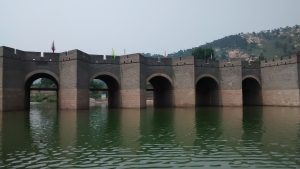
Most travelers give Jishou a few hours between connections. Walk the pedestrian stretch of Qianzhou Ancient Town, a reconstructed quarter beside the new district government offices. Stone arches frame a canal where paddle boats drift under willow branches. Shops sell Miao silver — heavy neck rings, horned headdresses, bell‑fringed bracelets — priced by weight. Bargain hard; the first quote is usually double the settled price.
Climb the hill behind the ancient town to the Confucius Temple. The courtyard holds a ginkgo that turns gold in late autumn. Incense curls from the brazier where students tuck red wish cards before exams. From the rear pavilion you see the whole valley: the river splitting the old and new districts, the railway viaduct stitching the mountains, and beyond, the hazy peaks that hide Dehang’s waterfalls.
If you have an extra morning, take bus 6 to the Xiangxi Prefecture Museum on the university campus. The bronze drums, batik panels, and shaman robes are labeled in Chinese only, but the visual density rewards slow looking. Allow ninety minutes. The cafe in the lobby serves passable coffee and a quiet place to plan the next leg.
Gateway Logistics: Fenghuang, Dehang, Aizhai
Jishou’s value is its spokes. Fenghuang Ancient Town draws the crowds — Ming‑era stilt houses, lantern‑lit canals, tour groups in matching hats. Buses leave the downtown terminal every twenty minutes from 6:30 am until 7 pm. The ride takes forty minutes; the last return bus departs Fenghuang at 6:30 pm. Stay overnight there if you want the lanterns without the day‑trip crush.
Dehang Grand Canyon sits thirty minutes south. Minivans queue at the south bus station; they leave when full. The scenic area operates a shuttle from the gate to the trailhead. Hike the plank road along the cliff face, then descend to the Miao village where women demonstrate batik in open courtyards. Bring water and snacks — vendors inside sell instant noodles at triple the outside price.
Aizhai Bridge, the suspension span that threads the expressway over a 300‑meter gorge, is a photo stop, not a day trip. Drivers pull over at the service area on the Zhangjiajie‑bound side. Walk the glass‑bottom observation deck if your stomach allows. The view is best in late afternoon when the sun lights the river far below. Return to Jishou before dark; mountain fog rolls in fast and the highway closes when visibility drops.
- Fenghuang — bus every 20 min, 40 min ride, last return 18:30.
- Dehang — minivan from south station, leaves when full, shuttle to trailhead.
- Aizhai Bridge — service area stop, glass deck, afternoon light best, leave before fog.
- Zhangjiajie — direct bus 2 hr, or high‑speed rail 45 min from Jishou East.
What Newcomers Get Wrong
Assuming English works. Hotel clerks in chain properties may manage check‑in, but taxi drivers, bus conductors, and market vendors rarely speak more than numbers. Install a translation app with offline Chinese packs and save screenshots of your destination names in characters.
Treating Jishou as a base for Fenghuang day trips only. The prefecture capital has its own rhythm — morning noodle steam, evening square dancing in the riverside plaza, the whistle of the night freight train echoing off the karst. Stay one night. Eat the sour fish. Watch the ginkgo leaves fall on the temple steps. Then catch the early bus to the canyon. You will leave with a taste of the place, not just a transit stamp.
Ignoring the lunar calendar. The Miao New Year (usually the tenth lunar month) and the Tujia Sheba Festival (around the first lunar month) flood the city with returnees. Buses sell out, prices double, and the night market expands into three streets. If your dates are flexible, avoid those weeks. If you land in them, embrace the chaos — you will see silver headdresses in the wild, not in a museum case.
Packing light for the mountains. The valley is humid and mild, but the canyon rim and the bridge deck sit 1,000 meters higher. A windproof layer and closed‑toe shoes with grip are not optional. I learned that the hard way, shivering in sandals on the Aizhai glass deck while the mist swallowed the gorge.