The minibus rattles west on Wenhua Road, the afternoon sun bleaching the poplar leaves to a pale green. To the left, the New Town spreads out in wide grids — concrete apartment blocks, a row of banks, a shopping mall with a faded blue awning. To the right, the street narrows. Mud-brick walls rise behind wooden gates. The smell shifts from diesel exhaust to woodsmoke and frying cumin. An old man in a doppa pushes a cart piled with golden nan bread, the flat rounds steaming against the burlap. This is the seam where Kuqa’s two halves meet, and the best way to understand the place is to keep walking west until the pavement turns to packed earth.
Arriving on the Southern Rim
Most travelers hit Kuqa by train. The station sits seven kilometers southeast of the New Town, a low concrete building where the platform empties into a parking lot of idling taxis and shared vans. Trains from Urumqi crawl through the night, twelve to eighteen hours of rhythmic clatter across the desert. From Kashgar the ride is shorter, nine to eleven hours, but the schedule is thin — often one departure a day. If you fly, Kuqa Qiuci Airport lands you southwest of the city; a taxi ride takes twenty minutes and costs whatever the driver asks, usually settled with a handful of cash and a nod. Long-distance buses pull into the station on the New Town’s southeast edge. The Korla run is reliable, four hours with five or six departures daily. The Kashgar bus is a different beast — twenty hours, no sleeper guaranteed, and you often wait at dawn for a passing coach to have an empty bunk. Locals heading south sometimes break the journey in Aksu, catching a second bus from there.
Moving Between the Two Towns
Wenhua Road is your spine. City buses numbered 1, 2, and 5 run its length every ten minutes, packed with students and market vendors. A ride costs one yuan, exact change dropped in the box by the driver. Taxis cluster near the train station and the Grand Bazaar entrance; a cross-town trip runs fifteen to twenty yuan if you insist on the meter, though most drivers prefer a flat fee negotiated through the window. I rented a battered electric scooter from a shop near the Id Kah Mosque — fifty yuan a day, helmet included, the battery good for a full loop to the caves and back. The Old Town’s alleys are too tight for cars; once you pass the mosque, you park and walk. Bring a scarf for the dust that rises from the unpaved lanes when the wind picks up in late afternoon.
Kizil Caves: Paint That Has Outlived Empires
Seventy kilometers west of the city, the Kizil Grottoes cut into a russet cliff above the Muzat River. The bus from the New Town’s west gate leaves at 9 a.m. and returns at 4 p.m.; buy the ticket at the small window beside the driver, not from the touts hovering at the station. Entry to the site is around eighty yuan, plus a mandatory shuttle from the gate to the cliff base. Inside, the air stays cool even in high summer. Cave 38 — the “Peacock Cave” — still holds a fragment of a dancer mid-spin, her sleeves frozen in pigment that has not faded to brown. Cave 17 shows a row of donors, their faces distinct enough to read individual expressions. Photography is banned; the guards carry flashlights and will tap your phone screen if you try. Allow three hours. Wear shoes you can slip off at the entrance to each chamber. The river below runs opaque with glacial silt — do not wade in, the current is faster than it looks.
Old Town Rhythms: Mosque, Market, and Mahalla
The Id Kah Mosque anchors the Old Town’s western edge. Friday midday prayer spills onto the square — men in embroidered vests, women in silk headscarves, children darting between the rows. Non-Muslims may enter the courtyard outside prayer times; remove shoes at the gate, keep shoulders covered, and speak in whispers. The bazaar fans out behind the mosque: stalls stacked with dried apricots, sacks of cumin seed, copper teapots hammered by hand. I watched a baker slap dough against the inner wall of a tandoor, the bread blistering in seconds, then pulled a hot nan from the pile and tore it open — steam curling, crust crackling, the inside soft as a pillow. Eat it standing there, dipped in yogurt thinned with cold water and a pinch of salt. The mahalla committees — neighborhood councils — still organize weddings and funerals; if you hear drumming from a courtyard at dusk, it’s a betrothal celebration. You are welcome to watch from the lane, but do not step inside the gate unless invited.
Subashi Ruins and the Desert Walk
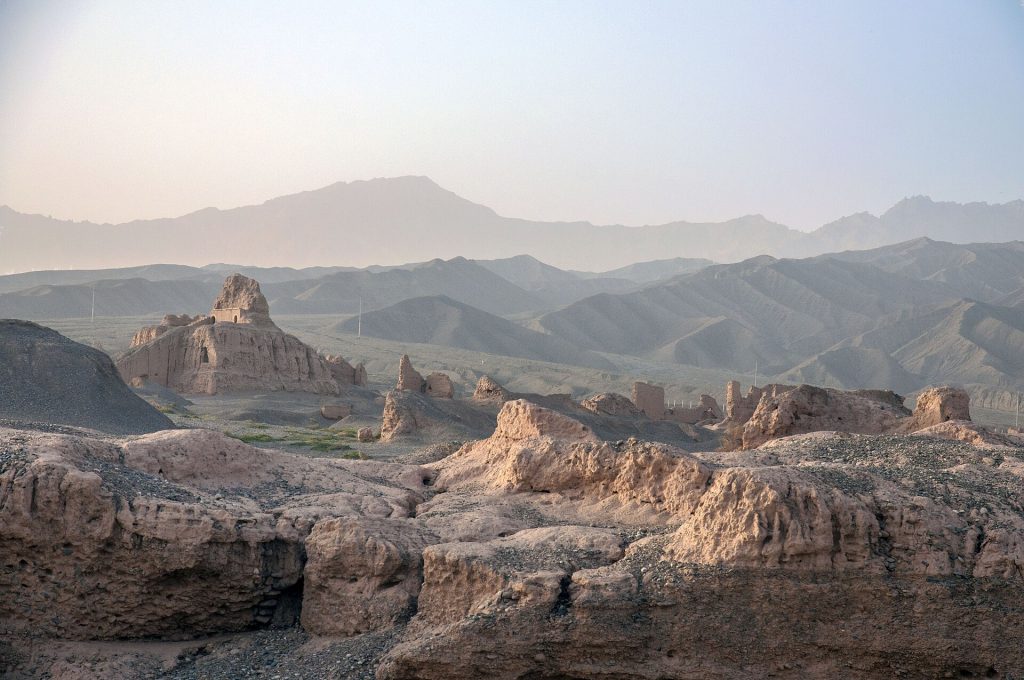
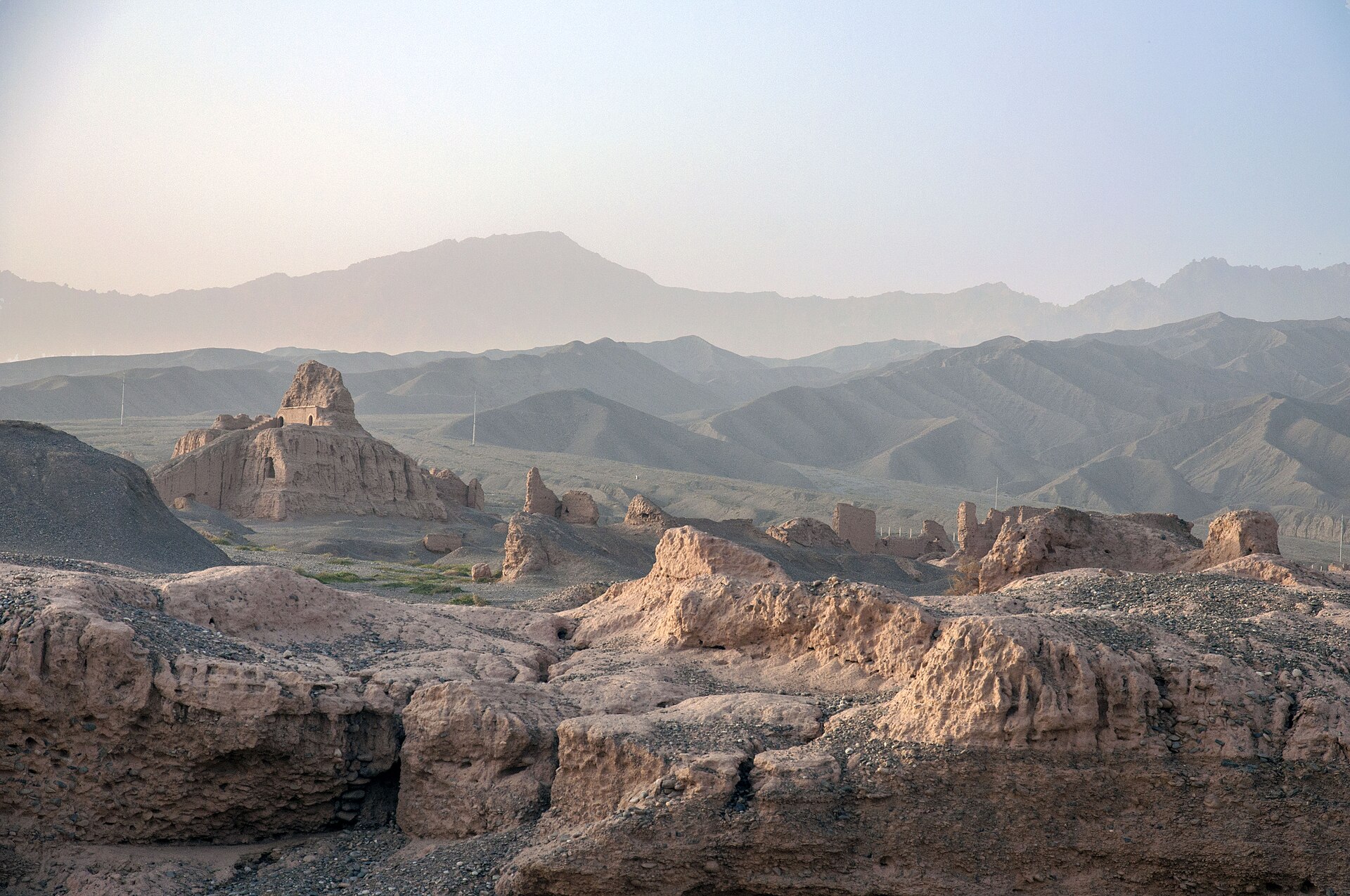
Twenty kilometers north, the Subashi Temple ruins sit on a wind-scraped terrace. The site splits into east and west monasteries, connected by a path that crosses a dry wash. Stupas stand as truncated cones, their mud bricks eroded to rounded shoulders. Fragments of stucco Buddha heads lie in the sand — guards tolerate you picking them up to examine, but they must stay on site. The best light is early morning, when the sun rakes low across the walls and the tour groups have not yet arrived. Bring two liters of water, a wide-brim hat, and a packet of electrolyte powder. There is no shade, no vendor, no toilet. The return taxi will wait if you agree on a price before you leave the city; expect one hundred fifty yuan round trip, including the driver’s wait time.
Eating Where the Locals Eat
Skip the hotel dining room. Follow the smoke to a courtyard restaurant behind the bazaar’s north gate. The menu is handwritten on a plastic board: laghman, polo, samsa, grilled lamb kidneys. Order by pointing.
- Laghman — hand-pulled noodles, thick as bootlaces, swimming in a broth of tomato, chili oil, and stewed beef. The noodles should snap when you lift them; if they droop, they were machine-cut.
- Polo — rice steamed with carrots cut into matchsticks, raisins, cumin, and chunks of lamb fat that melt into the grains. A proper version arrives in a wooden bowl, the rice mounded high, a whole garlic head buried in the center.
Home method for laghman broth: simmer beef shank with onion, ginger, star anise, and a stick of cinnamon for three hours. Strain. Stir in tomato paste, chili flakes, and a splash of black vinegar. Cook fresh noodles separately, drop into bowls, ladle broth over, top with julienned cucumber and cilantro. Restaurant mistake: asking for “less spicy.” The chili oil is the soul of the dish; without it the broth tastes flat. Another mistake: ordering samsa as a starter. They come piping hot from the tandoor, juice bursting at the first bite — eat them last, or the oil will coat your fingers and make the noodles slippery.
Seasonal Rhythms and Quiet Corners
Spring arrives with the apricot blossoms in the third lunar month — valleys north of the city turn white-pink, and families picnic under the trees with thermoses of milk tea. Summer heat peaks in the sixth month; the Old Town’s courtyards stay cooler than the New Town’s concrete, and the bazaar empties by noon, reviving only after sunset. Autumn, the ninth month, brings the grape harvest. Trucks piled with purple clusters clog Wenhua Road, and every courtyard lays out trays for raisins. Winter is silent. The Kizil Caves see maybe ten visitors a day. If you come then, the taxi driver will become your de facto guide, pointing out the herder’s stone shelters in the foothills and telling stories of the Silk Road caravans that once camped where you now stand. Listen. The stories are not in the guidebooks.



