The minibus from Dali had been climbing for six hours when the Nu River suddenly appeared, a brown slash cutting between steep green walls. We dropped into the valley floor just before dusk, the air thick with diesel and wet stone. Liuku did not announce itself with a gate or a sign. It simply arrived: a ribbon of concrete and tile squeezed between the water and the mountain, neon already flickering on the bridge cables. I rolled my suitcase onto the riverside promenade, found a plastic stool at a barbecue stall, and ate skewers of pork belly and erkuai rice cakes while the current roared past. That first night set the tone. Liuku is not a place you come to see. It is a place you land in, catch your breath, and learn the rhythm of the valley before the road north swallows you whole.
Getting There: The Only Way In
There is no airport. There is no high-speed rail. The Nujiang Valley swallows transport plans whole, so every route into Liuku involves wheels on asphalt and a driver who knows the corners. Most foreigners arrive from Dali or Kunming. The Dali run takes six to seven hours on the G56 expressway, crossing the Lancang River at Yongping before tunneling into the Nujiang prefecture. Buses leave Dali’s Xiaguan station every morning; the last one usually departs around 2 p.m. From Kunming, the overnight sleeper pulls out of the West Bus Station after 7 p.m. and deposits you in Liuku before breakfast. If you are coming from the north — Gongshan or Bingzhongluo — you are backtracking. The road dead-ends at the Tibetan border, so every northbound traveler passes through Liuku twice. Buy your onward ticket the moment you arrive. The ticket window is a glass booth behind the Mingzheng Hotel, not the main bus station out on the ring road. A taxi from the center to that station costs twenty yuan on the meter; agree on the price before the door shuts.
- Dali to Liuku: day bus, 6–7 hours, leaves Xiaguan morning to early afternoon.
- Kunming to Liuku: overnight sleeper, departs ~7 p.m., arrives ~7 a.m.
- Gongshan to Liuku: day bus, 5–6 hours, leaves Gongshan early morning.
- Ticket office: small shop behind Mingzheng Hotel, cash only.
- Main bus station: 3 km south of the river bridge, taxi ¥20.
Moving Around: Feet, Wheels, and the Bridge
Liuku stretches three kilometers along the left bank. The old core clusters around the suspension bridge; the new government district climbs the slope behind it. You can walk the entire waterfront in forty minutes. Taxis are green sedans, plentiful, and start at eight yuan. Most drivers know “Mingzheng Hotel” and “Bus Station” even if your Mandarin fails. There is no ride-hailing app that works reliably here. If you plan a day trip to the old stone village of Shizi or the hot springs at Luzhang, hire a driver for the day — two hundred to three hundred yuan gets you a car and a man who will wait while you soak. Motorbike taxis cluster near the bridge at night; they are faster but sketchy after rain. I walked everywhere. The hills are steep, but the alleys behind the main drag hide noodle shops and laundry steam that the boulevard never shows.
What to See: Neon, Noise, and a View Worth the Sweat
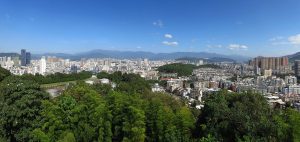
Do not expect temples or museums. The attraction is the valley itself. Start at the suspension bridge after dark. The cables glow blue and red, turning the brown river into a light show. Locals gather on the promenade: grandmothers dancing to a cracked speaker, teenagers on scooters doing slow circles, couples sharing beer from plastic bags. Walk upstream ten minutes to the foot of the hill where a concrete path climbs behind a row of karaoke bars. The stairs are lit by pink neon tubes. Fifteen minutes of breathing hard puts you on a ridge with the whole town spread below — bridge, bus station, the black slit of the river, the glow of Gongshan’s headlights far upstream. Come back down for grilled fish at the stall with the red awning. The owner guts the carp on a wooden block, stuffs it with cilantro, garlic, and fermented bean paste, then clamps it over charcoal. Skin crisps, flesh stays sweet. Eat with your fingers. That is the Liuku highlight reel.
- Suspension bridge at night: light show, street life, free.
- Neon stair path: starts behind karaoke row, 15 min climb, panoramic view.
- Riverside promenade: dancing, beer, people-watching, best 8–10 p.m.
- Grilled whole carp: red-awning stall upstream of bridge, ¥40–60.
Eating and Drinking: River Fish, Rice Cakes, and Loud KTV
Food in Liuku leans salty, sour, and spicy — Nujiang flavors with a heavy hand of chili oil and vinegar. Breakfast is a bowl of rice noodles in pork broth, topped with pickled mustard greens and a spoon of chili paste. The best stall sits on the alley behind the post office; look for the blue plastic stools and a steamer the size of a bathtub. Lunch is often liangfen, cold mung-bean jelly cut into thick ribbons, drowned in garlic water, soy, and crushed peanuts. Dinner moves to the riverside. Order the “Nujiang set” if you see it: grilled fish, stir-fried wild greens (often fern shoots), erkuai cakes charred on the grill, and a clay pot of tomato-egg soup. Beer is Dali or Snow, served warm unless you demand “bing de.” The bars along the promenade are open-air, plastic tables, loud pop music. Karaoke boxes upstairs run until 2 a.m. If you want quiet, buy bottles at the convenience store near the bridge and drink on the stone steps watching the water.
- Breakfast rice noodles: alley behind post office, ¥8–12.
- Liangfen (cold jelly): market lane near old bridge, ¥10.
- Nujiang dinner set: grilled fish, wild greens, erkuai, tomato-egg soup, ¥80–120 for two.
- Beer: Dali or Snow, ask for “bing de” (cold), ¥5–8 a bottle.
- Late night: convenience store bottles on bridge steps, silent and free.
Sleeping: Clean Sheets, Thin Walls, River Sound
Liuku has no hostels and no boutique hotels. What it has are business hotels: tiled lobbies, card-key elevators, beds harder than the river rocks. The Mingzheng Hotel sits two blocks back from the bridge, convenient for the ticket shop. Rooms run 150 to 250 yuan, hot water reliable, Wi-Fi fast enough for video calls. The Jinjiang Inn clone near the bus station is newer, quieter, but a twenty-minute walk to the river action. A handful of family guesthouses hide in the alleys behind the market; they cost eighty yuan, share a bathroom, and the owner will feed you home-pickled chilies at breakfast. Book nothing in advance. Walk in, ask to see the room, check the mattress and the shower pressure. Pay cash. Keep the receipt — some places demand it at checkout. Earplugs matter. The walls transmit every cough, every KTV bass line, every truck downshifting on the bridge.
- Mingzheng Hotel: central, near ticket shop, ¥150–250.
- Jinjiang-style near bus station: newer, quieter, far from river.
- Family guesthouses: alleys behind market, ¥80, shared bath, cash only.
- Check: mattress firmness, hot water, Wi-Fi, receipt.
- Essential: earplugs.
Planning the Northward Push: Timing, Permits, and the Dead End
Liuku is the gatekeeper. North of here the road narrows, the checkpoints multiply, and the scenery sharpens into something that feels like another country. You need two things before you leave town: a seat on the Gongshan bus and a Tibet Travel Permit if you plan to continue past Bingzhongluo toward the border. The permit cannot be obtained in Liuku. Arrange it in Kunming, Dali, or Lhasa through a registered agency at least two weeks ahead. The bus to Gongshan leaves the main station at 7:30 a.m. and 12:30 p.m. Buy the ticket the afternoon before at the Mingzheng shop. The ride is five hours of switchbacks, landslide scars, and occasional rockfall delays. Pack water, snacks, and a plastic bag for motion sickness. Bingzhongluo is the turnaround point — the road stops at a military gate. You see the stone village, the Catholic church, the Nu women in indigo headscarves, then you ride the same bus back to Liuku. Do not try to hitch a truck further. The soldiers will turn you around and fine the driver. Spend your last night in Liuku eating grilled fish on the bridge steps. The river noise will follow you into the next valley.
- Gongshan bus: 7:30 a.m. and 12:30 p.m. from main station.
- Buy ticket day before at Mingzheng shop, cash, ID required.
- Tibet Travel Permit: arrange weeks ahead in Kunming/Dali/Lhasa, not in Liuku.
- Bingzhongluo: end of road, day trip only, return same bus.
- Pack: water, snacks, motion-sickness bag, passport, permit copy.
- No hitching past the gate — military checkpoint, fines, turnaround.
Mistakes Newcomers Make
They book a hotel online and find a locked door because the listing died two seasons ago. They arrive at the main bus station at 6 p.m. expecting a northbound bus — the last one left at noon. They skip the permit, reach the Bingzhongluo checkpoint, and lose a day arguing. They eat only at the tourist restaurant near the bridge and miss the alley noodles that cost half the price and taste twice as good. They hike the neon path in flip-flops, slip on the wet concrete, and spend the night in the county hospital. They assume the river is swimmable — it is not; the current pulls logs and livestock. They forget cash. The ticket shop, the guesthouses, the grilled fish stall — none take cards. And they rush. Liuku rewards the extra night. The second morning, you find the tofu pudding vendor who only works Tuesdays. You hear the old Lisu man singing into a crackly microphone at the karaoke box. You understand why the drivers stop here, smoke a cigarette, and stare at the water before climbing back into the mountains.
- Booking unseen hotels — walk in, inspect, pay cash.
- Missing the last northbound bus — leaves by early afternoon.
- No Tibet permit — checkpoint turns you back at Bingzhongluo.
- Eating only main-street restaurants — alleys have better, cheaper food.
- Hiking neon stairs in flip-flops — wet concrete is treacherous.
- Thinking the river is safe to swim — strong current, debris.
- Carrying only cards — cash economy everywhere.
- Rushing through — the second night reveals the real town.