The minibus shudders to a halt on a hairpin bend somewhere between the toll gate and the valley floor. Through the open door, a wall of white mist rolls up from the Beipan River, cold and smelling of wet limestone. The driver taps his watch — five minutes to stretch legs before the final descent into Shuicheng District. This is how Liupanshui introduces itself: no fanfare, just altitude and the promise that the heatwave cooking the rest of Guizhou cannot climb this high.
Getting there without losing a day
Fly into Yuezhao Airport if your schedule is tight. The terminal is small — two baggage carousels, a noodle stall, and a row of charging ports that are usually occupied. Flights from Chengdu, Chongqing, and Guangzhou land daily, but winter fog cancels more than a few. If your app shows a delay, walk to the taxi stand instead of waiting for the airport bus; the ride to downtown takes twenty minutes and costs roughly the same as a hotpot lunch.
The high‑speed rail station sits on the edge of Zhongshan District, a glass box surrounded by construction cranes. Trains from Guiyang arrive in just over an hour; from Kunming, three hours. Exit the station, ignore the touts holding “private car” signs, and follow the blue arrows to the public bus bay. Bus 101 runs every ten minutes to the city center and accepts the same transport card used on the metro in Guiyang. If you arrive after the last bus, the official taxi queue is fifty meters to the left — meter starts at eight yuan, and most drivers know the major hotels by name.
Long‑distance coaches still matter here. The main bus station near the old railway square dispatches sleeper buses to remote counties like Liuzhi and Panxian where trains don’t reach. Buy tickets at the window rather than online; the system rarely syncs with English apps. Seats in the front row behind the driver have the least sway on mountain switchbacks.
Moving around the Cool City
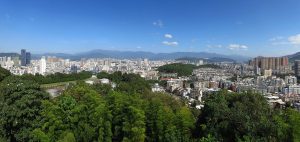
Downtown Liupanshui spreads along a narrow valley, so most attractions line up along two main arteries. Public buses are frequent, cheap, and color‑coded: green for cross‑district routes, blue for loops around the university and hospital zones. A single ride costs one yuan with a transport card, two yuan cash. Drivers announce stops only in Mandarin and the local dialect — ask a student to tap your shoulder when your stop appears.
Ride‑hailing apps work, but drivers often cancel if the destination involves a steep, unpaved access road. For places like Danxia Mountain or the Yushe National Forest Park, hire a local driver for the day. Negotiate a flat fee before you load luggage; three hundred yuan for eight hours is a fair baseline. The driver will wait while you hike, boil water in a thermos, and knows which parking lot lets you enter the scenic area without backtracking.
What to see when the mist lifts
Duge Bridge dominates the skyline long before you reach the viewing platform. The deck hangs five hundred sixty‑five meters above the Beipan River, a thin white line stitching Yunnan to Guizhou. Park at the service area on the Guizhou side, walk the pedestrian lane, and lean into the wind. The river below looks like a silver thread; eagles ride thermals at eye level. Stay until the sun drops behind the opposite cliff — the cables glow amber for ten minutes, then the valley swallows the light.
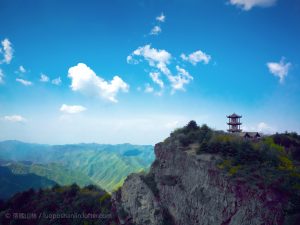
Danxia Mountain rewards patience. The trailhead sits behind a village where elderly women sell roasted corn from bamboo baskets. Follow the red‑painted arrows past a Taoist shrine, then climb stone steps carved during the Ming dynasty. Xu Xiake paused here to sketch the red sandstone towers; his notes hang on a plaque near the summit. The final ridge opens onto a basin of karst peaks floating in cloud. Bring water — no vendors above the halfway pavilion.
Yushe Forest Park feels like a different province. Broadleaf evergreens block the sun, and boardwalks cross streams that stay icy in July. Families picnic on blue tarps beside the reservoir; couples rent paddle boats shaped like swans. A narrow gauge railway loops the park — slow, rattling, and the best way to cover distance when your legs quit. The last train departs at five; miss it and you face a forty‑minute walk back to the main gate.
Eating where the locals queue
Liupanshui cuisine leans sour, spicy, and smoked — flavors built for altitude. The signature dish is yangrou fen: hand‑pulled rice noodles in a broth boiled with mutton bones, dried chili, fermented bean paste, and a spoonful of pickled radish. The meat falls apart when prodded with chopsticks; the noodles hold a slight chew. A proper bowl arrives scalding, topped with cilantro, scallion, and a drizzle of chili oil that floats like molten amber.
- Mutton bones — 1 kg, blanched and rinsed
- Rice noodles — 300 g, fresh or soaked until pliable
- Fermented bean paste (doubanjiang) — 2 tbsp
- Pickled radish — 50 g, sliced thin
- Dried chili flakes — 1 tbsp, adjust to heat tolerance
- Ginger, garlic, Sichuan peppercorns — aromatics for the broth
- Cilantro, scallion, chili oil — finishing garnish
- Simmer bones with ginger, garlic, and peppercorns for two hours; skim foam.
- Stir‑fry doubanjiang and chili flakes in oil until fragrant; pour into broth.
- Add pickled radish; season with salt and a splash of light soy.
- Blanch noodles ten seconds; divide into bowls.
- Ladle broth and mutton over noodles; garnish heavily.
In restaurants, order “yangrou fen da wan” for the large portion. Avoid places that pre‑cook noodles in water — they turn mushy. The best stalls slice mutton to order from a hanging carcass. If the broth is clear rather than milky, the bones weren’t boiled long enough. A side of cold tofu skin tossed with vinegar, garlic, and crushed peanuts cuts the richness.
Seasons, festivals, and the mistakes that cost time
Summer is the reason the nickname sticks. While Chongqing hits forty degrees, Liupanshui hovers around twenty‑five. Domestic tourists flood in during the sixth lunar month; hotel prices double, and the bridge viewing platform queues for an hour. Book a room near the railway station two weeks ahead if you must come then. Autumn, the ninth lunar month, is quieter. The forest park turns gold and crimson, and the morning mist burns off by nine, leaving crisp light for photography.
The Yi Torch Festival falls in the sixth lunar month. Villages around Liuzhi light pine torches, wrestle, and sing antiphonal songs around bonfires. Outsiders are welcome, but don’t point cameras at faces without a nod. Alcohol flows freely — decline politely with a hand over your cup; pressing a drink on a guest is respect, not pressure.
Common missteps: assuming English signage exists beyond the airport. It doesn’t. Download offline maps with Chinese labels. Skipping a windproof layer — the temperature drops ten degrees between the valley floor and the bridge deck. Paying the “guide” who materializes at Danxia’s gate; the official guides wear blue vests with ID badges and charge a posted rate. Finally, trying to squeeze Duge Bridge, Danxia, and Yushe into one day. Each deserves half a day minimum. The mountains dictate the pace; the sooner you accept that, the better the trip.