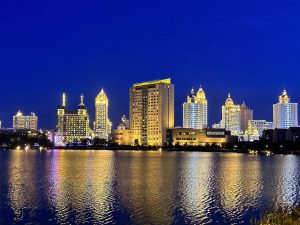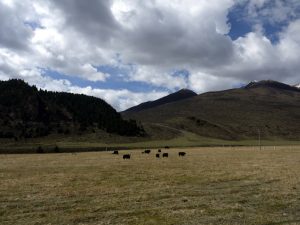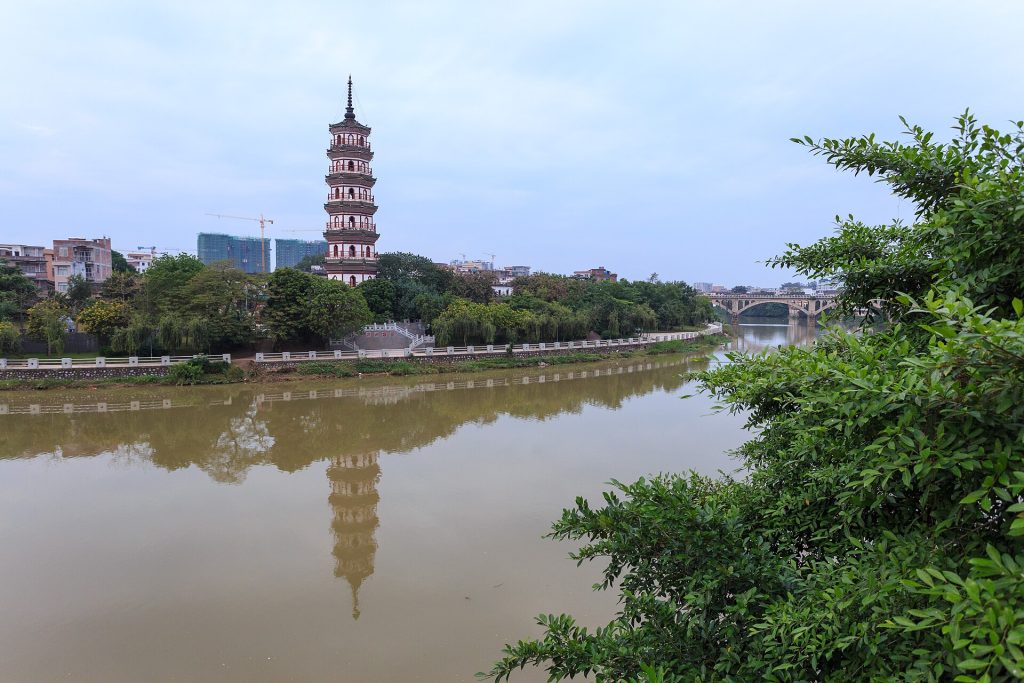
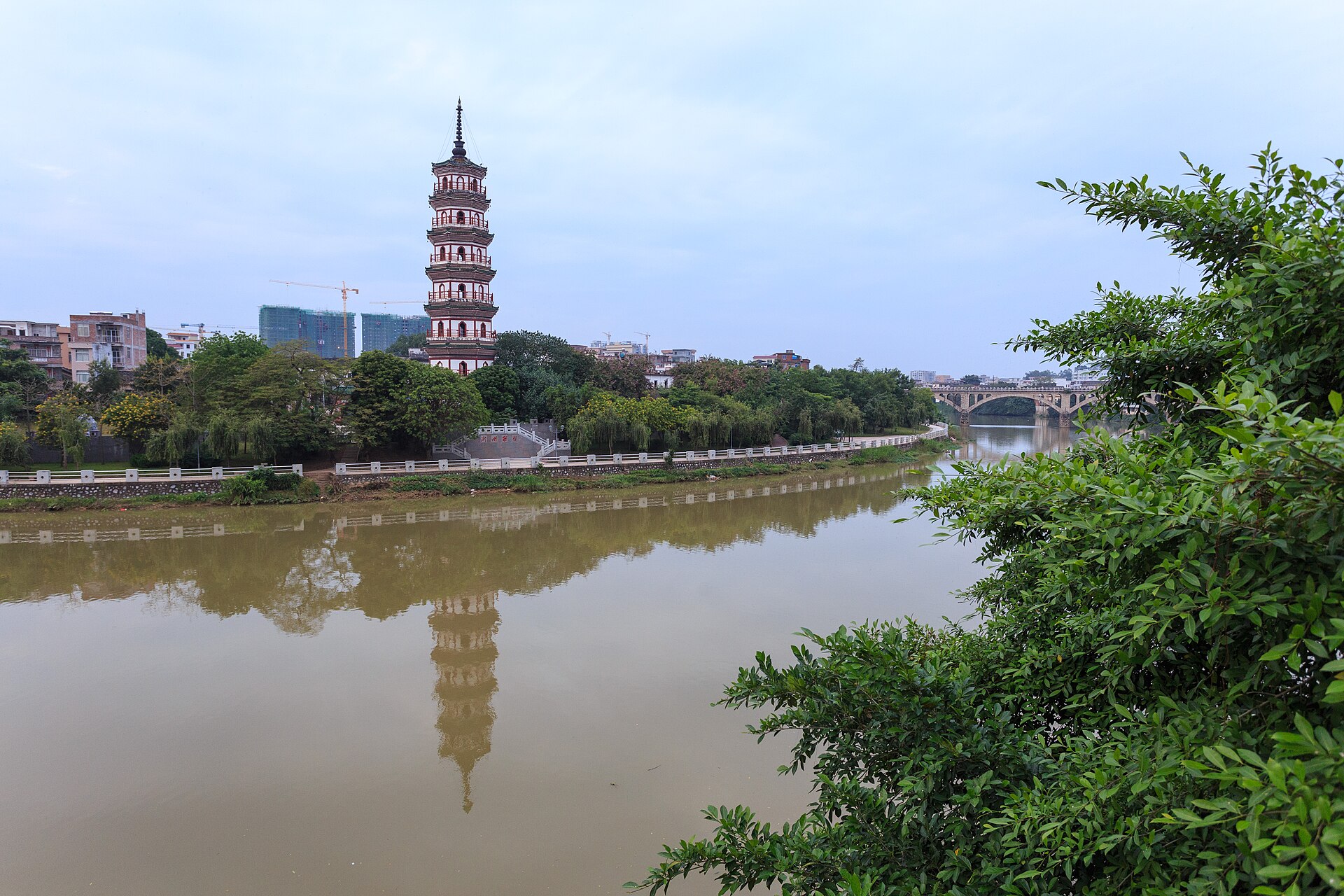
The minibus rattles over the last ridge before the valley floor drops away, and the Nanjiang River flashes below — wide, brown, and moving with the weight of last week’s rain. Ahead, the old town’s tiled roofs cluster around a stone bridge that has carried porters, soldiers, and now delivery scooters across the current for three centuries. I step off at the west gate where an auntie fans charcoal under a wok of rice noodles, steam curling into the morning air scented with fermented bean and river mud. This is Luoding: not a showcase, but a working river town where the past is still someone’s breakfast.
Getting There Without the Hassle
High-speed rail is the easiest entry. Trains from Guangzhou South terminate at Luoding East in just over an hour; the station sits in a new district of glass towers and parking lots, a twenty-minute ride from the historic core. Buses from Foshan and Zhaoqing pull into the old terminal on Jiefang Road, dropping you straight into the market lanes. If you drive, the G324 expressway cuts through karst hills and lychee orchards — watch for fog in the mountain passes after rain. Taxis cluster at the station forecourt; agree on a flat fare to the old town (usually thirty to forty yuan) before the meter starts. Shared electric bikes wait near the bridge, silent and convenient for the last kilometer.
Walking the River Spine
The Nanjiang curves through the city like a bent arm. Start at the west gate archway, its lintel carved with dragons that have lost noses to centuries of incense smoke. Follow the stone quay downstream: elderly men practice tai chi on the broad steps, their movements mirrored in the water. Half a kilometer on, the Dongshan Ancestral Temple rises behind a banyan canopy — its courtyard still hosts the spring temple fair when drum troupes pound the pavement and paper horses burn at midnight. Cross the arched bridge to the east bank where the former customs house now sells dried longan and vacuum-packed douchi. Allow two hours for the loop; the shade disappears by ten in summer, so carry water.
Eating What the River Gives
Luoding’s kitchen runs on fermentation and fire. The signature dish arrives in a clay pot: wrinkled gauze fish (juan sha yu), its flesh scored and steamed over pickled mustard greens, ginger threads, and a spoonful of the city’s black bean paste. The skin turns translucent, the meat flakes sweet against the salt. Order it at any riverside canteen — look for the blue plastic stools and a menu handwritten on red paper. For breakfast, hunt down a stall selling hegu glutinous rice: sticky grains mixed with cured pork, peanut, and a drizzle of soy, wrapped in banana leaf and steamed in bamboo tubes. Late afternoon brings takishu song vendors — not food, but the soundtrack — while you sip herbal tea cooled in a porcelain bowl.
- Wrinkled gauze fish: fresh grass carp, pickled mustard greens, ginger, Luoding douchi, rice wine, oil, salt.
- Steps: score fish diagonally; rub with wine and salt; layer greens in clay pot; nestle fish on top; scatter ginger and douchi; steam twelve minutes over high heat; finish with hot oil splash.
- Hegu glutinous rice: glutinous rice, cured pork belly, roasted peanuts, dried shrimp, soy sauce, banana leaves.
- Steps: soak rice two hours; dice pork and shrimp; stir-fry with peanuts and soy; mix with rice; pack into leaf-lined bamboo tubes; steam forty minutes.
Sleeping Where the Lanes Quiet Down
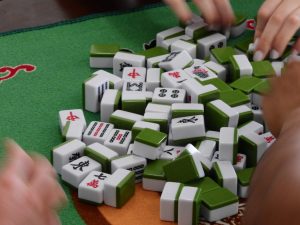
Chain hotels ring the high-speed station — clean, air-conditioned, and forgettable. For atmosphere, book a courtyard guesthouse in the old town’s north lane. Mine had a tiled roof, a koi pond, and a landlord who brewed pu-erh at dawn. Rooms face inward; the only night noise is the river and the occasional mahjong clack from the courtyard next door. Price runs two to three hundred yuan for a double with private bath. Book through a Chinese platform or call the owner directly; few list on international sites. Bring cash for the deposit — some still don’t take cards.
Festivals That Shut the Streets
The Dongshan Temple Fair falls on the third day of the third lunar month. By noon the bridge is impassable: shoulder-to-shoulder crowds, incense coils hanging from every eave, vendors selling sugar paintings on sticks. If you go, wear closed shoes — the pavement gets slick with melted wax and tea. The Dragon Boat Race in the fifth lunar month launches from the same quay; teams from surrounding villages practice for weeks. Spectators line the banks with stools and coolers. The smaller Hegu Rice Festival in early autumn celebrates the harvest with communal feasts in the village squares — outsiders are welcome if you follow the host’s lead: wait for the eldest to lift chopsticks first, leave a few grains in the bowl.
What Trips Up Newcomers
Assuming English works — it doesn’t, not even at the station. Carry a screenshot of your destination in characters. Treating the old town as a museum — it’s residential; laundry hangs across alleys, children do homework on doorsteps. Step aside for motorbikes; they own the lanes. Skipping the bean paste — Luoding douchi is the soul of local cooking; buy a vacuum brick at the customs house shop, not the supermarket near the station. Overpacking the day — the heat and humidity drain energy fast. Plan one main site per half-day, with tea breaks built in. Finally, leaving without crossing the river at sunset. The light turns the water gold, the bridge silhouettes, and the call to prayer from the mosque on the east bank mingles with temple bells. That moment is the town.