The minivan’s suspension groaned as we climbed the switchbacks above Gutian, tea bushes clinging to slopes so steep they looked pasted on. Below, the coast stretched toward Taiwan, a jagged line of bays and headlands that disappeared into afternoon haze. My driver, a man named Lao Chen who smelled of cigarette smoke and oolong, pointed at a white speck far out on the water. “That’s Sandu’ao,” he said. “Biggest naval base on the coast. But we’re going the other way.” He spun the wheel and we dropped toward the sea.
Getting oriented
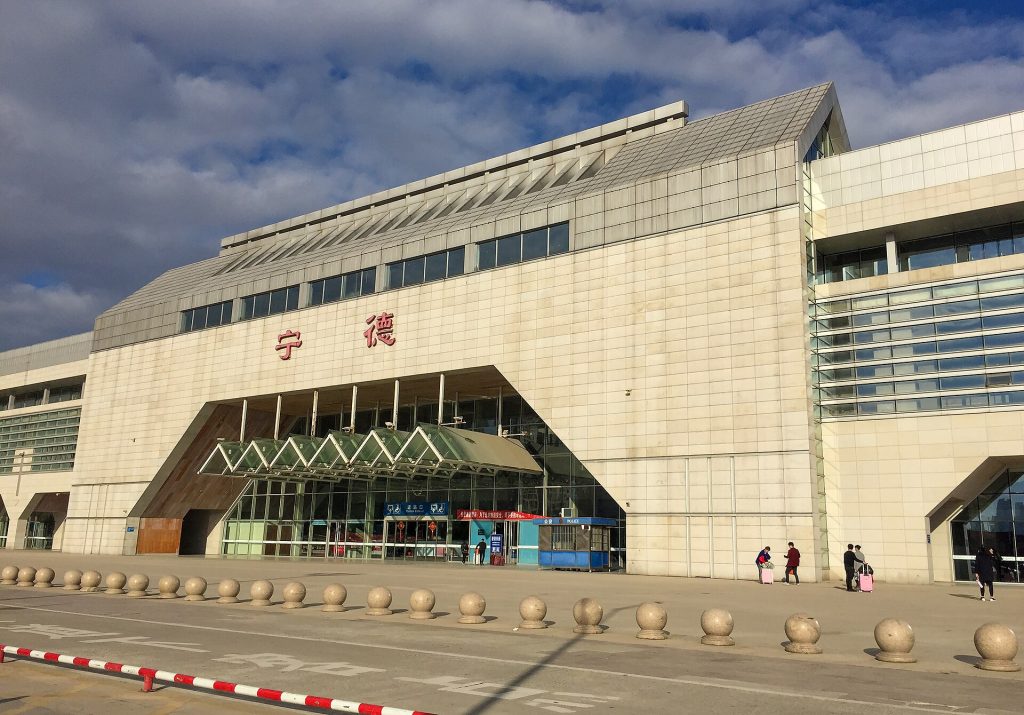
Ningde sits on Fujian’s northeastern shoulder, a prefecture-level city that administers one district and seven counties. Most travelers fly into Fuzhou Changle International Airport, then take a high-speed train forty minutes north to Ningde Station. From there, the map fans out: Xiapu’s tidal flats to the south, Fuding’s white-tea mountains to the north, the island chain of Sandu Bay straight east. Buses connect the county seats, but schedules thin out after sundown. I learned to hire a car for the first two days, then switch to local minibuses once I knew which villages were worth the walk.
Xiapu: where the mud meets the lens
Photographers arrive before dawn at Beiqi, tripods planted in the wet silt, waiting for the bamboo poles to catch the first light. The poles mark kelp farms, rows of them stretching to the horizon like lines of calligraphy. At low tide, women in wide-brimmed hats wade calf-deep, harvesting laver that will dry on bamboo mats behind their homes. The smell is brine, fermented bean paste, and diesel from the outboard motors.
- Stay in a family guesthouse at Beiqi or Xiaohu. Rooms are simple, tiled floors, shared bathroom, but the host will wake you at 4:30 a.m. and drive a motorbike to the best shooting platform.
- Bring rubber boots. The mud sucks at sneakers and the oyster shells hidden underneath draw blood.
- Check the lunar calendar. Spring tides around the full and new moons expose the widest flats and the cleanest reflections.
- Don’t fly a drone over the naval restricted zones near Sandu Bay. Coast guard boats appear fast.
I spent three mornings chasing light at Yangjiaxi, a narrower inlet where mangroves fringe the channels. The water there turns the color of weak tea at sunset, and the poles glow like amber. On the fourth day, a typhoon warning cleared the beaches. That was the morning I ate steamed mantis shrimp in a shed at the end of a pier, shells cracking under my thumbs, while the wind tore the tarp above us.
Fuding: white tea and the mountain that breathes
North of the city, the road climbs into the Taimu Mountains. Mist clings to the ridgelines even at noon. Fuding white tea grows here, the buds picked before they unfurl, withered under the sun until they smell like dried hay and melon. I visited a courtyard factory in Panshi Village where the owner, a woman in her sixties, spread the leaves on bamboo trays across the stone floor. She didn’t weigh them. She pinched a handful, smelled, nodded. “Today is good,” she said. “Yesterday was too damp.”
- Book a tasting at a registered tea farm, not a roadside shop. Ask to see the drying yard; if the trays are stacked indoors under fans, keep walking.
- Buy loose leaf in paper bags, not gift boxes. The boxes cost three times as much and the tea inside is often last year’s grade.
- Hike the Taimu Shan main trail early. By ten a.m. the tour buses from Ningde unload, and the stone steps turn into a queue.
- Carry a windbreaker. The temperature drops ten degrees between the parking lot and the summit shrine.
The mountain has a different rhythm at night. I stayed in a stone guesthouse near the Guanyin Temple, no heating, just thick quilts. At three a.m. the temple bell rang, once every minute, and the mist moved through the courtyard like something alive. The caretaker brought me a bowl of hot ginger tea without a word. That silence, broken only by the bell and the drip of condensation from the eaves, is why people come back.
Island hopping in Sandu Bay
Sandu Bay holds a string of islands, some inhabited, some just rock and pine. The ferry from Sansha Town runs on a loose schedule tied to the tide, not the clock. Dayu Island has a fishing village clinging to its leeward side, houses built from coral stone and ship timbers. The harbor smells of drying squid and gasoline. I walked the perimeter trail in two hours, passing a lighthouse, a banyan tree wider than my arms could reach, and a shrine to Mazu where fresh lychees sat on the altar.
- Buy tickets at the Sansha wharf ticket window, cash only. Boats leave when full, usually every ninety minutes.
- Pack lunch. Dayu has one noodle stall that closes at two p.m. Xiaoyu has nothing but a well and a goat.
- Wear shoes with grip. The coastal paths are wet rock and loose shale.
- Return on the second-to-last boat. The last one cancels if the wind picks up, and the guesthouses on the islands don’t take online bookings.
On Xiaoyu, I met a fisherman mending a net in the shade of his boat. He spoke no Mandarin, only the local dialect, but he handed me a grilled scallop on a bamboo skewer, still steaming. The meat was sweet, barely touched by fire. He laughed when I burned my fingers, then mimed fanning them. No words needed.
Beaches that don’t appear in brochures
Dongchong Beach, south of Xiapu, curves between two headlands. The sand is coarse, gray-white, and the water drops off fast. No jet skis, no banana boats. Just a row of pop-up tents where families from Fuzhou grill corn on charcoal braziers. I swam until the current tugged at my calves, then ate grilled oysters brushed with garlic and fermented black bean, served on a plastic stool.
- Go on a weekday. Weekends bring tour groups from the city and the parking lot fills by nine.
- Bring your own snorkel gear. The rental shop at the entrance rents fogged masks and cracked fins.
- Watch the flag system. Red means no swimming. The undertow here has pulled strong swimmers out past the buoys.
- Shower at the public block near the gate. The water runs cold, but it rinses the salt before the bus ride back.
Further north, near the Zhejiang border, lies Yushan Island. It’s a day trip from Fuding: speedboat forty minutes, then a hike across the spine to a crescent beach that faces the open ocean. The sand there sings when you walk on it, a dry squeak from the quartz grains. I camped one night with a group from Ningde University. We built a fire from driftwood, boiled tea in a dented aluminum pot, and watched the Milky Way rise over the water. No phone signal. No lights except the lighthouse beam sweeping the dark every twelve seconds.
What newcomers get wrong
They try to do Xiapu, Fuding, and the islands in three days. The distances look short on the map, but the mountain roads eat time. They book a hotel in Ningde city and drive out each morning, losing four hours round-trip. They show up at a tea farm without calling ahead and find the gate locked because the family is at a wedding. They wear white sneakers on the tidal flats and throw them away the next day. They ask for English menus in village restaurants and get blank stares. The dialect here isn’t Mandarin with an accent; it’s a different language.
Slow down. Pick two bases: one coastal, one mountain. Stay three nights in each. Learn to say “thank you” in the local tongue — “m̄-sī” in Eastern Min — and the old women at the market will slip an extra lychee into your bag. That’s the trip.