The minibus lurches around a hairpin bend on the G106, and the air conditioning finally catches up to the humidity clinging to my shirt. Through the window, the limestone peaks of Danxia rise like broken teeth against a pale sky, their red sandstone flanks streaked with green where banyan roots have found purchase. The driver honks at a water buffalo ambling along the shoulder, and the old woman beside me adjusts the bamboo basket on her lap, smiling without teeth. This is the approach to Shaoguan: not a grand arrival, but a slow immersion into a Guangdong that exists beyond the Pearl River Delta’s neon glow.
Getting There Without Losing a Morning
Most travelers land in Guangzhou and debate the train versus the bus. The high-speed rail from Guangzhou South to Shaoguan Station slices the journey to roughly an hour, depositing you in a modern glass hall where taxis queue in orderly lines. It is efficient, sterile, and costs about the price of a decent lunch. The conventional train from Guangzhou Station takes two and a half hours, rattling through county towns where vendors press steamed buns against the windows at every stop. I took the slow train once, winter solstice, and shared a hard seat with a crew of Yao women returning from market. They passed me pickled ginger and taught me to pronounce “thank you” in their language — yao yat — while the landscape shifted from factory sprawl to karst hills.
Buses leave from Guangzhou’s provincial station and Tianhe coach terminal throughout the day. The ride stretches past three hours when traffic thickens near Qingyuan, but the fare is half the bullet train. If you are carrying hiking gear for Danxia, the bus drops you closer to the park’s south gate than the train station does. Whichever you choose, have your destination written in characters: 韶关 for the city center, 丹霞山 for the mountain. Drivers rarely read pinyin.
Danxia Mountain: More Than a Day Trip
Danxia Mountain (丹霞山) gives its name to the entire geological category of red-bed landforms, but the UNESCO label does not prepare you for the scent of camphor and damp stone on the trail. The park sprawls across 290 square kilometers. Most day-trippers cluster around the cable car to Yangyuan Stone — the “Male Stone” — snapping photos of the phallic pillar and descending before lunch. Stay longer. The real walking begins where the tour groups thin out.
- Enter through the south gate (南门) at first light. The ticket booth opens at 7:00 AM; buy the through-ticket that includes the internal shuttle bus.
- Ride the shuttle to the Zhanglao Peak (张老峰) trailhead. The ascent takes ninety minutes on stone steps worn smooth by centuries of pilgrims. No guardrails on the final ridge — watch your footing when mist slicks the rock.
- Descend via the Jinjiang River plank road. The boardwalk clings to the cliff face above water the color of cold tea. Kingfishers dart through the gorge; I once watched a monkey troop raid a tourist’s backpack for mandarin oranges.
- If your knees hold, continue to Bazhai (八寨), the “Eight Villages” area. Abandoned Yao terraces climb the slopes, stone walls holding soil against gravity. Few foreigners reach this far. The silence is broken only by wind in the bamboo.
Wear trail shoes with grip. The red sandstone turns treacherous after rain, and the park’s plastic rain ponchos shred on the first thorny vine. Carry water — the mountain springs look clear but carry parasites. A thermos of chrysanthemum tea from a street vendor at the gate serves better than the overpriced bottles at the summit kiosk.
Where to Sleep: Hot Springs and Hostels
Shaoguan city center spreads along the Bei River (北江). The chain hotels near Shaoguan Station — Vienna, Jinjiang Inn, Atour — offer reliable showers and English-speaking front desks. They sit ten minutes by taxi from the train station and forty from Danxia’s south gate. Convenient, forgettable.
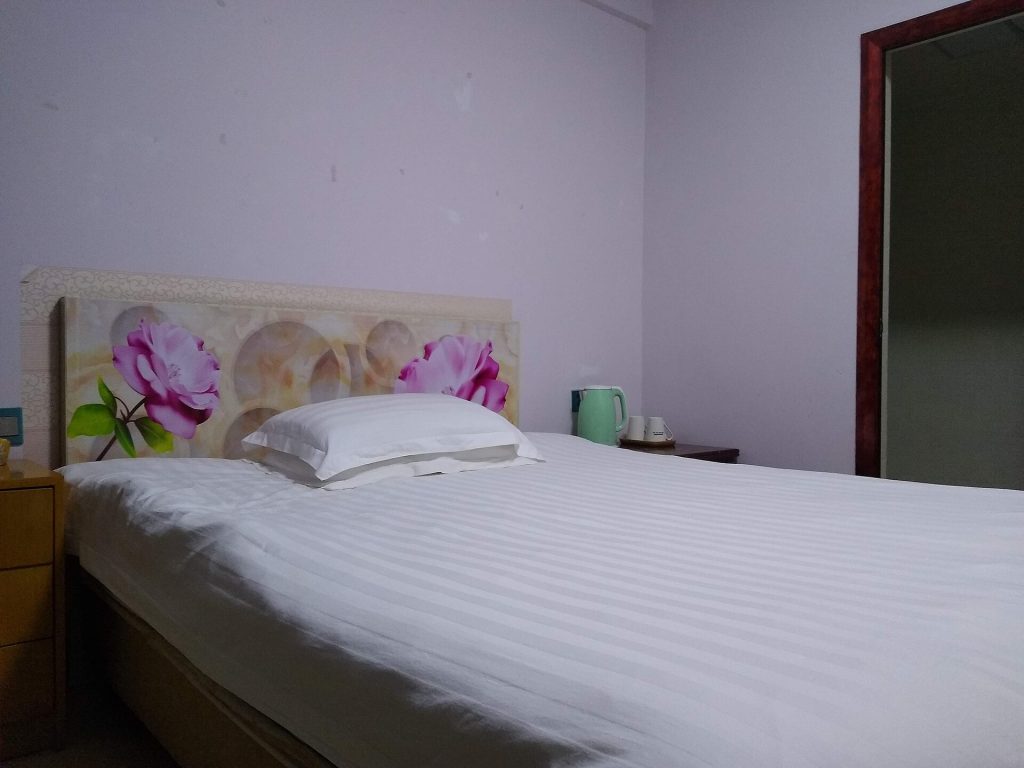
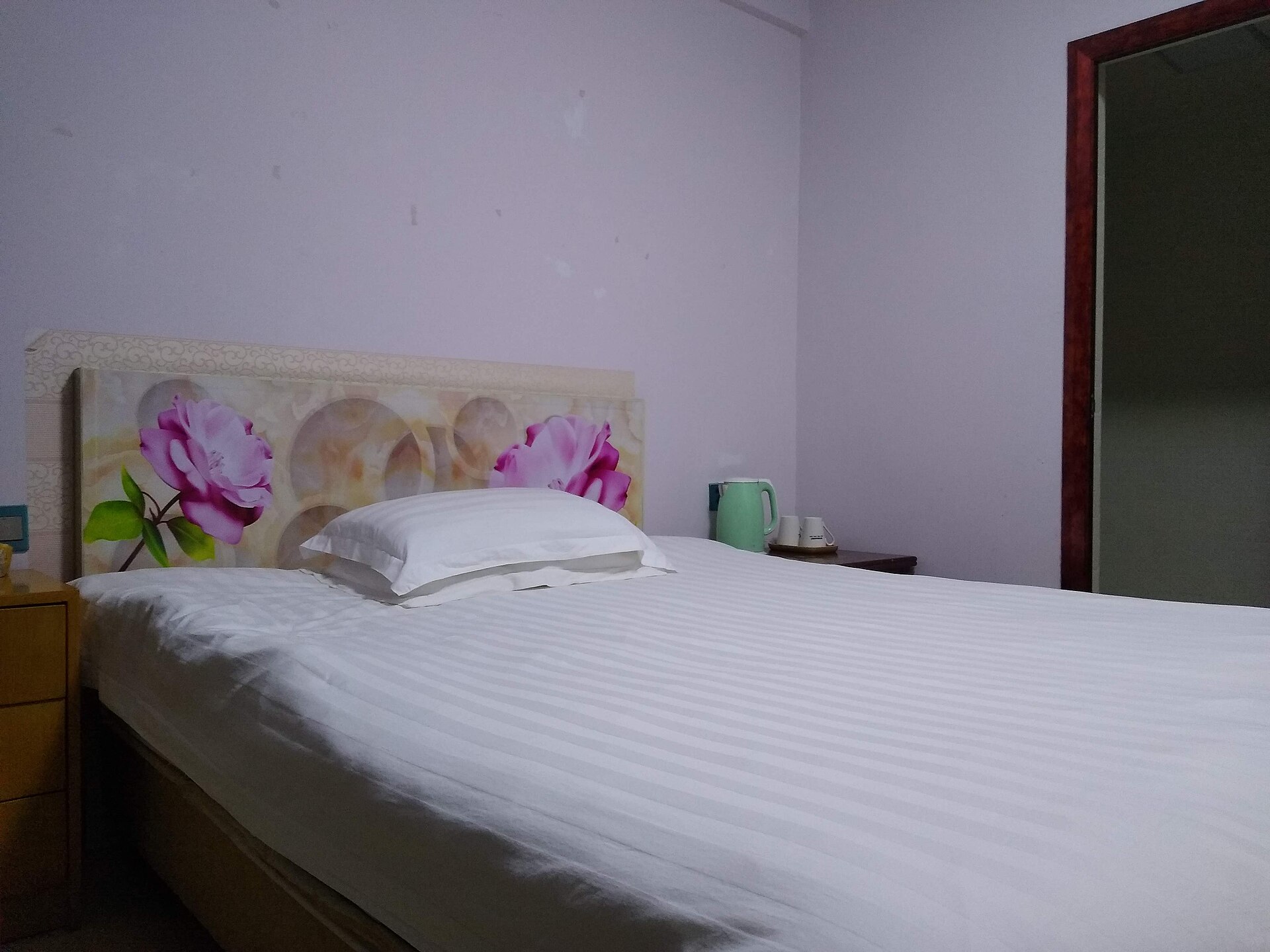
For atmosphere, stay in the hot spring villages at the mountain’s foot. Tangquan (汤泉) and Wenquan (温泉) are clusters of guesthouses built over geothermal vents. My room in a family-run courtyard house had a private soaking pool fed by a pipe disappearing into the hillside. The water smells of sulfur and minerals, 42°C straight from the rock. The host, a Hakka woman in her sixties, brought steamed taro and fermented bean curd at dawn. No menu, no bill until checkout. She spoke only Hakka and a few words of Mandarin; we communicated through gestures and a translation app that butchered both our languages. It remains the best night’s sleep I have had in Guangdong.
Book these places through Chinese platforms (Meituan, Ctrip) or call directly. Few list on international sites. Ask for “private hot spring pool” (私人温泉池) and confirm the water is natural spring, not heated tap water. Midweek in autumn, a courtyard room with pool runs ¥300–500. Weekends and holidays double. The Yao villages deeper in the mountains — Zhoutian (周田), Yanzhou (燕洲) — offer homestays in wooden stilt houses. No hot springs there, but you wake to roosters and the smell of woodsmoke.
Eating: Hakka Salt, Yao Sour, River Fresh
Shaoguan’s cuisine sits at a crossroads. Hakka salt-baked chicken (盐焗鸡) arrives with skin the color of amber, meat pulling clean from bone, scented with sand ginger and five-spice. The best version I found hides in a back-alley shop near the old bus station — no sign, just a cleaver chopping rhythm through the door. Order a whole bird, a plate of stir-fried bitter melon with fermented black beans, and a bowl of rice. Eat with your fingers.
Yao cuisine leans sour and spicy. Oil tea (油茶) is not tea at all but a slurry of pounded tea leaves, peanuts, sesame, and puffed rice, whisked with boiling water in a wooden bowl. You drink it with chopsticks, fishing out the solids. It wakes you better than coffee. Sour fish soup (酸鱼汤) uses river carp, pickled mustard greens, wild tomato, and a handful of herbs the Yao women gather from the forest floor. The broth turns milky white, sharp on the tongue, warming the chest.
- Salt-baked chicken: Whole chicken, coarse salt, sand ginger, star anise, cinnamon, Sichuan pepper. Bury in heated salt for forty minutes. Crack the crust at the table.
- Oil tea: Green tea leaves, raw peanuts, sesame seeds, puffed rice, garlic, ginger. Pound in stone mortar. Scald with boiling water. Drink hot.
- Sour fish soup: River carp, pickled mustard greens, wild tomato, perilla, pennywort, chili. Simmer twenty minutes. Do not boil hard.
- Stuffed tofu (酿豆腐): Firm tofu pockets, minced pork, dried shrimp, scallion, soy sauce. Pan-fry until golden, braise in broth.
Restaurants in the city center put pictures on menus. Point, nod, hold up fingers for quantity. In Yao villages, there is no menu. You eat what the household cooked that day. Accept the bowl offered. Refusing is an insult. I learned this the hard way when I hesitated at a dish of stir-fried bamboo shoots with dried chili — my host’s grandson fetched a second helping before I could protest.
Language: Three Tongues and a Fourth That Defies Classification
Mandarin works everywhere — hotel clerks, train staff, younger shopkeepers. Cantonese dominates the markets and taxi radios. But listen in the alleyways behind the Bei River bridges: Hakka flows in rapid, clipped syllables, preserving finals that Mandarin lost centuries ago. “Eat rice” is shik fan in Cantonese, sit fan in Hakka. The difference marks generations.
Then there is Shaozhou Tuhua (韶州土话), the “local speech” that linguists still argue over. It shares no mutual intelligibility with the big three. An old cobbler near the south gate spoke it to me — his vowels stretched, his tones flat where Mandarin rises. He understood my Mandarin but answered in Tuhua. His grandson translated: “He says your shoes are good for walking.” I wear those shoes still.
In Yao villages, the language shifts again. Yao (Mien) belongs to the Hmong-Mien family, unrelated to Chinese. A few words survive in my notebook: yao yat (thank you), meh (rice), za (eat). The Yao women selling embroidery at Danxia’s gate switch to Mandarin for prices, then revert to their own tongue for jokes I cannot catch. Learn yao yat. Say it when they hand you a cup of oil tea. Their faces change.
What Newcomers Get Wrong
They treat Shaoguan as a Danxia day trip from Guangzhou. They arrive at 10:00 AM, queue for the cable car, photograph the Male Stone, eat instant noodles at the summit restaurant, and catch the 4:00 PM train back. They never smell the sulfur rising from the hot springs at dusk. They never hear the Hakka mountain songs drifting from a riverside pavilion on a summer evening. They never sit on a wooden stool in a Yao kitchen, peeling garlic beside a grandmother who measures salt by the pinch.
They assume “minority culture” means performances on a stage. In Zhoutian village, the Yao women wear indigo headscarves and silver ornaments not for tourists but because that is what they wear. The embroidery on their collars records family history in stitches — a language without paper. Ask permission before photographing. Offer a small gift: cigarettes for the men, hair clips for the women, fruit for the children. Not money. Money creates distance.
They pack light for “southern China” and freeze in a mountain guesthouse when a cold front sweeps down from Hunan in the tenth lunar month. The humidity penetrates cotton. Bring a down jacket, merino layers, waterproof shell. The hot spring will heal the chill, but only after you have shivered through the night.
They expect English signage. Danxia’s main trails have bilingual markers. Beyond that, characters rule. Download offline maps. Save the characters for your destinations. Learn to recognize 厕所 (toilet), 出口 (exit), 入口 (entrance), 小心滑倒 (caution: wet floor). The last one appears exactly where you need it.
The minibus drops me at the guesthouse gate as the last light stains the sandstone red. The host’s grandson runs out, barefoot on the stone flags, shouting something in Hakka that sounds like laughter. Inside, the hot spring pool steams in the courtyard. A bowl of oil tea waits on the low table. Tomorrow I will walk the ridge to Bazhai before the tour buses arrive. Tonight, I soak.