The minibus shudders to a halt beside a lot of idling taxis, and the smell of chili oil and steamed rice drifts from a row of canteens across the road. Ahead, a broad stone plaza stretches toward a bronze figure that catches the morning light, one arm raised as if still addressing a crowd that has long since gone home. This is Shaoshan, a town of about one hundred thousand people tucked into the folds of central Hunan, where the main attraction is not a temple or a mountain but the childhood house of Mao Zedong.
Getting There from Changsha
The fastest way is the high‑speed train. Trains leave Changsha South roughly every hour from early morning until early evening, and the ride lasts twenty‑five minutes. When you step onto the platform at Shaoshan South, a fleet of green‑painted minibuses waits beside the forecourt; they run a loop to the Visitor Center for a few yuan and depart every ten minutes or so. If you prefer a private car, the expressway covers the distance in just over an hour, but parking near the main sites fills up quickly on weekends and holidays.
- High‑speed train: Changsha South → Shaoshan South, 25 minutes, hourly departures.
- Shuttle bus: station forecourt → Visitor Center, 5–10 minutes, frequent.
- Private car or taxi: about 1 hour via the Changsha–Shaoshan Expressway.
Core Sites and the Order to See Them
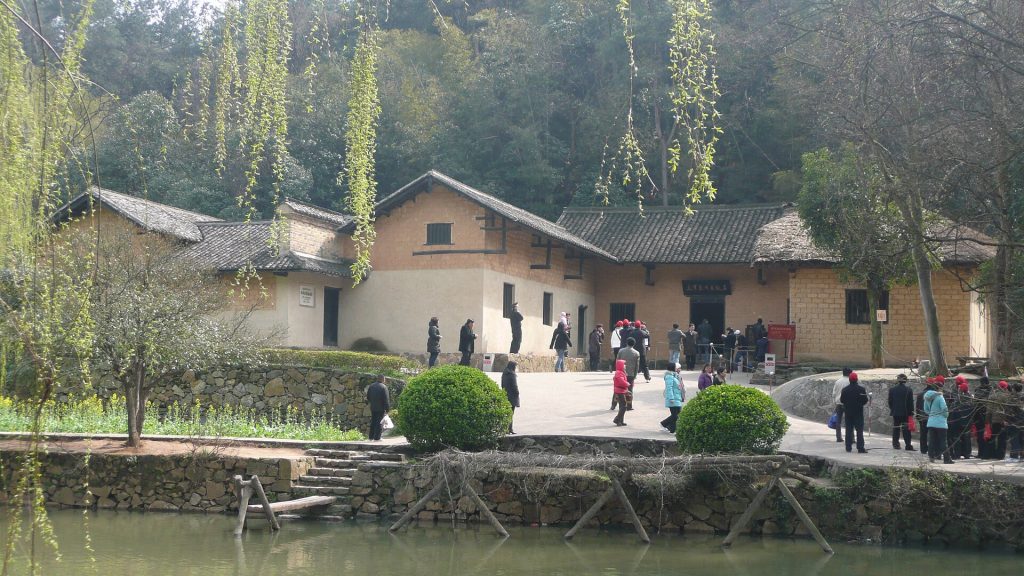
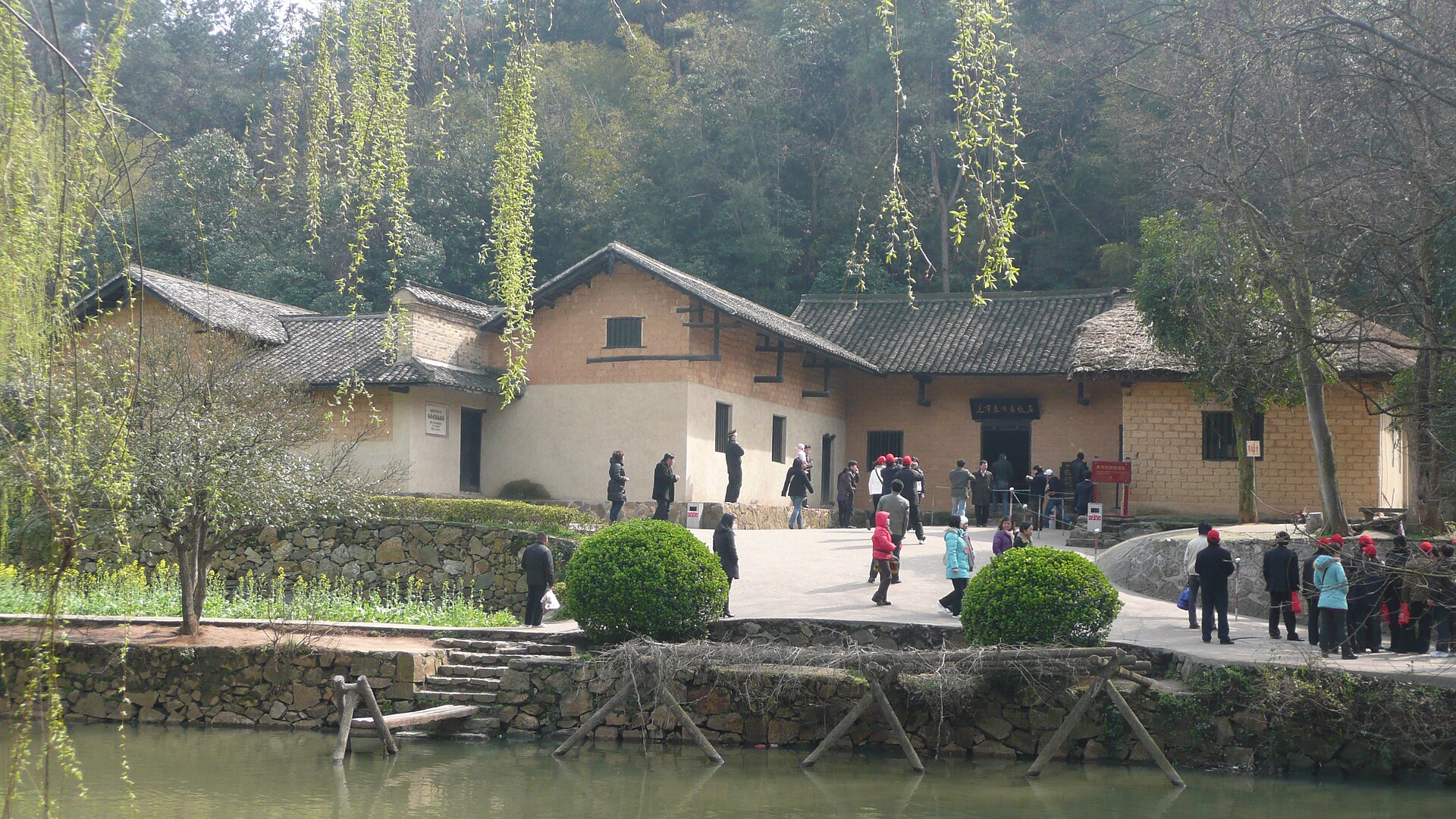
The Visitor Center issues a single ticket that covers the former residence, the exhibition hall, the ancestral hall, and the Water Dripping Cave. Start at the residence, a low compound of gray‑brick rooms arranged around a paved courtyard. The kitchen still holds the iron wok where Mao’s mother cooked, and the bedroom displays the wooden bed where he was born in the winter of the nineteenth year of the Guangxu reign. A short walk uphill brings you to the exhibition hall, where glass cases hold handwritten letters, a faded school satchel, and the straw sandals he wore on the Long March. Continue to the ancestral hall, where incense curls before tablets bearing the family name, then board the electric cart that climbs the valley to Water Dripping Cave — a concrete bunker disguised by bamboo groves where Mao stayed for a week in the summer of 1966.
- Former Residence: courtyard house, original furniture, birth‑room bed.
- Exhibition Hall: letters, school items, Long March sandals.
- Ancestral Hall: family tablets, active incense offerings.
- Water Dripping Cave: 1966 conference site, shaded valley walk.
What to Eat Before You Leave
Every canteen near the plaza serves the same handful of Hunan staples, but the one with a line of locals at noon is usually the best bet. Order a bowl of braised pork belly — dark, glossy, melting into the rice — and a plate of stir‑fried lotus root slices, crisp and slightly sweet. The chili here is fresh, not dried, so the heat builds slowly rather than striking at once. If you want something lighter, ask for the steamed fish head with chopped chili; the flesh pulls away in white flakes, and the broth is sharp enough to wake you for the return trip.
- Braised pork belly (红烧肉): soy‑braised until the fat turns translucent.
- Stir‑fried lotus root (炒藕片): quick‑fried, crunchy, touch of vinegar.
- Steamed fish head with chopped chili (剁椒鱼头): whole head, fermented chili topping.
- Rice: served in a wooden bucket, refillable.
Timing, Crowds, and Local Etiquette
The compound is quietest right after opening, when the morning mist still clings to the bamboo behind the ancestral hall. By mid‑morning tour groups arrive in matching caps, and the narrow corridors of the residence become a slow shuffle. If you visit during the Qingming season or the anniversary of Mao’s birth in the eleventh lunar month, expect queues that stretch back to the ticket gate; the town puts on evening performances and the plaza fills with people holding small red flags. Dress modestly — shoulders covered, no shorts — and speak low inside the exhibition hall. Photography is allowed in the courtyards but prohibited in the rooms where original documents hang under glass.
- Best quiet window: first hour after opening.
- Peak crowds: Qingming (early spring) and the eleventh lunar month.
- Dress code: covered shoulders, knees covered.
- Photos: courtyards yes, document rooms no.
Half‑Day Extras If You Have Time
After the main circuit, walk the stone path that circles the lotus pond behind the exhibition hall; old men practice calligraphy with water brushes on the paving stones, and the characters vanish in the sun. A kilometer further up the valley, a narrow trail leads to the former site of the Mao family’s private school — just a foundation and a few stone steps, but the view over the terraced fields shows why the family was considered wealthy in a rice‑growing valley. If you still have energy, hire a motorbike taxi at the plaza and ride to the Comrade Mao Zedong Memorial Garden, a landscaped hilltop with a giant stone inscription and fewer visitors. The driver will wait while you walk the loop and bring you back for the last shuttle to the station.
- Lotus pond calligraphy: morning only, water brushes provided.
- Old private‑school site: 1 km uphill, terrace views.
- Memorial Garden: hilltop, stone inscription, motorbike taxi recommended.
Common Mistakes First‑Timers Make
Assuming the train station is walking distance — it is not; the shuttle or a taxi is essential. Buying snacks from the vendors right at the gate; walk two blocks toward the market and the same sticky‑rice dumplings cost half as much and taste fresher. Skipping the ancestral hall because it looks like a duplicate of the residence; the tablets and the active incense tell a different story about family continuity. Finally, trying to cram the Water Dripping Cave into a two‑hour visit — the round‑trip cart ride plus the walk inside takes ninety minutes on its own. Budget at least four hours from the moment you leave the Visitor Center if you want to see everything without rushing.
- Walk from station: too far, take the shuttle.
- Gate snacks: overpriced, better two blocks in.
- Skip ancestral hall: misses family‑ritual context.
- Underestimate cave time: needs 90 minutes minimum.