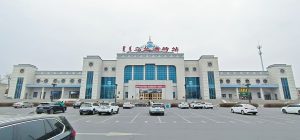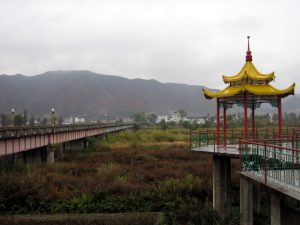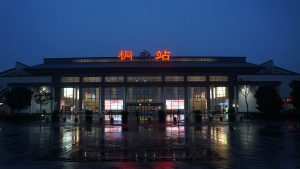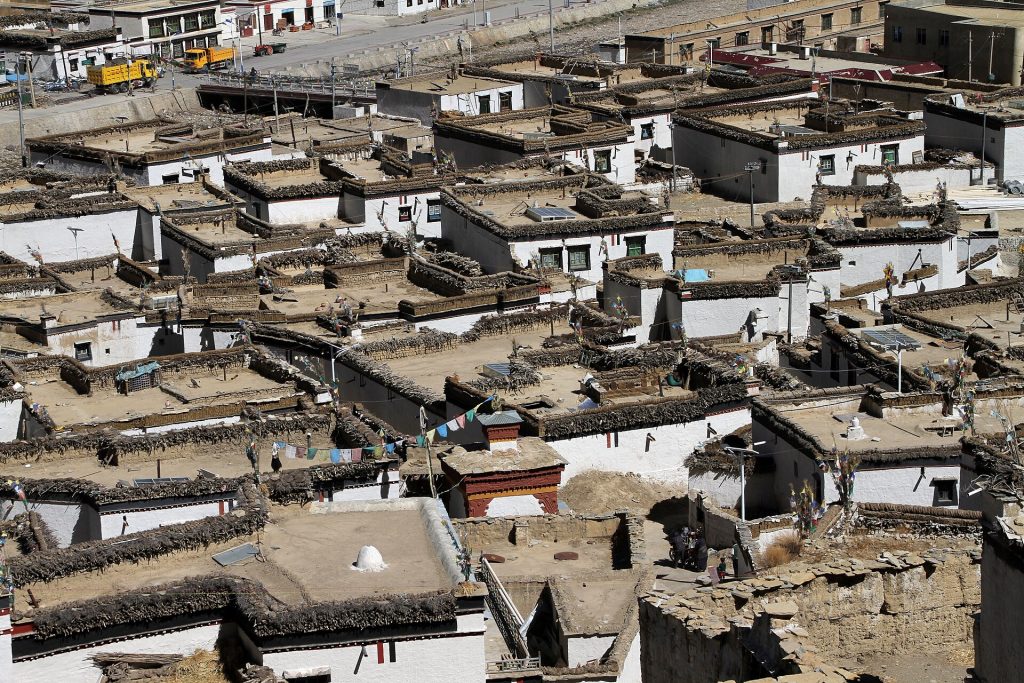
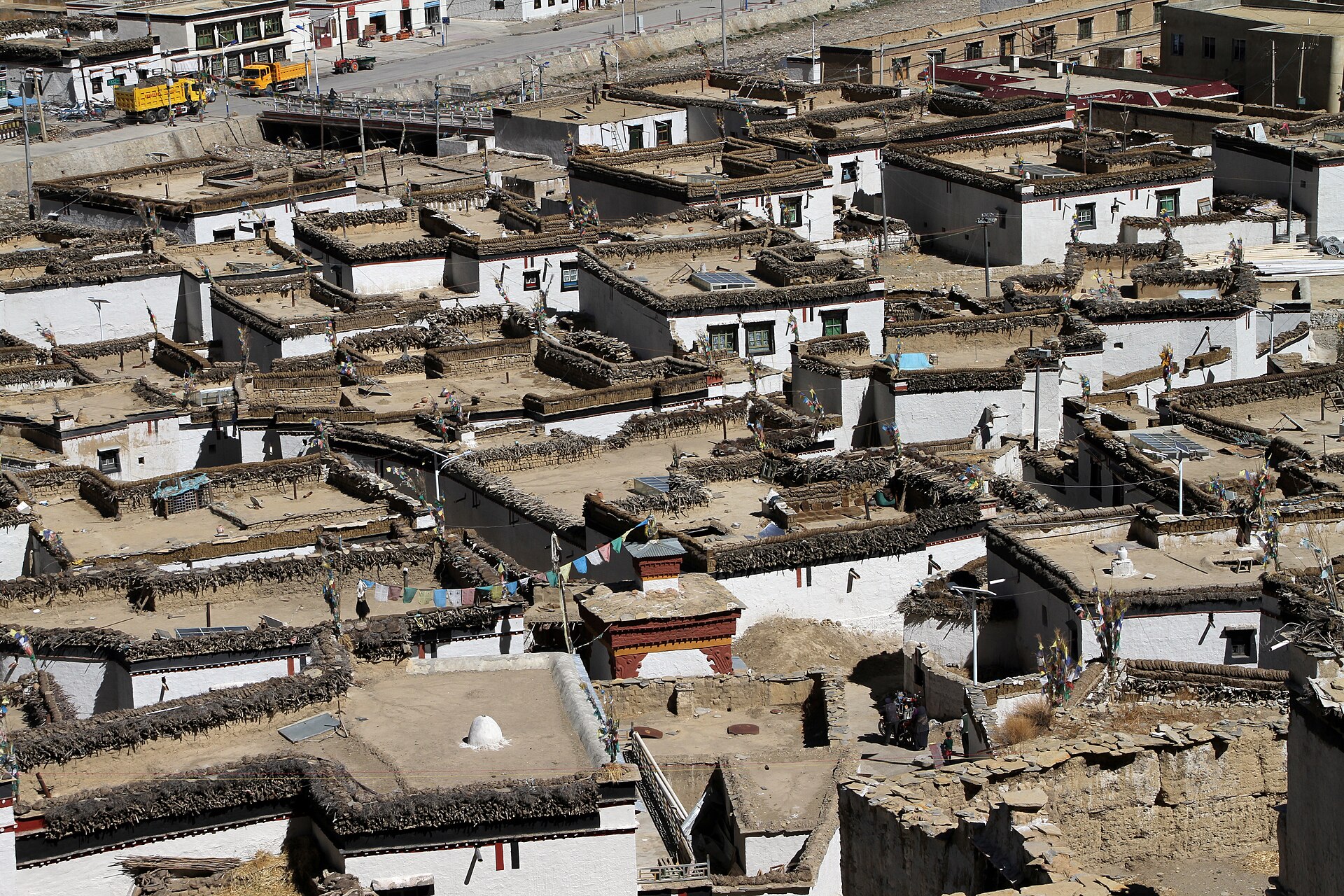
The minivan shudders to a halt on the gravel shoulder where the Friendship Highway yawns toward the pass. Ahead, a cluster of concrete boxes — the Junction — squats under a sky so pale it hurts the eyes. Prayer flags snap on a pole beside a PetroChina pump. Seven kilometers of washboard track disappear into a valley toward the town proper, but the driver kills the engine here. “Shelkar,” he says, tapping the dashboard. “You walk, or you wait for a tractor.” I shoulder my pack and start walking, the dust already coating my boots before the first kilometer marker.
Getting There: The Junction Gambit
Most overland itineraries treat Shelkar as a checkbox between Shigatse and Everest Base Camp. The Friendship Highway (G318) doesn’t actually enter the town; it bypasses it entirely. The action happens at the Junction, a sprawl of truck-stop eateries, tire-repair shacks, and three large hotels that function as de facto transit hubs. There is no bus station, no taxi rank, no Didi service. If you arrive by shared minivan from Shigatse — usually a five-hour bone-rattler leaving the Shigatse long-distance station at dawn — the driver drops you at the Junction gate. From there, the town sits up a side valley. Locals hitch rides on passing freight trucks or the occasional military convoy. Foreign travelers without a pre-arranged vehicle have two choices: negotiate a private car at the Junction (expect 150–200 yuan round-trip, paid in cash) or start hiking the access road. The walk takes ninety minutes at altitude; the first half follows a drainage ditch past a scrapyard, the second climbs through a wind tunnel where sand scours your calves.
- Shared minivan from Shigatse: Departs ~7:00 AM from the lot behind the Shigatse Hotel. No ticket window; find the driver shouting “Dingri! Shelkar!” Cash only.
- Private car hire at Junction: Approach the drivers leaning against Land Cruisers near the Everest Service Center. Confirm they know the permit checkpoint locations.
- Self-drive: Turn off G318 at the brown sign reading “Shelkar 7 km.” The paved spur ends at the town’s main intersection; beyond that, dirt tracks require clearance.
Sleeping at 4,300 Meters: Permits and Pillows
The Junction hotels exist primarily to sell the Qomolangma National Nature Reserve entry permit — 180 yuan per person, valid for three days — which you cannot buy at the park gate further up the valley. The Everest Service Center Hotel (the big blue building with the satellite dish) is the official vendor. Their front desk keeps a stack of carbon-copy forms; you hand over your passport, Tibet Travel Permit, and a passport photo. Fifteen minutes later you hold a pink slip stamped in red. The rooms upstairs are functional: twin beds, electric blankets, shared squat toilets down the hall, hot water from a solar tank that runs cold after 9 PM. Qomolungma Hotel across the courtyard runs a similar operation but quieter, with a small dining room serving yak butter tea in thermoses. Mt Everest Home Inn and Chengdu Jiudian sit farther back, cheaper but colder — literally; their heating relies on a single coal stove in the lobby. Shigar Snowland Hotel, the newest, has en-suite bathrooms and Wi-Fi that works when the generator isn’t refueling. Book nothing in advance. Show up, flash permits, negotiate. Winter sees rooms half-price; summer festival weeks see mattresses on the lobby floor.
Eating: Sichuan Heat in Thin Air
Food at the Junction is expensive by Tibetan standards — 60 yuan for a plate of mapo tofu, 40 for a bowl of hand-pulled noodles — because every sack of flour and bottle of oil rides 300 kilometers from Shigatse. Zhuang Yuan Sichuan Restaurant, the green-sign place beside the fuel pumps, prints a ten-page English menu with photos. The kung pao chicken arrives swimming in dried chilies and Sichuan peppercorns that numb the lips for an hour. The twice-cooked pork belly is fatty in a way that feels necessary at this elevation. In town proper, a row of hole-in-the-wall canteens behind the county government building serves thukpa — thick wheat noodles in yak broth with radish and cilantro — for 15 yuan. Order “la” if you want chili oil; the cook spoons it from a jar fermented since last autumn. Breakfast is usually steamed buns stuffed with minced yak and onion, eaten standing at a counter while a TV blares CCTV news. No coffee anywhere. Instant Nescafé packets cost 5 yuan at the PetroChina minimart.
- Zhuang Yuan Sichuan: English menu, credit cards accepted, portions large enough to split. Try the dry-fried green beans and the cold smashed cucumber salad.
- Town canteens (behind gov’t building): Cash only. Point at the pot you want. Thukpa, yak momos, fried rice with cured meat.
- PetroChina minimart: Instant noodles, Snickers, boiled eggs, thermos flasks, oxygen canisters (mostly placebo).
Doing: The Monastery and the Pass
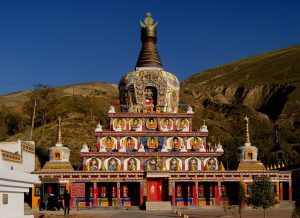
Shelkar town clusters around a hill crowned by Shelkar Chode Monastery, a Sakya-sect complex rebuilt after the 1980s. The approach climbs a switchback dirt lane past mani walls where old women circumambulate, fingers moving beads, murmurs rising in the thin air. The main assembly hall smells of juniper butter lamps and dust. Murals depict the life of Sakya Pandita; a side chapel houses a self-arisen Tara image the size of a thumbnail, encased in silver. Monks — maybe twenty in residence — chant at 6:30 AM and 5:00 PM. Visitors sit on the rear cushions; photography inside is forbidden. Outside, a caretaker sells incense sticks (10 yuan) and will unlock the rooftop for a view down the valley to the highway ribbon if you ask politely. Two kilometers north, the road crests Gyatso La (5,220 m). The pullout there fills with tour buses at sunrise. On a clear morning, Everest’s northeast face rises like a white wall at the horizon, unobstructed by foothills. Wind screams across the pass. Stay ten minutes max; the cold seeps through down jackets. Descend the same way — no loop road exists.
- Monastery visit: Arrive before 8 AM for chanting. Remove hat, no shorts, speak low. Donation box by the entrance (20–50 yuan typical).
- Gyatso La viewpoint: Requires the park permit. Best light: pre-dawn to 8 AM in autumn. Carry water; no facilities at the pass.
- Acclimatization walk: From town, follow the riverbed west toward the glacier moraine. Flat, 3 km round-trip, good for testing lungs before Base Camp.
Buying: Fuel, Oxygen, and the Wrong Souvenirs
The PetroChina station at the Junction is the only reliable fuel for 150 kilometers in either direction. The pump accepts UnionPay and WeChat; the attendant speaks enough Mandarin to understand “man you” (fill it up). Diesel sometimes runs dry during the autumn climbing season — fill in Shigatse if your tank reads below half. The minimart stocks Chinese-brand oxygen canisters (30 yuan), which tourists clutch like talismans; locals never use them. Real acclimatization comes from slow ascent and hydration. Souvenir stalls beside the hotel gates sell “Tibetan silver” amulets stamped in Chengdu factories, machine-printed thangkas on polyester, and yak-bone malas bleached with peroxide. If you want authentic goods, wait for Shigatse’s Barkhor market. The only thing worth buying here is a heavy wool blanket (200 yuan) from the woman who sets up a tarp behind the Everest Service Center — hand-woven, undyed, warm enough for a Base Camp night.
Moving On: The Road to Base Camp and Beyond
Northbound, the Friendship Highway climbs to Pang La (5,200 m) where the four 8,000-meter peaks — Everest, Lhotse, Makalu, Cho Oyu — line up in a single panorama. The turnoff for Everest Base Camp (Tashizom township) is 60 km past the Junction; a checkpoint there verifies your pink permit slip. Rongbuk Monastery guesthouse offers dorm beds and the world’s highest toilet with a view. Southbound, the road drops toward the Nepal border at Gyirong Port — seven hours if the landslides haven’t closed the gorge. The Kyirong valley descends from alpine desert to subtropical forest in forty kilometers; mangoes grow where yaks grazed at breakfast. Most travelers heading to Kathmandu overnight in Kyirong town, cross the Resuo Bridge on foot at 10 AM, and catch a Nepali jeep to the capital. Coming from the other direction, the same jeep deposits you at the bridge; a Chinese driver meets you for the ascent. Either way, Shelkar fades in the rearview mirror — a dusty junction, a monastery on a hill, a bowl of thukpa that warmed your hands before the real climbing began.