The minivan’s engine whined as we climbed the last switchback before the pass, the air thinning with every meter. Prayer flags snapped at the summit, a lattice of blue, white, yellow, green, and red against a sky so dark it looked bruised. Below us, the valley floor unrolled in a sweep of alpine meadow, dotted with yaks that resembled shaggy rocks and the white canvas of nomad tents glowing in the slant light. Tagong sits at 3,700 meters, halfway between Kangding and Litang, and the first breath you take stepping onto the grassland feels different—colder, sharper, tasting of wet earth and juniper smoke.
Getting There: The Kangding Connection
Most travelers arrive from Kangding, a four-to-five-hour drive that feels longer when the road clings to cliff faces. The official morning buses depart the Kangding station around dawn, bound for Garze, but they drop passengers at the Tagong turnoff if you ask. You pay the full Garze fare even for the shorter ride. A simpler option waits at the taxi parking lot across the river from the Yak Market. Drivers there run a shared circuit: fifty yuan per seat, four passengers to a sedan. The real advantage isn’t the price—it’s the leverage. You can pay the driver an extra hundred yuan to pause at the high pass for photos, or to detour toward the hot springs at Muya, or simply to wait while you walk a ridge line for twenty minutes. Try that on a scheduled bus.
Moving Around: Two Wheels and Altitude Lungs
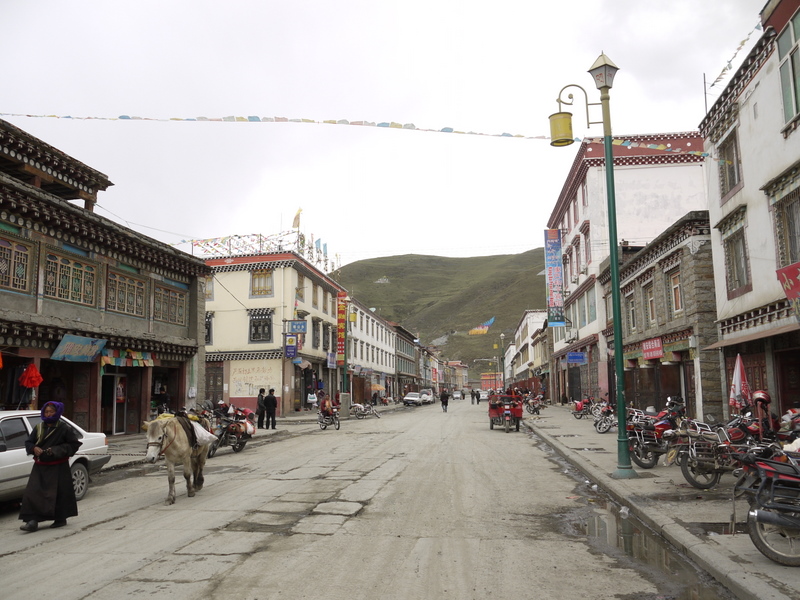
Tagong town stretches along a single main street. You can walk its length in ten minutes, but the grassland fans out for kilometers in every direction. Walking works for the monastery and the immediate stupa field, but to reach the far meadows or the glacial lake at Yala, you need wheels. Rental motorbikes line the street near the monastery gate—mostly 150cc or 200cc semi-automatics with a heel-toe shifter. There are no twist-and-go scooters here. If you haven’t shifted a clutch lever with your left foot since driving school, practice in the empty lot behind the guesthouse before you point the nose toward open pasture. The altitude steals horsepower; the engine will cough on steep grades. Keep the revs up, shift early, and carry a spare spark plug. Helmets are provided, but bring your own gloves and a buff—the wind at 3,800 meters cuts through denim in seconds.
What to See: Monastery, Meadow, and Mountain
Tagong Monastery anchors the town. Its golden roof catches the first light, and the interior smells of butter lamps and aged yak butter. Monks debate in the courtyard, their claps sharp as gunshots. Walk the kora circuit clockwise, spinning the prayer wheels set into the whitewashed wall. Each revolution sends a mantra into the wind. Outside the gate, the grassland begins. Tagong Grassland isn’t a park with boundaries; it’s an open range where herders move seasonal camps. In early summer, the meadow erupts in yellow potentilla, blue gentian, and the occasional edelweiss. Yaks graze in loose herds, their bells a constant low chiming. Horse treks depart from a cluster of tents near the main road—negotiate by the hour, not the day, and clarify whether the guide rides with you or leads the horse on foot. The best riding is toward Yala Snow Mountain, where the glacier tongue creeps down a hanging valley. On a clear morning, the peak reflects in the still water of Yala Lake, a two-hour ride each way.
Practical Rhythms: Seasons, Sleep, and Sickness
The high season arrives with the summer monsoon, when the grass turns electric green and wildflowers carpet the slopes. Shoulder months—late spring and early autumn—offer clearer skies for mountain views but colder nights. Winter shuts down most guesthouses; the wind scours the valley and temperatures drop well below freezing. Accommodation clusters near the monastery and along the main drag. Rooms are basic: thick quilts, a space heater that may or may not work, and a shared squat toilet down the hall. Hot water is a negotiation—ask before you check in. Food options revolve around Tibetan staples: hand-pulled noodles in yak broth, tsampa porridge, momos stuffed with yak meat and onion, and endless butter tea. Vegetarians can manage on fried rice, potato stew, and the monastery’s simple vegetarian hall lunch served around noon.
Altitude is the silent architect of every plan. Headaches often hit the first night. Hydrate aggressively—three liters minimum. Avoid alcohol the first two days. Carry ibuprofen and, if you’re prone, acetazolamide. Walk slowly. The motorbike helps cover distance, but the exertion of pushing a stalled bike up a pass at 4,000 meters can trigger symptoms faster than hiking. If nausea or confusion set in, descend immediately; the road to Kangding drops a thousand meters in thirty kilometers.
Cultural Footing: What Locals Expect
Tagong remains a living Tibetan town, not a theme park. Herders tether mastiffs near their tents—give them a wide berth. When you enter a home or a monastery chapel, remove your hat, step over the threshold (never on it), and accept a offered cup of butter tea with both hands even if you only sip. Photography inside chapels is usually forbidden; outside, ask before pointing a lens at a person. Monks are approachable but not tour guides. If you join a kora, keep pace, stay silent, and move clockwise. Mani stones and prayer flags are sacred objects—do not step over them, rearrange them, or take fragments as souvenirs. The nomad camps you pass are private residences. A friendly wave is welcome; wandering among the tether lines uninvited is not. Cash is king. The nearest reliable ATM sits in Kangding. Bring enough yuan for fuel, horse hire, meals, and a buffer for a sudden vehicle breakdown.
Common Missteps
Arriving without a Chinese ID or passport copy—police checkpoints on the Kangding–Tagong road check documents frequently.
Renting a motorbike without testing the brakes and clutch on flat ground first.
Assuming the shared taxi from Kangding runs on a fixed schedule; drivers leave when the car fills.
Drinking untreated stream water—giardia is common in high pasture.
Packing only light layers; a down jacket is necessary even in July nights.
Expecting 4G or Wi-Fi beyond the main street; signal vanishes two kilometers out.
Offering candy or money to children—creates a begging dynamic the community discourages.
Skipping the monastery kora because “it’s just walking”—the circuit orients you to the valley’s rhythm.
Tagong rewards patience. The landscape doesn’t perform; it simply exists, vast and indifferent, while the prayer flags count the wind. Give it a few days. Let the altitude settle in your bones. Ride the motorbike until the fuel light blinks, then sit on a ridge and watch the light slide across Yala’s glacier. That silence, broken only by a yak’s grunt and the whip of a flag, is the reason you came.