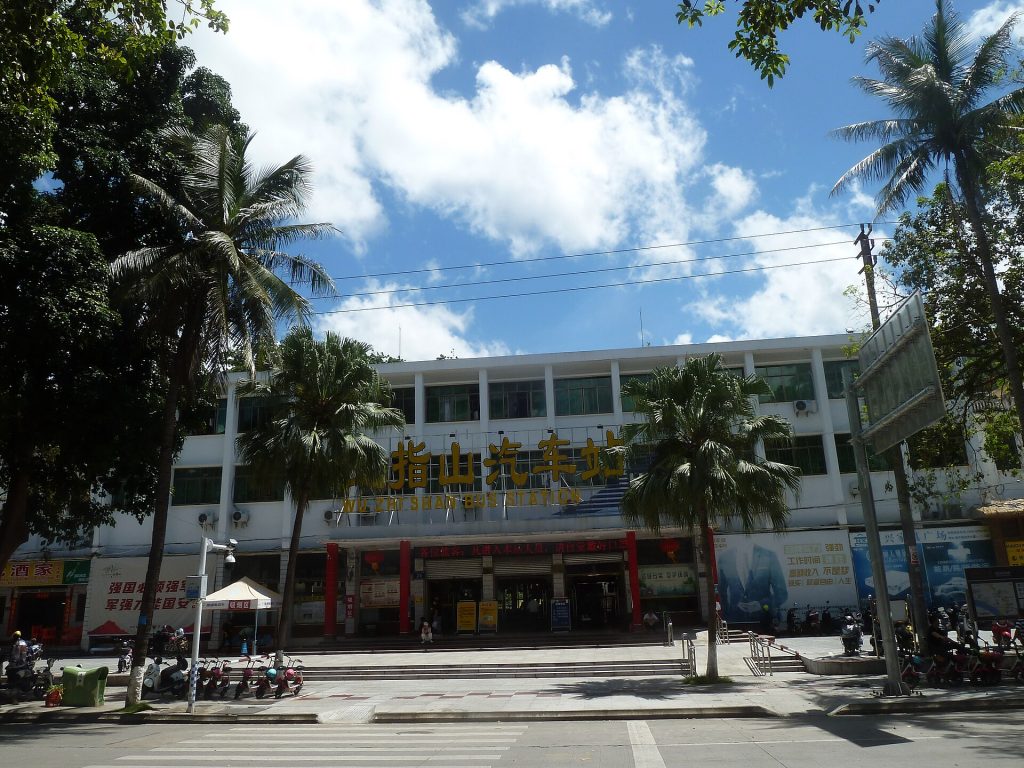
The minibus from Sanya shudders to a halt on Haiyu North Road, brakes hissing in the humid afternoon air. Through the window, the Five Finger peaks — Wuzhishan’s namesake — catch the last light, their ridgelines sharp against a sky bruised purple by coming rain. No tour groups spill onto the pavement here, just a knot of Li women in indigo headscarves negotiating the price of wild bitter greens with a vendor beside a rusted steel wok. The air smells of woodsmoke, river mud, and fermented tea. This is not a scenic area with a ticket booth; it is a working highland town where the mountains begin at the edge of the market.
Getting There Without a Tour Bus
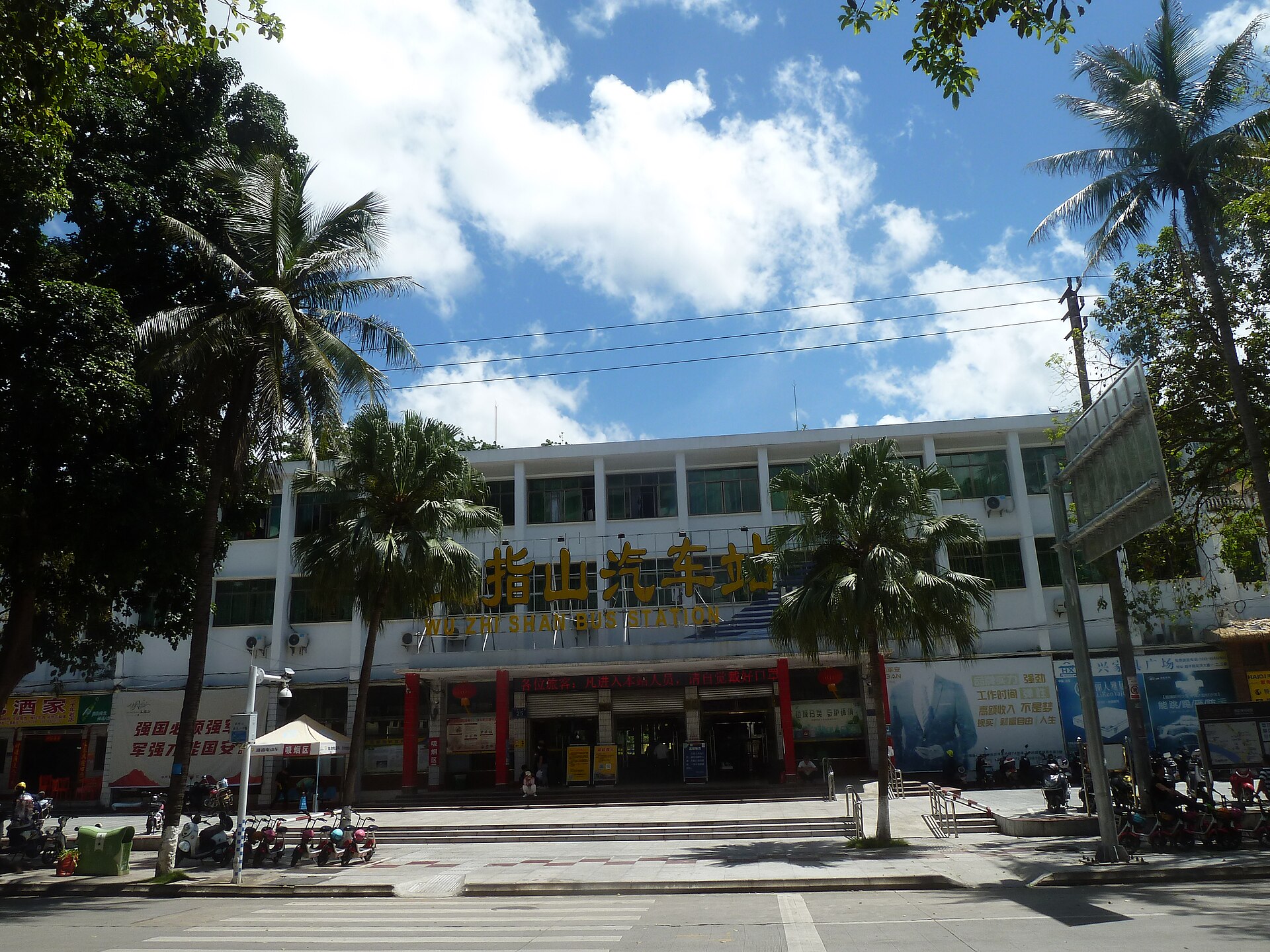
Most travelers arrive by long-distance coach from Sanya or Haikou. The Sanya run leaves the main station near the train terminal every forty minutes or so; the ride climbs from coastal flats into cloud-forest switchbacks in roughly two hours. Buses from Haikou take closer to four. Tickets are sold on the Hainan Bus Company platform, though the interface is Chinese-only — have a local friend book or simply show up early at the station window with cash. The Wuzhishan terminal sits on Haiyu North Road, a five-minute walk from the central market and most guesthouses. If you are coming from the east coast, check the Wanning connection; it runs less frequently but avoids the Sanya detour.
Driving yourself is straightforward: the G98 expressway cuts inland at Sanya and becomes the S82, a tolled mountain road with long tunnels and steep grades. In wet season, fog can drop visibility to ten meters inside the tunnels. Fill the tank in Sanya; petrol stations thin out past the toll plaza. There is no train service to the city, though the high-speed line to Ledong puts you within an hour’s drive if you arrange a pickup.
Moving Around the Valley Floor
The urban core stretches along the Nankai River, flat enough to walk if the heat does not flatten you first. Public buses numbered 1 through 6 link the bus station, the government quarter, the hospital, and the two main market streets. Fares are one yuan on most lines; the 5 and 6 run longer loops into the foothill villages and charge by distance. Drivers rarely speak English, so learn the stop name for your guesthouse in Chinese characters.
Motorcycle taxis — once the default — have dwindled. You will still find a few idling near the bus station at dawn, drivers perched on plastic stools smoking. A ride across town costs a few yuan; negotiate before you mount. Standard taxis cluster at the same rank; meters start around eight yuan. For trailheads outside the valley, most hikers hire a private car for the day. Ask your hostel owner to call a trusted driver; the going rate for a full day with waiting time hovers around three hundred yuan, more if you need a high-clearance vehicle for the muddy track to Shuiman Township.
Footpaths Into the Cloud Forest
The Five Finger peaks themselves are a protected reserve; summit access requires a permit and a registered guide, arranged through the forestry bureau office on Jiefang Road. The classic two-day traverse enters at the Shuiman gate, climbs through dwarf bamboo and rhododendron thickets to a ridge camp, and tags the second finger — the highest accessible point — before descending via the waterfall trail. Rangers check permits at the first checkpoint; without one, you will be turned back and fined.
For a half-day taste, the “Lover’s Valley” boardwalk starts ten kilometers north of town. A paved path follows a boulder-strewn creek through primary forest to a viewing platform opposite the first finger. Leeches are common after rain; tuck trousers into socks and carry salt. The trailhead has a small parking lot, a toilet block, and a vendor selling bamboo-tube rice — sticky rice roasted in a green bamboo joint over coals. Eat it hot, peeling the charred skin back to the steam.
- Permit: Apply in person at the Wuzhishan Forestry Bureau (解放路林业局) with passport photocopy; processing takes one working day.
- Guide: Mandatory for overnight routes. Licensed guides cluster at the bureau gate; expect 400–600 yuan per day including their food and transport.
- Gear: Waterproof boots, quick-dry layers, headlamp, 2 L water capacity, leech socks or gaiters.
- Exit plan: The ridge camp has no shelter. Bring a four-season tent or book the basic bunkroom at the ranger station (reserve through your guide).
Rainforest Tours That Aren’t Theme Parks
Several agencies in Sanya sell “Wuzhishan rainforest day trips” — air-conditioned bus, boardwalk loop, staged Li dance, souvenir shop. Skip them. The real forest lives on the dirt roads branching off the S82 toward Maozhang and Shuiman. Hire a driver who knows the logging tracks; stop where the canopy closes over the road and walk in fifty meters. You will hear white-cheeked gibbons before you see them, and the scent of wild ginger rises from the leaf litter.
Birders target the limestone karst near Hongmao Village for Hainan peacock-pheasant and partridge. The best window is early dry season, when mist burns off by nine and the understory is quiet. Bring a spotting scope; the birds flush at thirty meters. Local villagers sometimes act as spotters for a modest fee — ask at the village committee office, not the first house you pass.
Li Villages: Guest, Not Spectator
Baihua Village, thirty minutes up a concrete lane from the main road, still builds the traditional boat-shaped thatch houses — low, windowless, with a central hearth and a loft for grain. Families here speak Li among themselves, Mandarin with outsiders. If you are invited inside, step over the threshold beam, not on it; the beam holds the household spirit. Accept a cup of roasted tea — bitter, smoky, served in a small bowl — and drink it in three sips. Refusing is polite once; refusing twice insults the host.
Markets rotate on a five-day cycle. The big one in Tongza township falls on days ending in 2 and 7. Women spread woven baskets of hill rice, smoked pork, wild fern shoots, and cotton cloth dyed with indigo and blood-root. Prices are not posted; the opening offer is usually double what a local pays. Smile, counter at half, settle somewhere in the middle. Do not photograph elders without asking; some believe the camera steals a fragment of the soul.
- Greeting: Nod, do not shake hands unless the elder extends theirs first.
- Footwear: Remove shoes at the door of any thatch house.
- Gifts: A pack of good cigarettes or a bag of rock sugar for the household tea jar is welcomed; avoid alcohol unless you know the family drinks.
- Taboos: Do not point at the hearth fire with chopsticks. Do not whistle inside at night — it calls spirits.
Eating Cheap, Eating Well
The night market on Jiefang Road sets up at dusk under fluorescent tubes strung between plane trees. Follow the smoke to the stall where a woman flash-fries river shrimp with garlic, chili, and sawtooth coriander — shells crisp, meat sweet, heads sucked clean. Next to her, a cauldron bubbles with pork bone broth, rice noodles, pickled bamboo, and a spoonful of fermented bean paste that turns the soup the color of old amber. A bowl costs six yuan. Plastic stools wobble on the wet pavement; you eat shoulder-to-shoulder with construction workers and off-duty forest rangers.
For a sit-down meal, walk into any restaurant with a hand-painted red sign reading “农家菜” (farmhouse dishes). Order the bamboo-tube chicken — a whole young bird stuffed with glutinous rice, ginger, and wild pepper, sealed in a bamboo section and slow-roasted until the bamboo chars and the rice absorbs the fat. Share it with a plate of stir-fried water spinach and a jar of homemade rice wine, milky and faintly fizzy. The bill for two rarely tops eighty yuan.
Where to Sleep Without Booking.com
Foreigners can register at any licensed hotel, but the system flags unregistered guesthouses instantly. The safe bets cluster near the bus station: the Wuzhishan Hotel (five-story concrete, hot water reliable, English-speaking night clerk) and a string of family-run inns on the lanes behind the market. Walk in, show your passport, ask to see the room. Check the bathroom for mold — humid season turns tile black in weeks. Negotiate a weekly rate if you stay longer than three nights; owners prefer cash and a handshake over apps.
In the villages, homestays are arranged through the village committee. You sleep on a straw mat in the loft, share a squat toilet, and wake to roosters at five. No Wi-Fi, no hot shower, no menu — you eat what the family eats. The cost is nominal, often fifty yuan including dinner and breakfast. Bring your own towel, toilet paper, and a headlamp for the midnight trip to the latrine.
Seasonal Rhythms and Hard Lessons
Dry season runs from the tenth lunar month through the third — cool mornings, clear skies, trails firm underfoot. This is when the gibbons call loudest and the peaks show their full faces. Wet season arrives with the fourth month; afternoon thunderstorms swell the rivers, leeches bloom, and the S82 tunnels flood. Landslides close mountain roads for days. If you come in summer, build two buffer days into your itinerary and carry a satellite messenger.
The biggest mistake newcomers make is treating Wuzhishan as a day trip from Sanya. You arrive at noon, walk the boardwalk, buy a magnet, leave. You miss the morning mist curling off the Nankai, the old man tuning his nose flute in the market alley, the taste of tea brewed with water from a mountain spring. Stay two nights minimum. Walk the ridge at dawn. Sit with a Li grandmother while she spins cotton by lamplight. The mountains do not reveal themselves to the hurried.