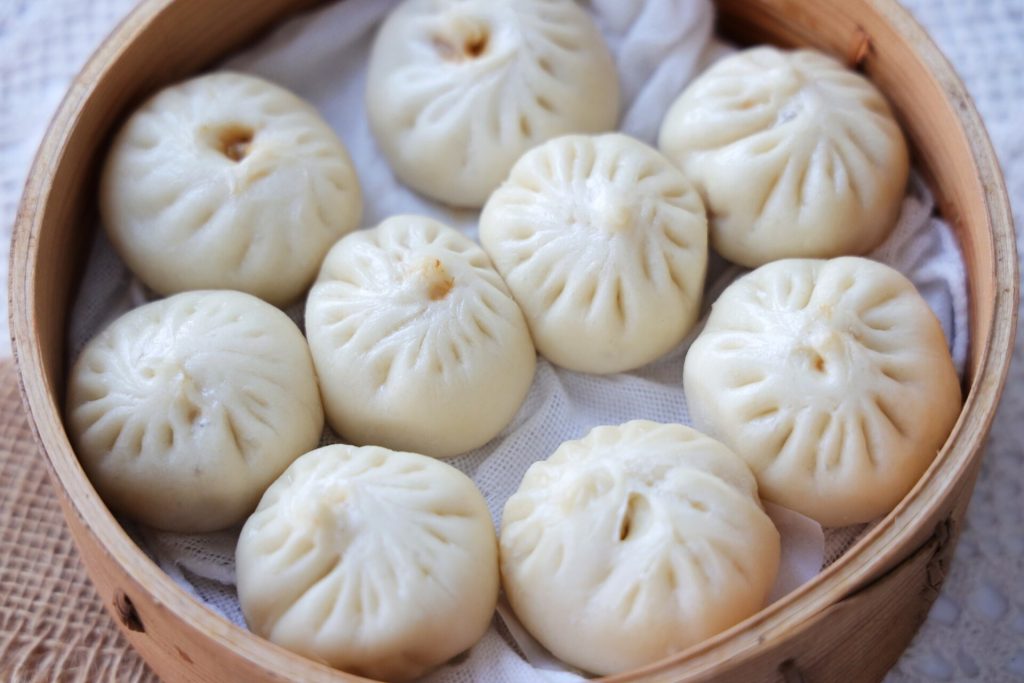
There are few culinary rites of passage in China as thrilling—or as hazardous to your dry-cleaning—as biting into your first authentic Shanghai xiaolongbao (soup dumpling). Steam-wreathed bamboo baskets arrive at your table, their contents translucent, delicate, and visibly sloshing with hot broth. To the uninitiated, they present an urgent logistical puzzle: How do you eat a boiling pouch of liquid without turning your shirt into a casualty zone or burning the roof of your mouth?
Whether you are navigating Shanghai’s bustling autumn streets or planning your itinerary using tools like the How to Use Amap (Gaode Maps) in China as a Foreigner: 2026 English Guide, this practical guide breaks down everything a first-timer needs to know. From mastering the classic spoon-and-chopstick technique to understanding the differences between heritage styles and modern chains, here is how to eat xiaolongbao like a local.
1. The Anatomy of a True Shanghai Xiaolongbao
True xiaolongbao are not just dumplings filled with meat; they are feats of kitchen architecture. The wrapper is rolled thin—traditionally featuring around 18 distinct, delicate folds at the top twist—and sealed over a sphere of seasoned minced pork and a rich, gelatinized meat broth. When steamed, the gelatin melts back into a piping-hot, savory soup suspended inside the dough envelope.
Behind every exceptional basket lies rigorous craftsmanship. The pork must maintain a precise lean-to-fat ratio—typically an 80/20 split—to ensure the filling remains succulent without becoming overwhelmingly greasy as the broth renders. Furthermore, skilled dim sum chefs regulate the resting time of the dough to achieve maximum elasticity, allowing the wrapper to stretch paper-thin over the filling without tearing during the high-pressure bamboo steaming process.
Because the filling is naturally rich, the pork is balanced with subtle hits of ginger, scallion, and sometimes a touch of Shaoxing wine or soy. If you are pairing your soup dumplings with other regional delicacies during your food crawl, you might also want to sample classic Shanghainese cold appetizers like sweet-and-savory Shanghai Xunyu (Smoked Fish) for First-Timers or comforting stir-fries such as Shanghai Stir-Fried Rice Cakes (Chao Niangao) for First-Timers.
2. Top Neighborhood Spots and Iconic Neighborhoods to Explore
Knowing where to find the city’s best soup dumplings can mean the difference between an unforgettable culinary discovery and a disappointing tourist trap. While modern malls offer convenience, the soul of Shanghai’s dumpling culture resides in its historic neighborhoods:
* The Former French Concession (Luwan & Xuhui Districts): Shaded by plane trees, this area mixes trendy cafes with decades-old neighborhood spots. Here, you will find family-run stalls where dumpling skins are rolled out by hand in full view of the street, offering an intimate glimpse into daily local life.
* Old Town & Yu Garden Vicinity: While portions of this historic district lean heavily into tourism, walking just a few blocks away from the main bazaar reveals alleyway vendors who have perfected their craft across generations. Expect crisp service, communal seating, and intensely flavorful broths.
* Jing’an and People’s Square: A bustling commercial hub where legendary heritage brands sit side-by-side with high-end culinary innovators. This is the ideal zone to sample both traditional pork fillings and modern seasonal variations (such as hairy crab roe in autumn).
3. How to Eat Xiaolongbao Safely (The Spatula/Spoon Method)
The cardinal sin of eating xiaolongbao is stabbing it aggressively with a chopstick, causing the precious soup to rupture onto the table or splatter onto your neighbor. To eat them safely without losing a drop of broth, follow this time-tested method:
1. Lift Gently: Using your chopsticks, pinch the dumpling securely right by its top knot (the thicker twist of dough). Do not grab it by the delicate sides, or the skin may tear.
2. Transfer to the Spoon: Carefully lift the dumpling from the steamer basket and place it gently into a deep Chinese soup spoon.
3. Cool and Pierce (Optional): If you prefer not to risk a scorched tongue, use the tip of your chopstick to poke a tiny hole in the side of the wrapper. Let a little steam escape, and allow a fraction of the hot broth to spill out into the spoon to cool down.
4. Dip in Vinegar and Ginger: Traditional xiaolongbao are served with a small dish of Chinese black Chinkiang vinegar piled high with ultra-thin julienned ginger. The sharp, acidic bite of the vinegar cuts right through the richness of the pork fat, while the ginger adds a bright, clean punch. Dip the dumpling lightly, or place a few strands of ginger directly on top.
5. Slurp and Savor: Bring the spoon to your mouth. Sip the flavorful broth first, then eat the remaining dumpling in one or two savory bites.
4. Xiaolongbao vs. Shengjianbao: Know the Difference
It is easy to confuse xiaolongbao with Shanghai’s other iconic street-food dumpling: shengjianbao (often called SJB). While both feature pork and soup fillings, they are structurally and texturally distinct:
* Xiaolongbao: Steamed in bamboo baskets. The wrapper is thin, pliable, and delicate. The soup is entirely enclosed inside a soft dough pouch, and they are meant to be eaten hot and delicate with a soup spoon.
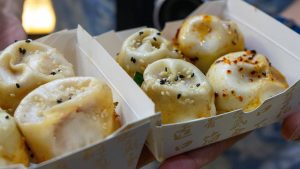
* Shengjianbao: Pan-fried in massive, shallow iron pans with heavy lids. The wrapper is made from a slightly leavened (yeast-risen) dough, making it thicker, fluffier, and crisper on the bottom. They are heartier, blisteringly hot underneath, and offer a completely different textural contrast between the crunchy fried base and the soft top.
5. Nanxiang Heritage vs. Modern Chains
When researching where to eat, you will quickly encounter a spectrum of options, ranging from historic institutions to ubiquitous modern franchises.
* The Nanxiang Style & Tradition: Nanxiang, an ancient water town in the northern suburbs of Shanghai, is widely recognized as the birthplace of the modern soup dumpling. Traditional versions here often feature thinner skins and fillings that lean slightly sweeter in true Shanghainese culinary fashion. Historic tea houses in the city center still serve variations of this heritage style.
Modern Chains: Global and domestic chains (such as Din Tai Fung or local favorites like Jia Jia Tang Bao) have streamlined the art of xiaolongbao*. While purists sometimes debate whether mechanized precision beats old-school hand-pleating, modern chains offer exceptional consistency, pristine kitchen hygiene, and standardized portion sizes—making them a stress-free option for visitors getting their bearings.
Rather than relying on arbitrary point scores, look for busy local spots with high turnover where bamboo baskets are stacked high and steamed fresh to order.
6. Practical Tips for Your Shanghai Food Adventure
* Digital Readiness: Most traditional neighborhood dumpling shops and modern chains alike operate entirely through mobile ordering. Ensure you have your digital wallet set up smoothly before you sit down by reviewing Alipay and WeChat Pay for Foreign Visitors in China 2026.
* Connectivity: Finding tucked-away alleyway dumpling legends requires reliable mobile data for maps and translation apps. Grab a reliable data plan ahead of time using a China SIM and eSIM for Foreign Visitors in 2026.
Patience and Pace: Xiaolongbao* are served fresh from the steamer and retain heat fiercely. Never rush your first bite—patience ensures you taste the complex harmony of ginger, pork, and broth without a trip to the pharmacy.
Frequently Asked Questions (FAQ)
Should I eat the entire dumpling in one bite?
As a general rule, no. Trying to fit an entire piping-hot xiaolongbao into your mouth will almost certainly result in a severe burn. Always sip the broth first using your soup spoon before consuming the dumpling wrapper and pork filling.
Are all xiaolongbao filled with pork?
While traditional versions exclusively feature minced pork, modern variations offer creative fillings including pork mixed with crab roe (xieifen), shrimp, truffle, or vegetarian mushroom blends.
Can I find vegetarian xiaolongbao?
Traditional street-side stalls rarely offer vegetarian options because the rich soup broth relies heavily on pork fat and bones. However, select modern chains and temple-adjacent vegetarian restaurants serve plant-based variations using mushrooms and tofu derivatives.