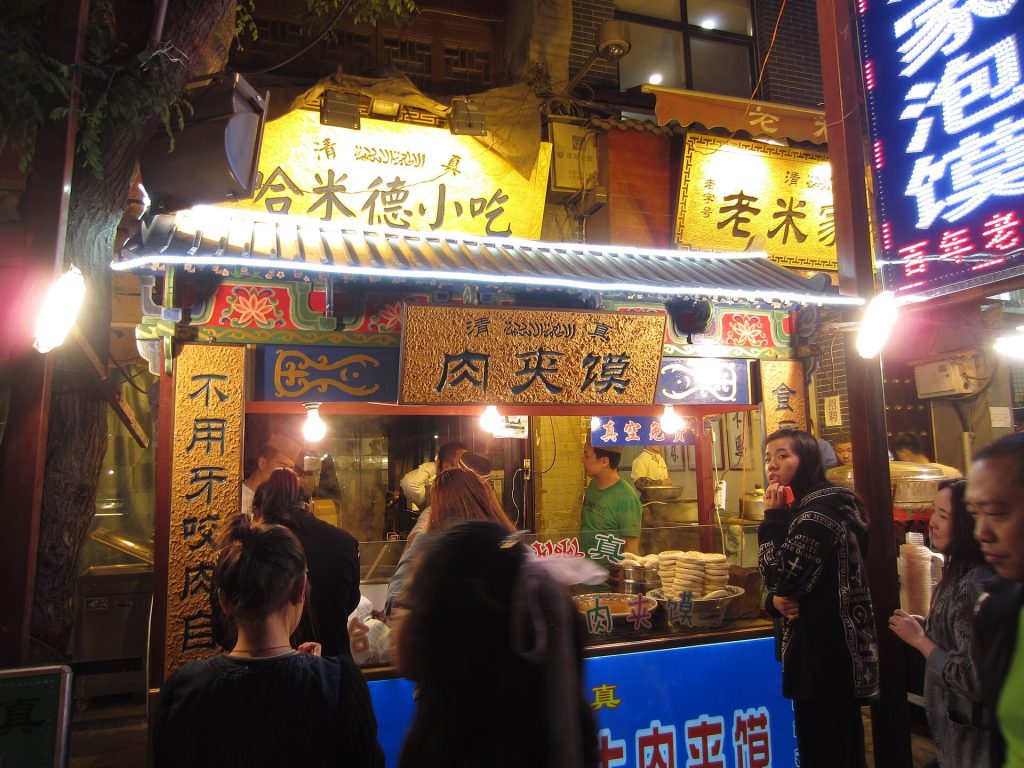
If you have ever wondered what the world was eating before modern fast-food chains standardized the handheld sandwich, look no further than Shaanxi province. Long before hamburgers populated the Western world, ancient China was perfecting its own version: Rou Jia Mo.
Often translated as the “Chinese hamburger,” Rou Jia Mo (肉夹馍) literally translates to “meat sandwiched in bread.” But calling it a burger is a bit like calling a symphony a nice tune—it sells the depth, technique, and cultural heritage short. Originating during the Qin Dynasty (over 2,000 years ago), this legendary street food pairs a tender, slow-braised pork belly filling with a uniquely crisp, unleavened flatbread that shatters delicately with every bite.
Whether you are planning your first trip to Xi’an or tracking down a specialty vendor in your local city, here is everything you need to know to master, appreciate, and devour your very first Rou Jia Mo.
What is Rou Jia Mo? Anatomy of the Ultimate Street Food
To understand why this snack has endured for millennia, you have to break down its two core components: the bread (La Zhi Ba Mo) and the filling (La Zhi Rou). Unlike soft, spongy burger buns, the bread used in traditional Rou Jia Mo is a marvel of culinary engineering.
1. The Bread: Bai Ji Mo (白吉馍)
The bread is an unleavened, griddle-baked flatbread known as Bai Ji Mo. It is made from a simple wheat flour and water dough that is rolled, coiled into a spiral to create flaky internal layers, flattened, and then cooked on a dry cast-iron griddle before finishing in an oven.
* Texture: The exterior is golden-brown and intensely crisp—almost pastry-like—while the interior remains slightly chewy and airy enough to absorb the rich juices of the meat.
* The Secret: Traditional bakers press the dough into a distinct shape with a slightly depressed center, ensuring even cooking and structural integrity so it can hold a generous, heavy-duty meat filling without sogging or falling apart.
2. The Meat: La Zhi Rou (腊汁肉)
The filling is where the magic happens. Authentic Shaanxi-style Rou Jia Mo features pork belly that has been simmered for hours in a master stock loaded with over 20 spices.
* The Spices: Star anise, cloves, cinnamon, fennel seeds, Sichuan peppercorns, black cardamom, ginger, and aged fermented bean paste are just a few of the aromatics that infuse the meat.
* The Texture: The pork is cooked until it achieves a melting, fork-tender consistency. It is then finely chopped on a cutting board, often mixed with a spoonful of the intensely flavorful braising liquid and fresh green chili peppers or cilantro for a burst of brightness.
A Bite of History: From Qin Warriors to Global Craze
Rou Jia Mo’s roots trace back to the Shaanxi province in northwestern China, historically serving as the starting point of the ancient Silk Road. Xi’an, the provincial capital, is an ancient city that once served as the imperial capital for 13 dynasties.
Food historians believe that the dish evolved from military rations. Soldiers needed a meal that was portable, nutrient-dense, and required minimal utensils. By wrapping spiced, salted meats inside a durable, dry-baked flatbread, ancient cooks created the world’s first truly portable meal. Over the centuries, street vendors perfected the recipe, passing down secret spice blends through generations. Today, it is recognized globally, often mentioned alongside other staples like Xi’an Biang Biang Noodles as a defining masterpiece of northwestern Chinese cuisine.
Variations: Beyond the Classic Pork Belly
While the classic pork version (La Zhi Rou Jia Mo) is the gold standard, regional variations and modern adaptations have expanded the culinary landscape.
* Beef or Lamb Rou Jia Mo: Popular among China’s Hui Muslim community (particularly in the Muslim Quarter of Xi’an), versions made with tender, cumin-spiced beef or lamb are widely available and fiercely flavorful.
* Vegetarian and Egg Options: In some modern street stalls, you will find variations stuffed with spiced tofu skin, hard-boiled eggs, or pickled vegetables.
The Chili Oil Kick: Depending on the vendor, you can often request a spoonful of Shaanxi chili oil (You Po La Zi*) poured directly over the meat. Made from coarse chili flakes, toasted sesame seeds, and hot oil, it adds a smoky, tingling warmth that cuts through the rich pork fat.
For a broader dive into regional Chinese street eats, check out our guide on Mastering Chinese Dumpling Varieties, which explores similar regional hand-formed dough traditions.
How to Eat Your First Rou Jia Mo Like a Pro
Eating a proper Rou Jia Mo can be a messy affair if you are not prepared. Because the bread is so wonderfully crisp, the first bite can send golden crumbs flying. Here are a few insider tips for the ultimate tasting experience:
1. Embrace the Drip: The best Rou Jia Mo are generously juiced with spiced pork broth. Lean forward slightly when you take your first bite to protect your clothes.
2. Pair It Right: In Xi’an, locals almost never eat a burger by itself. It is traditionally paired with a steaming bowl of rice noodle soup, cold skin noodles (Liangpi), or a sour plum drink (Suanmei汤) to balance the rich, fatty nature of the pork.
3. Inspect the Chop: Watch how the vendor prepares it. Authentic vendors will chop the pork belly and green peppers together on a heavy wooden block with a cleaver, ensuring an even distribution of lean meat, rich fat, and herbaceous crunch in every mouthful.
If you enjoy exploring intense, aromatic spice profiles like those found in authentic Rou Jia Mo, you will also love our deep dive into Authentic Sichuan Mala Flavor Profiles, which explores the science behind numbing peppercorns.
Frequently Asked Questions
Is Rou Jia Mo spicy?
The classic pork belly version (La Zhi Rou Jia Mo) is typically savory, aromatic, and rich rather than fiery hot. However, vendors frequently add chopped green chili peppers or house-made chili oil to the filling. If you are sensitive to spice, simply ask for it mild or without the chili garnish.
How is Rou Jia Mo different from a Western hamburger?
While both feature meat inside bread, the differences are stark. A Western burger uses a soft, leavened bun and ground beef patties cooked on a flat top. Rou Jia Mo uses a flaky, unleavened, griddle-baked flatbread stuffed with slow-braised, hand-chopped chunks of spiced pork belly rather than ground meat.
Can I make Rou Jia Mo at home?
Yes, though achieving the authentic texture of Bai Ji Mo takes practice. While you can use store-bought flatbreads in a pinch, making the dough from scratch and cooking it on a dry cast-iron skillet yields the best textural contrast. The pork filling can be made ahead of time in a slow cooker using a blend of Chinese five-spice, soy sauce, and star anise.
What aspect of Rou Jia Mo are you most excited to try first—the crispy flatbread or the slow-braised spiced pork filling?