A small room that moves while you sleep
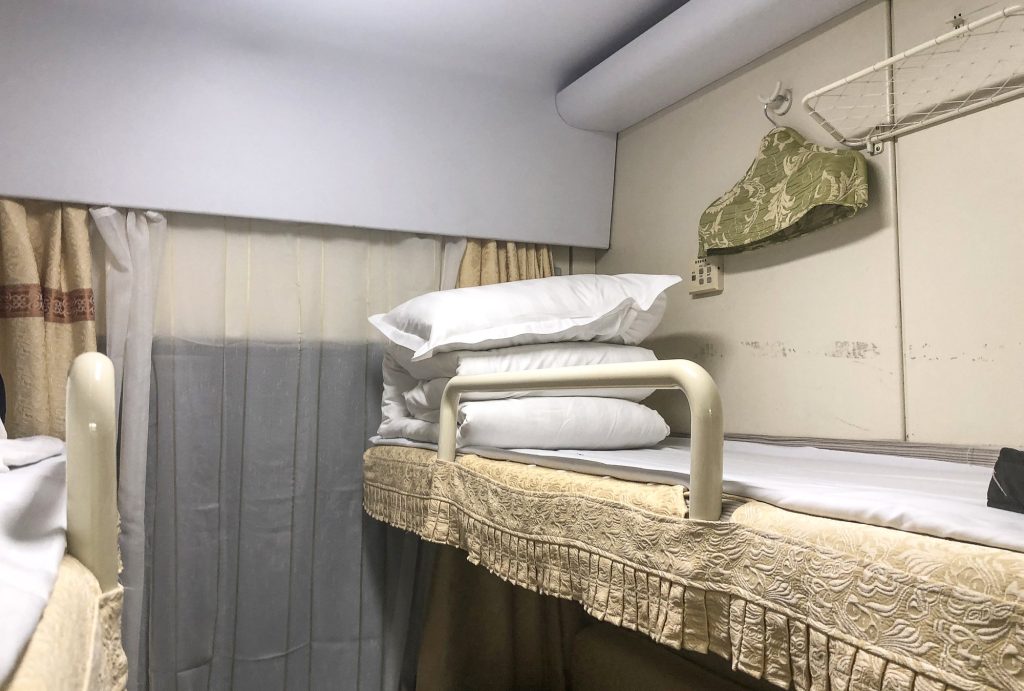
Your first soft sleeper (软卧, ruǎnwò) overnight in China is less like a hotel and more like sharing a compact cabin with strangers who all agreed to the same gentle fiction: we will be quiet enough to rest, and the train will do the rest of the work. The compartment typically holds four berths—two lower, two upper—behind a door that slides. Bedding is provided. The corridor has hot water and washrooms. Outside the window, provinces pass in the dark.
This is a practical story-guide for riding that cabin calmly: how to find your berth, where bags go, what “lights out” feels like, and how to be a good roommate without performing travel-influencer drama. For ticket mechanics, lean on how visitors book mainland trains on 12306. For holiday timing, remember Golden Week (1–7 October 2026) and Mid-Autumn (25–27 September 2026) make sleepers scarce—book early.
Soft sleeper versus the other beds
China’s conventional trains commonly offer:
- Soft sleeper (软卧): 4-berth closed compartment, more privacy, higher price tier than hard sleeper.
- Hard sleeper (硬卧): open-bay bunks (often six per section), livelier, cheaper.
- Seats: fine for short hops; less kind for a full night.
High-speed sleeper products also exist on some routes with different layouts. This guide focuses on the classic RW-style soft sleeper compartment many first-timers mean when they say “I booked a sleeper.”
Lower berths are easier to sit on during evening hours and easier for travelers with mobility concerns. Upper berths feel cozier once you are horizontal and free up daytime sitting space for others. Neither is morally superior; pick based on knees, luggage, and whether you want to perch or climb.
Boarding without a soundtrack
Arrive with margin. Stations are large; security and identity checks take time. Keep your passport (or the ID you used to book) accessible. Follow car number (chexiang) and berth number on your ticket.
On the platform, car attendants can point you to the right door. Inside, stow larger luggage in the space by the door / under lower berths / on the overhead rack depending on car design—do not block the corridor. Keep a day bag with passport, phone, charger, medications, earplugs, and a light layer on your berth.
Greet quietly if others are already settling. A nod beats a speech.
The evening rhythm of a compartment
Soft sleeper life has a soft script:
1. Settle and tea. Fill a bottle or cup from the corridor hot-water urn if you carry instant noodles or tea. Many veterans travel with slippers and a small mug.
2. Dinner window. Some eat station food before boarding; others use dining cars or instant meals. Keep smells moderate—your cabin is tiny.
3. Berth conversion. Lower berths double as evening seats. When people are ready to sleep, sitting guests yield the bed space. If you have an upper berth, avoid monopolizing a lower mattress for hours after others want to sleep.
4. Lights. Compartment lights usually dim as people turn in; corridor lights stay on. Use a phone’s dim reading light rather than a flashlight beam to faces.
5. Quiet hours. Conversations drop. Phone calls move to the corridor connection areas when possible. Headphones stay on.
You will hear tracks, announcements, and neighboring doors. That is normal, not a crisis. Earplugs and an eye mask turn “characterful” into “sleepable.”
Etiquette that keeps the peace
- Shoes off the bedding. Use slippers or socks on bunks.
- Share the table board if your compartment has a fold-out middle table—do not colonize it with seven open snacks.
- Charge thoughtfully. Outlet access varies; ask before unplugging someone else’s phone.
- Curtains and privacy. Upper berths often have a curtain; use yours without yanking others’ space.
- Morning packing. Repack before the arrival scramble. Leave bedding roughly usable; attendants handle resets on many services, but tidiness is still courtesy.
- Kids and volume. Families travel too. Patience is part of the fare. If noise is extreme, find an attendant rather than start a compartment argument.
Soft sleeper culture rewards people who act like temporary housemates, not like solo hotel guests who misplaced a wall.
Washrooms, water, and the overnight body
Toilets lock at station stops on many trains—plan ahead when the carriage announcement or attendant warns of a long halt. Carry tissues and hand sanitizer as backup. Washbasins are usually in a shared area; keep routines short during morning peaks.
Hydrate, but pace liquids if you dislike middle-of-night corridor walks. Motion plus unfamiliar bunks already wake light sleepers.
If you feel unwell, tell the attendant. Staff have seen everything from nosebleeds to anxiety; you are not auditioning for toughness.
Safety and belongings—calm, not paranoid
Keep passport and phone on your body or in a bag you use as a pillow anchor. Casual theft panic stories travel farther online than they do in most ordinary soft sleeper cars; still, basic awareness is enough: zip valuables, note your car and berth, and do not leave a brand-new phone flashing alone on the table while you nap hard.
Door etiquette varies by carriage custom—some compartments leave doors ajar for air, others close for quiet. Follow the group’s lead unless you need the door shut to sleep; a polite gesture usually works.
Eating on board without turning the cabin into a canteen
Instant noodles are classic for a reason: hot water is available, cleanup is simple. Fruit, bread, and sealed snacks are neighbor-friendly. Strong-smelling hotpot cups in a closed four-berth room are how legends of awkward journeys begin.
Dispose of trash in designated bins. Attendants appreciate passengers who do not leave a floor mosaic of sunflower-seed shells.
Arrival mornings
Set two alarms. Trains arrive when they arrive; station names flash quickly if you are groggy. Change into shoes before the final stop so you are not hopping in the corridor while locals flow past with practiced ease.
If you connect to a metro, give yourself buffer—overnight legs plus holiday crowds (especially around 1–7 October 2026) can stack delays in your head even when the train is on time. Ride-hailing from stations works; review Didi for foreign visitors if that is your exit plan.
A first-timer’s emotional map (without fake drama)
You may feel shy climbing to an upper berth while three strangers scroll their phones. That shyness fades after twenty minutes. You may wake at 3 a.m. to a sudden brake squeal and think something is wrong—usually it is just rail life. You may watch dawn hit industrial edges and farmland and feel briefly outside ordinary tourism. That quiet is the point.
Soft sleeper nights rarely need cinematic conflict. They need earplugs, a charged power bank, and the humility to whisper.
Mini packing list that earns its weight
- Eye mask and earplugs
- Power bank and short cable
- Light sweater (air-conditioning varies)
- Slippers / thick socks
- Small towel or packet tissues
- Offline translation phrases for “excuse me” and “this is my berth”
- Paper or phone copy of ticket details
Bottom line
Book the berth early, board with time, stow bags cleanly, yield sitting space when sleep begins, and keep noise and smells modest. China’s soft sleeper is not a luxury suite—it is a civilized, compact, shared overnight tool. Treat it that way, and your first dawn arrival will feel like competence, not survival theater.