The short answer for 2026
Sunday 20 September 2026 is a makeup workday (调休上班日) in mainland China ahead of the Mid-Autumn Festival holiday. Many offices, schools, and government-linked workplaces treat it as a normal work Sunday so the Mid-Autumn break can form a longer contiguous leave block around Friday 25 September 2026 (holiday period commonly framed around 25–27 September).
A second makeup workday sits after National Day Golden Week: Saturday 10 October 2026. Both dates appear in the State Council-style holiday arrangement published as 国办发明电〔2025〕7号 — the same framing already used across Lovely China holiday explainers.
If you only remember one travel implication: 20 September may feel like Monday, not like a quiet Sunday — especially near business districts, school routes, and weekday-oriented services.
What 调休 means in plain English
调休 (tiáo xiū) literally suggests “adjust rest.” In practice, it is China’s method of moving weekends and weekdays so public holidays become usable multi-day blocks.
Instead of giving only the festival day off and leaving everyone with awkward single days, the calendar may:
- Designate nearby weekend days as workdays (makeup workdays)
- Cluster official holiday days into a continuous stretch
- Expect many white-collar workplaces to follow the national arrangement even when tourism sites stay open
So a “Sunday workday” is not a surprise overtime shift invented by your manager alone — it is often a national calendar feature. Company policy still matters for exact attendance rules, but the public calendar is the starting map.
For Mid-Autumn open/closed patterns (malls, attractions, deliveries), keep Mid-Autumn holiday 2026 open and closed nearby. For the larger October picture, see National Day Golden Week 2026 travel plan.
Mid-Autumn 2026 vs Golden Week makeup: do not mix them up
| Anchor | Date (2026) | Role |
| — | — | — |
| Makeup workday before Mid-Autumn | Sun 20 Sep | Work Sunday so Mid-Autumn leave can cluster |
| Mid-Autumn Festival day | Fri 25 Sep | Festival core; holiday block ~25–27 Sep |
| National Day Golden Week | ~1–7 Oct | Long early-October holiday window |
| Makeup workday after Golden Week | Sat 10 Oct | Work Saturday to balance the October block |
Travelers sometimes assume “weekend = free day” and book airport runs, apartment viewings, or bank errands for Sunday 20 September — then discover colleagues are in the office and weekday traffic patterns return. Expats sometimes assume the opposite: that every service shuts because “it is holiday season.” Reality is mixed: workplaces follow 调休; tourist services often follow demand.
Who usually works on 20 September 2026
Typically aligned with a normal workday:
- Many office and corporate teams on the national holiday calendar
- Schools and universities following the published arrangement (confirm locally)
- Government service halls and many bank branches that track official workdays
- Delivery and support staff tied to weekday business volumes
Often still operating in “weekend/tourism mode”:
- Major attractions, malls, restaurants, and hotels
- Intercity trains and flights (booked as usual — seats matter more than 调休)
- Convenience services in residential areas
Always verify your own employer handbook. Foreign companies, joint ventures, and factories may publish internal calendars that match the national notice — or differ for production lines. If you are new and unsure how to ask about leave around these days, read the companion people guide on Mid-Autumn leave for new foreign employees (same batch topic) and the earlier working Golden Week as a foreign employee patterns.
How travelers should plan around the makeup Sunday
If you are sightseeing on 20 September
You can still visit temples, museums, and malls. The twist is who else is moving:
- Commuter metro lines may feel more like a weekday morning
- Business-district cafes may be fuller at lunch
- Some weekday-only ticket offices or campus areas may be open
It is a decent sightseeing day if you wanted fewer pure-holiday crowds than Mid-Autumn proper — just do not expect a sleepy Sunday in every neighborhood.
If you need errands (visa paperwork, HR, banks)
Treat 20 September like a workday opportunity: some offices that close on normal Sundays may be open. Call or check official notices. Do not assume holiday closure, and do not assume full staffing either.
If you are in transit
Trains still run on makeup workdays. The booking logic is the same as any busy September weekend-adjacent day: reserve early if your route is popular, and keep passport-ready station habits. For the booking flow, see how visitors book mainland trains on 12306.
If your trip spans Mid-Autumn night
Makeup workday is the setup, not the festival. Night markets, family dinners, and moon-viewing pressure concentrate closer to 25–27 September. Use 20 September for logistics: SIM backup, laundry, museum indoors, or a calm rehearsal metro ride.
How expats and foreign employees should read the calendar
1. Screenshot the company holiday notice as soon as HR posts it — do not rely on memory of last year.
2. Mark both makeup days (20 Sep and 10 Oct) in your personal calendar in Chinese and English.
3. Check school calendars if you have children in local or international schools — they may align differently.
4. Plan leave requests early if you want to connect Mid-Autumn with adjacent annual leave; managers schedule coverage around 调休.
5. Expect weekday traffic on makeup Sundays near office clusters — leave earlier for airport runs.
调休 can feel unfair if you hoped for a free Sunday. Framing helps: the trade is a contiguous Mid-Autumn block later in the month. Whether that trade is worth it depends on your role — but arguing with the national calendar rarely helps on the morning of the 20th.
Services: open, closed, or “it depends”
Use this mental model:
- Employment calendar → follows 调休 closely
- Tourism calendar → follows visitors and festival peaks
- Building management / deliveries → often weekday logic on makeup workdays
- Private clinics and tutors → check individually
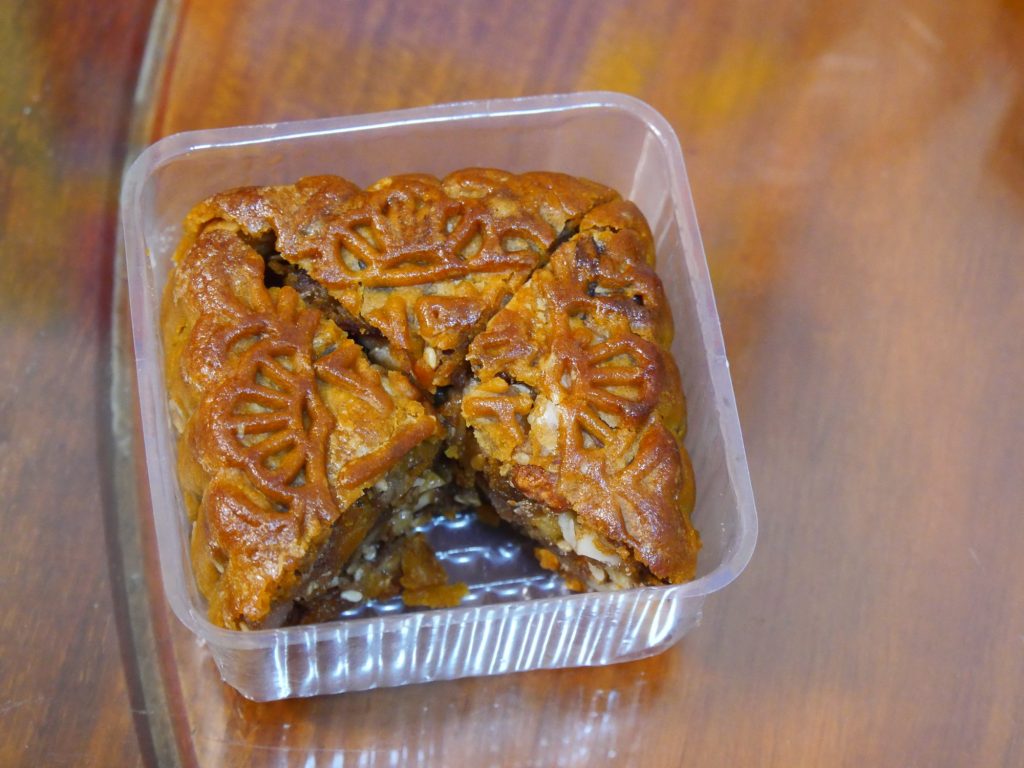
Mooncake sales and Mid-Autumn gift traffic will already be visible in shops by mid-September; that retail buzz can coexist with an office work Sunday. The city does both at once.
A practical week sketch (mid–late September 2026)
- Weekdays before 20 Sep: normal work; gift shopping rises
- Sun 20 Sep: makeup workday — office mode for many
- Mon 21–Thu 24 Sep: normal work bridge into the festival
- Fri 25–Sun 27 Sep (approx.): Mid-Autumn holiday window — family travel and local trips
- After 27 Sep: return to work, then prepare for Golden Week in early October
- Sat 10 Oct: makeup workday after Golden Week — another “weekend that works”
If you are choosing between traveling on Mid-Autumn versus Golden Week, compare crowd logic and train pressure in Golden Week 2026 vs Mid-Autumn rather than treating every autumn weekend as identical.
Communication phrases that reduce confusion
With coworkers or hotel staff, clarity beats slang:
- “9月20日是调休上班吗?” — Is 20 September a makeup workday?
- “中秋节假期是哪几天?” — Which days are the Mid-Autumn holiday?
- “公司按国家法定节假日安排吗?” — Does the company follow the national public-holiday arrangement?
With travel partners abroad, translate the idea: “We work this Sunday so we get a continuous Mid-Autumn break next weekend.”
What not to invent
Do not rely on overheard “everyone gets seven days for Mid-Autumn” claims, fake crowd percentages, or unofficial posters without checking the national notice and your HR mail. Mid-Autumn is a short holiday block compared with Golden Week. The makeup workday exists precisely because the official leave stretch is limited and needs stitching.
Bottom line
20 September 2026 is a work Sunday for much of mainland China’s official calendar, created through 调休 so Mid-Autumn around 25–27 September can be taken as a contiguous break. Travelers can still sightsee; expats should expect office rhythms; everyone should separately track the 10 October makeup day after Golden Week. Read the calendar twice — once as a worker, once as a visitor — and September suddenly makes sense.