Landed at PVG: what “calm” looks like
Shanghai Pudong International Airport (PVG) is many travellers’ first Chinese doorway. The terminal is large, bilingual enough on main paths, and full of transfer choices that feel overwhelming after a long-haul flight. Your goal on arrival is not to optimise every minute — it is to clear immigration, secure connectivity and payments, then choose one transfer mode that matches your luggage, hotel location, and energy.
This guide is for foreign visitors arriving in 2026, including trips that brush Mid-Autumn (Friday 25 September 2026, holiday roughly 25–27 September) or Golden Week (roughly 1–7 October). Festival periods make city traffic and metro cars denser; they do not change the basic transfer menu. For festival date logic, see Golden Week 2026 vs Mid-Autumn.
Step zero: immigration, baggage, and the first 30 minutes
Follow Arrivals signs. Keep passport, landing card information if required, and hotel address screenshots ready. After baggage claim, pause before you commit to a train:
1. Use the restroom.
2. Confirm your hotel’s Chinese address and nearest metro station.
3. Decide whether you need a local SIM/eSIM top-up immediately.
4. Check that mobile payments will work for tickets and rides.
If you still need connectivity help, read China SIM and eSIM for foreign visitors before you wander the whole terminal twice. Payment setup belongs before the Maglev gate or Didi pin — see Alipay and WeChat Pay.
Transfer options at a glance
PVG typically offers four practical paths into the city:
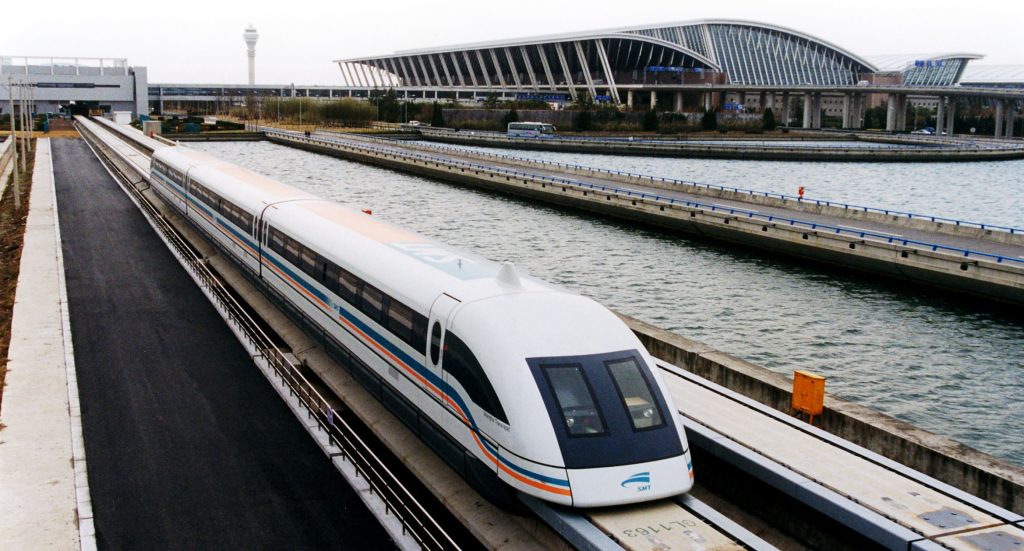
- Shanghai Maglev: Fast airport–Longyang Road link, then metro or taxi onward.
- Metro (Line 2 and connections): Cheapest common path, more stops, luggage effort.
- Airport bus: Useful for certain hotel clusters; watch schedules and last buses.
- Taxi / Didi: Door-to-door; cost and time vary with traffic and holiday density.
There is no single “best” choice — only the best choice for your bags and bedtime.
Maglev: when the fast train is worth it
The Maglev is the iconic PVG option: a dedicated high-speed link toward the Longyang Road area, where you continue by metro or road. It shines when:
- You want a short, memorable airport segment
- You are staying near a convenient Longyang Road metro connection
- Your luggage is manageable on escalators and short walks
- You arrive when Maglev operating hours still cover your landing
It is less ideal when:
- Your hotel is far from the Maglev–metro logic and would need a long second hop anyway
- You have very heavy luggage and limited hands
- You land near end-of-service and risk a stranded connection
Follow Maglev signs inside the airport. Buy tickets via authorised counters/machines/apps available that day. Keep the onward metro plan ready so you do not celebrate the Maglev ride and then stand confused at Longyang Road with a dead phone.
Metro from PVG: slower, clearer, luggage-honest
Shanghai Metro Line 2 connects Pudong Airport into the city spine. For many first-timers, metro is the calm default: predictable stations, English signage on major stops, and no surge pricing. The cost is time and physical effort with suitcases.
Metro tips after a flight:
- Use elevators where marked; do not hero-carry down long stairs.
- Stand near doors if you need to exit soon; keep bags out of doorways.
- Avoid weekday peak if you can shift by 30–60 minutes.
- Screenshot the exit letter for your hotel station before tunnels kill your signal.
If your hotel sits near People’s Square, Jing’an, or other Line 2–friendly areas, metro can be enough for the whole trip into town. If you are going somewhere poorly connected, metro-plus-short-Didi often beats a single long taxi in congestion — but only if you still have battery and patience.
Taxi and Didi: door-to-door without romance
Official taxi ranks are the safe road option when you are too tired to decode transfers. Keep your hotel address in Chinese ready to show. Use the meter path through authorised queues rather than accepting random solicitation.
Ride-hail (Didi and similar) works well when your apps and payments are already set — Didi for foreign visitors. Pin the correct terminal pickup zone; wrong pins waste more time than a slow metro.
Road transfers stretch during rain, Friday evenings, Mid-Autumn leisure peaks, and Golden Week travel days. If your flight lands into that mix, add buffer before any dinner reservation.
Choosing by scenario
Light bag + hotel on Line 2 corridor: Metro all the way.
Light bag + want the signature airport ride: Maglev, then metro.
Two large suitcases + late night + jet lag: Taxi/Didi.
Family with stroller: Elevator-aware metro or door-to-door road transfer; avoid rush-hour cars.
Arriving near Mid-Autumn or Golden Week: Prefer modes that fail gracefully — metro does not sit in expressway traffic; road modes need extra time.
Passport, hotel, and first-night logistics
Shanghai hotels will register your passport — bring it to the desk even if a friend checks in first. For the flow, see China hotel check-in with a foreign passport.
If your first night is in Puxi and your body wants sleep more than skyline, do not detour through Bund photo stops with luggage. Check in, shower, eat near the hotel, and save the walk for tomorrow. A first Shanghai overview that assumes you are already settled is easier after you unload bags — Shanghai first visit in early autumn pairs well as day-two reading.
Money, tickets, and small frictions
- Overseas cards work at some machines and fail at others; have a mobile-pay backup.
- Keep a little cash for odd gaps, but expect QR codes everywhere.
- Drink water after the flight before you commit to a long walk between terminals or stations.
- Photograph your baggage claim ticket area if anything feels wrong — then ask official staff, not strangers offering “help.”
A sample calm transfer plan (copy and adjust)
1. Clear immigration and baggage.
2. Connect SIM/eSIM if needed; open maps offline layer.
3. Confirm hotel Chinese address + nearest metro exit.
4. Choose Maglev or Line 2 or Didi — only one primary plan.
5. Buy the ticket / request the car.
6. Ride without optimising for Instagram.
7. Check in; only then message friends that you “arrived in Shanghai.”
Terminal orientation without getting lost
PVG’s terminals are linked but still easy to overwalk when you are tired. Stay inside official corridors, follow the colour-coded transfer icons, and ask uniformed staff if Maglev and metro signs diverge after a renovation. If your flight arrives at an unusual remote stand, budget extra minutes for the shuttle to immigration before you judge any city transfer clock.
Keep one “meeting point” mental anchor — a named cafe, information desk, or clearly numbered exit — so travel companions can regroup without phone calls failing on weak roaming. If you are using China’s 144-hour transit rules on a longer itinerary, confirm your permitted movement area before you treat Shanghai like an open-ended stay; the 144-hour visa-free transit guide is the companion read for that case.
Mistakes that make PVG harder than it is
- Wandering for free Wi-Fi instead of fixing connectivity once.
- Choosing Maglev for the vibe when your hotel makes the second hop miserable.
- Entering metro peak with two hard-shell suitcases and no elevator plan.
- Arguing with jet lag by adding a Bund sunset before check-in.
- Ignoring last Maglev/metro timing after a delayed flight.
Festival-season note for September–October 2026
Makeup workday Sunday 20 September behaves more like a weekday for commuting density. Mid-Autumn (~25–27 September) increases leisure travel. Golden Week (~1–7 October) increases everything that moves. None of that requires panic — only earlier hotel confirmation and a transfer mode that matches your luggage honesty.
Pudong Airport is a system, not a test. Pick one path, protect your phone battery, and let Shanghai start at the hotel door — not at the baggage belt.