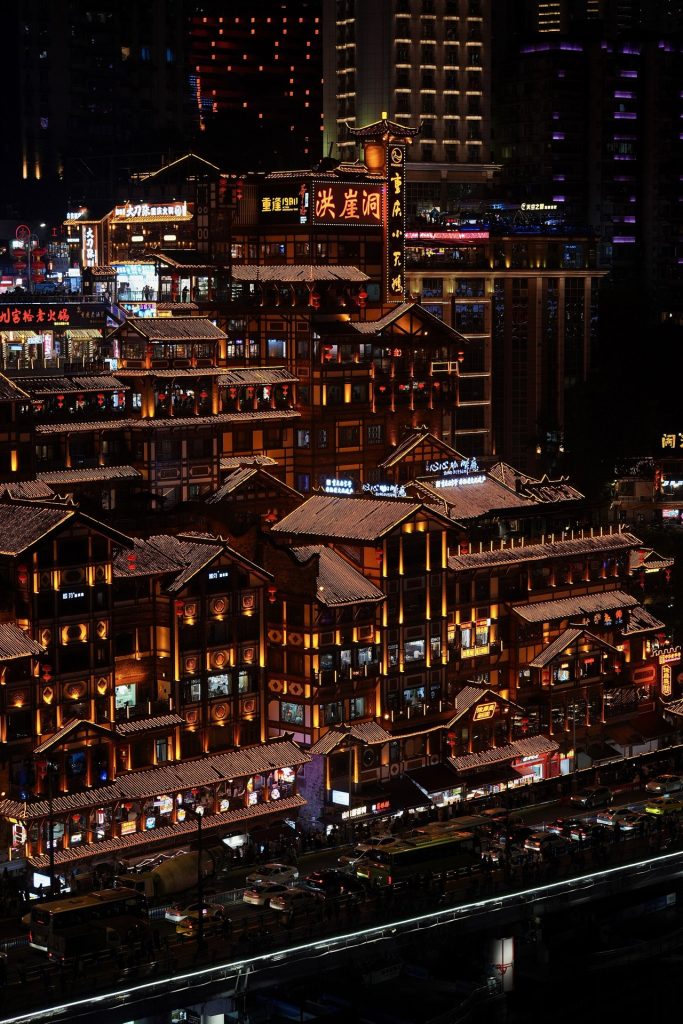
November in Chongqing does not announce itself with snow. It arrives as a cooler breath off the rivers, a earlier dimming of the cliff faces, and a thicker necklace of lights along Hongyadong. This is a short evening walk in story form—not a listicle, not a clone of Jinli or Bund night pieces—just one foreign traveller’s quieter loop from the lighted façades back toward the metro.
If you need practical city orientation later, keep Chongqing first-visit guide and China travel tools page bookmarked. Tonight is about looking.
The cliff that wears a lantern coat
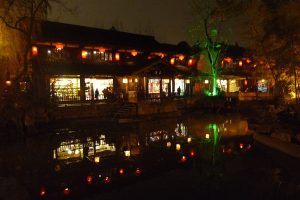
From the opposite bank or a riverside path, Hongyadong stacks timber-coloured galleries over stone like a theatre set that somehow pays rent. In November the air holds a thin mist; neon softens instead of shouting. Tour groups still pulse through the main stairs, but the edges—side alleys, a landing between escalators—open small pockets of hush.
Climbing into the noise, then past it
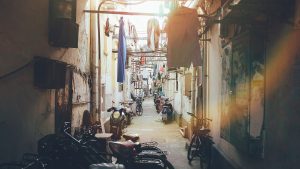
You buy nothing at first. You let the smell of hot oil and peppercorn hitch a ride on your coat. A child points at a projection of carp on a wall; someone films a selfie stick arc; a vendor’s radio leaks a pop chorus. Then a turn takes you onto a quieter flight of steps where laundry once might have hung and now only a security light hums.
River mist and the second city on the water
Below, the Jialing (and farther, the Yangtze’s wider grammar) moves like dark glass. Boat lights stitch slow dashes. Chongqing’s hills mean every view is also a staircase problem; your calves file the complaint your eyes ignore. A couple shares a paper cup of something sweet. You do not interrupt.
What you carry back
Not a checklist of “must-eat” stalls—you already know those exist—but the feeling of being inside a postcard without needing to own it. Phone battery at twenty percent. Hotel Chinese address still screenshotted. A decision to ride the metro one stop farther than necessary just to stay in the warm carriage a little longer.
Soft practical warmth
Wear a layer; November evenings bite more than noon forecasts admit. Keep a working payment wallet for a bottle of water (Alipay and WeChat Pay hub habits). Respect residents who live beside the spectacle—voices down in residential turns, drones grounded where signs ask, photos without blocking stair traffic.
The walk home
Escalators swallow the crowd in batches. Fluorescent station light replaces neon. Somewhere a train announcement rolls Mandarin and English in the same breath. Hongyadong stays on the cliff, glittering without you. That, somehow, is the point of coming: to see it continue after your evening ends.
A note on returning another night
If you come back, try the opposite bank for the wide postcard view, then skip the densest stair for a tea break on a quieter tier. Chongqing rewards repeat looks more than checklist sprints. Keep Chongqing xiaomian first-timers for a daylight noodle counter another morning—tonight was for light and mist.
<!–padded–>
Extra field notes for late 2026
Cross-check live official pages the week you travel. Keep passport, why cash is still needed, and one working wallet path (Alipay and WeChat Pay hub). Screenshot Chinese addresses and booking codes. November light fades earlier—start iconic outdoor plans sooner, and leave buffers for metro security trays.
<!–padded2–>
Rain-slick stone
If drizzle starts, stair edges shine. Slow down; the postcard can wait. Umbrella tips in crowds need awareness. A warm bowl the next morning—maybe noodles—repairs what the mist cooled (Chongqing xiaomian first-timers for another day’s appetite, not tonight’s plot).
Metro warmth as epilogue
The carriage heater hums. Someone eats a late skewer in a paper bag; you pretend not to notice the peppercorn ghost on your own sleeves. Hongyadong’s cliffs shrink to a phone photo you may never post. That privacy feels like the city’s gift on a November night.
Related Lovely China reading
For payments, start with Alipay and WeChat Pay hub and WeChat Pay vs Alipay for tourists. For trains, keep high-speed rail first-timers guide and 12306 passport signup for foreigners handy. City hubs: Beijing first-visit guide, Shanghai first-visit guide. Connectivity: roaming vs local SIM honest guide, pocket Wi-Fi vs eSIM for China, offline maps for foreigners. Bookmark China travel tools page.
Practical checklist
- Confirm official rules on the relevant government, park, airline, or bank page near your travel week
- Screenshot bookings, tickets, and QR codes while you still have stable Wi-Fi
- Save hotel and attraction names in Chinese characters in your phone notes
- Carry passport, a backup payment method, and a small cash float (why cash is still needed)
- Test one small mobile payment before you rely on wallets at a gate or taxi
- Keep the China travel tools page page bookmarked for related Lovely China hubs
FAQ
Is this a sightseeing checklist?
No—it is a literary evening sketch. Use the Chongqing city hub for transport and planning facts.
When is the light nicest in November?
Dusk into early evening is the classic window; exact timing shifts with sunset—check a local forecast.
Any etiquette on the stairs?
Keep moving with the flow, lower voices near homes, and follow posted photo/drone rules.
Do I need a ticket for Hongyadong?
Public viewing areas are generally strollable; shops and rides inside follow their own rules—verify on site.
Notes for late 2026 travellers
November and early December bring cooler mornings, earlier sunsets, and comfortable walking weather across much of eastern and central China. Pack layers and leave extra time on clear weekends at popular sights.
This article does not invent ticket prices, opening hours, processing times, consular fees, or official statistics. When a number matters, verify it on the official site, app screen, or ticket board near your travel week.
If an official rule page disagrees with this guide, follow the official page. Lovely China orients English-speaking travellers; we are not an immigration, banking, or medical authority.