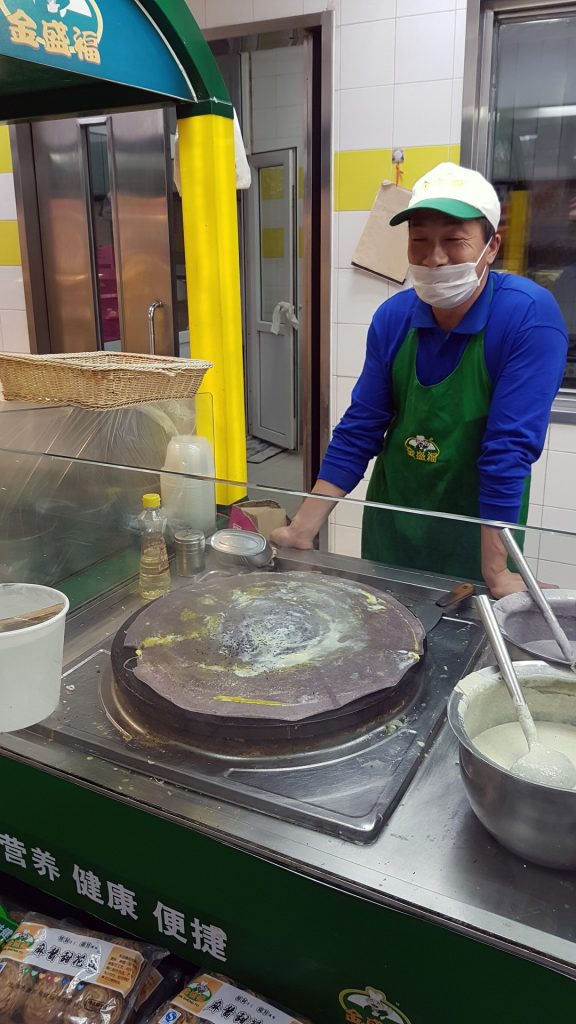
Stepping up to a bustling Beijing street-side cart on a crisp November or December morning to order a hot, freshly pressed jianbing is one of the ultimate quintessential expat and traveller experiences in China. Often translated as a Chinese breakfast crepe, this savory masterpiece is folded, brushed with rich bean pastes, and stuffed with crispy wonton skins and fresh herbs right before your eyes. For first-timers, the rapid-fire clatter of the spatula and the sheer sensory overload can feel intimidating, but conquering the morning rush is simpler than you think once you know the basic vocabulary, payment etiquette, and customization steps.
Decoding the Cart: What Goes Into a Authentic Beijing Jianbing
A traditional Beijing-style jianbing starts with a light, batter-based crepe poured onto a circular griddle, cooked instantly with a fresh cracked egg smoothed across the surface. Unlike its cousin from Tianjin, which heavily favors a crispier, crunchier pancake base, the Beijing variant is prized for its tender, slightly chewy wrap balanced by deliberate layers of texture and flavor.
When the vendor asks what you want, you are essentially building a custom breakfast package. The core foundation always includes:
The Base Batter: Mung bean or wheat flour spread paper-thin across the hot iron.
The Egg: Usually one or two eggs cracked directly onto the dough, scrambled and flipped into the crepe.
The Crispy Cracker (Bocui or Cui bing): A large, deep-fried crispy wonton skin that shatters delightfully with every bite.
The Spread: Brushed layers of savory sweet bean paste (tianshangjiang) and fermented bean curd (furu).
The Aromatics: Finely chopped scallions (conghua) and fresh coriander (xiangcai).
If you are planning an action-packed itinerary across the capital—especially when juggling transport logistics outlined in resources like our Beijing first-visit guide—this high-carbohydrate, protein-rich morning fuel will keep you energized for hours of walking.
Customizing Your Order: Spice, Meats, and Substitutions
Once you understand the basics, the fun begins with customization. Street vendors are remarkably accommodating if you know the right keywords to point at or speak aloud.
Controlling the Heat
Spice level is the single most important decision you will make. Beijing carts use a vibrant, smoky red chili oil (lazhao).
No spice: Say “Bu yao la” (不要辣).
Mild spice: Say “Wei la” (微辣) or point to a modest spoonful.
Extra spicy: Say “Duo la” (多辣) if you love serious heat.
Optional Add-ons and Dietary Tweaks
While traditional purists stick to egg, scallions, cilantro, and the crispy cracker, modern carts offer extra protein upgrades:
Sausage (Xiangchang): A split hot-dog style sliced sausage pressed into the middle.
Lettuce (Shengcai): A handful of fresh, crisp lettuce leaves added for extra crunch and moisture.
Tofu Skin (Doupi): Braised strips of spiced bean curd for a savory, chewy protein boost.
If you have specific dietary restrictions, remember that standard batters contain wheat and eggs, and the chili oil may occasionally encounter cross-contamination. If you want to dive deeper into local culinary etiquette after mastering breakfast, check out our Beijing roast duck order tips for navigating dinner reservations and table manners.
Payment Realities and Street-Stall Etiquette
Cashless payments dominate mainland China, and street breakfast carts are no exception. You will rarely see physical coins or paper bills exchanging hands for a standard morning crepe.
Digital Wallets: Almost every vendor displays a laminated QR code featuring WeChat Pay and Alipay. Simply scan the code using your app, enter the exact amount (usually between 6 to 12 RMB depending on your extra add-ons), and show the successful payment screen to the vendor.
The Cash Backup: While digital reigns supreme, older independent vendors or remote neighborhood stalls occasionally appreciate exact change if a network glitch occurs. Keeping some physical currency on hand—as discussed in our guide on why cash still needed—is always a smart safety net for travellers across China.
Queue Etiquette: Stand patiently near the cart, observe how others order, and have your phone or payment ready before the vendor turns to you. Morning rushes are fast-paced; keeping the line moving smoothly earns instant appreciation from locals.
Hygiene, Timing, and Common-Sense Tips
Street food in Beijing is generally exceptionally fresh because everything is cooked to order on a blazing hot metal griddle right in front of you. However, first-timers should keep a few practical pointers in mind.
Timing is Everything: Jianbing carts are strictly a morning phenomenon, typically operating from 6:30 AM until around 10:30 AM outside subway exits, office parks, and residential hutong alleyways. Once midday hits, they pack up entirely.
Watch the Oil: The griddle is heavily seasoned with cooking oil to prevent sticking. If you prefer a lighter breakfast, you can gesture or say “Shao you” (少油) to ask for less oil.
Napkins and Trash: Carts usually provide thin tissue packs, but carrying a small pack of pocket tissues and hand sanitizer is essential since you will be eating street food with your hands.
FAQ
Can I order a jianbing without cilantro or onions?
Yes, absolutely. If you dislike coriander or scallions, simply say “Bu yao xiangcai” for no cilantro, or “Bu yao cong” for no green onions. Most vendors are very accustomed to customizing these aromatics.
How much should a standard Beijing jianbing cost?
A basic jianbing with one egg and a crispy cracker typically costs between 6 to 9 RMB. Adding extra sausage, cheese, or multiple eggs might push the total to 12 or 15 RMB. If a vendor quotes significantly higher in a non-tourist neighborhood, politely look for another cart.
Are street food vendors safe for tourists with sensitive stomachs?
Yes, because jianbing are cooked fresh on a piping-hot griddle at high temperatures right in front of you, the risk of foodborne illness is very low. The ingredients are high-turnover and prepped daily. Just look for a busy stall with a long line of local office workers—that is always the definitive sign of quality and freshness.
Related Lovely China reading
For payments, start with Alipay and WeChat Pay hub and WeChat Pay vs Alipay for tourists. For trains, keep high-speed rail first-timers guide and 12306 passport signup for foreigners handy. City hubs: Beijing first-visit guide, Shanghai first-visit guide. Connectivity: roaming vs local SIM honest guide, pocket Wi-Fi vs eSIM for China, offline maps for foreigners. Bookmark China travel tools page.
Practical checklist
- Confirm official rules on the relevant government, park, airline, or bank page near your travel week
- Screenshot bookings, tickets, and QR codes while you still have stable Wi-Fi
- Save hotel and attraction names in Chinese characters in your phone notes
- Carry passport, a backup payment method, and a small cash float (why cash is still needed)
- Test one small mobile payment before you rely on wallets at a gate or taxi
- Keep the China travel tools page page bookmarked for related Lovely China hubs
FAQ
Is this food advice official?
No. Lovely China orients travellers. Verify live rules on official pages, apps, and counters near your travel week.
Will every city behave the same?
No. Airports, stations, parks, and markets differ. Use local signage and staff instructions when they conflict with a general guide.
What should I screenshot before I lose Wi-Fi?
Bookings, tickets, hotel Chinese address, pickup pins, and payment success screens.
Notes for late 2026 travellers
November and early December bring cooler mornings, earlier sunsets, and comfortable walking weather across much of eastern and central China. Pack layers and leave extra time on clear weekends at popular sights.
This article does not invent ticket prices, opening hours, processing times, consular fees, or official statistics. When a number matters, verify it on the official site, app screen, or ticket board near your travel week.
If an official rule page disagrees with this guide, follow the official page. Lovely China orients English-speaking travellers; we are not an immigration, banking, or medical authority.