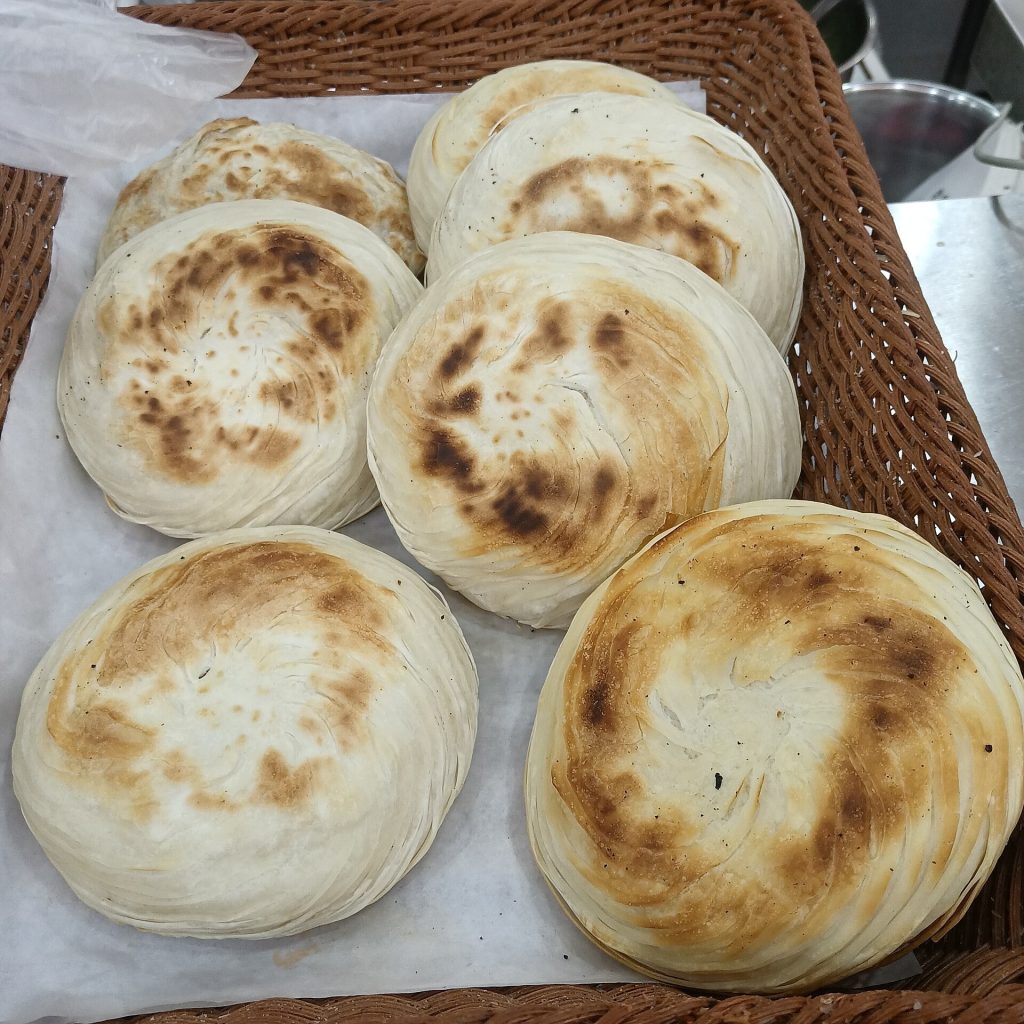
Stepping up to a bustling Xi’an street food stall and seeing a towering pile of golden-brown, freshly baked flatbreads next to a simmering pot of spiced, slow-braised meat can be exhilarating—and slightly intimidating for a first-timer. Often dubbed the “Chinese hamburger,” roujiamo is a culinary cornerstone of Shaanxi province with a history stretching back over a thousand years. Whether you are navigating a crowded stall in the Muslim Quarter or ordering via a smartphone mini-program in a modern dining district, mastering a few core terms and local ordering customs ensures you get exactly the texture, meat cut, and flavor profile you are craving.
1. Choosing Your Bun Style: The Foundation of Roujiamo
The defining characteristic of an authentic Xi’an roujiamo is not just the meat, but the bread (mo). Unlike soft, steamed, or fluffy sandwich rolls, traditional Xi’an buns are unleavened, dry-baked, and prized for their structural integrity and crisp exterior. When ordering, you will typically encounter two primary bread styles:
Baiji Mo (白吉馍): The most common style, featuring a dense, round, pale flatbread baked on a hot griddle without oil. It has a remarkably firm, biscuit-like crumb and a crisp, flaky crust. Its density is intentional: it holds up to juicy, rich meat without disintegrating in your hands.
Laizhi Mo or Guokui Variations (锅盔/烙馍 derivatives): Thicker, larger, or layered flatbread varieties found at specialized regional stalls. Some styles feature thousands of ultra-thin flaky layers that shatter satisfyingly with every bite, offering a lighter texture than the dense Baiji Mo.
First-Timer Tip: If the vendor asks for your preference or points to different bins, default to the classic Baiji Mo for the most traditional textural contrast against the tender meat filling.
2. Meat Selections: Lean, Fatty, and Authentic Cuts
Once your bun is chosen, the vendor will slice it open horizontally—leaving one side attached like a pocket—and chop the meat directly on a wooden cutting board with a heavy cleaver, often mixing in a spoonful of seasoned braising broth to keep it moist.
Pork Belly / Regular Cut (普通 / 肥瘦): The gold standard for traditional roujiamo. A mix of lean meat and rich, gelatinous fat (feishou xiangjian). As the meat is chopped together, the melting fat infuses the lean muscle, creating a rich, savory, and melt-in-your-mouth experience.
Lean Meat Only (纯瘦): Available upon request for diners who prefer to avoid visible fat. Note: Because traditional braised pork relies on fat to retain its succulent texture, ordering pure lean meat can sometimes result in a drier bite. Ask the vendor for an extra ladle of braising broth (mian zhi) to compensate.
Beef or Lamb Variants (牛肉夹馍 / 羊肉夹馍): Frequently found in Muslim-run eateries (Qingzhen stalls) across Xi’an. These versions utilize slow-simmered beef or mutton seasoned with heavy cumin, Sichuan peppercorns, and warming spices, served in a slightly different style of flatbread.
3. Customizing Flavor, Spice, and Heat
While the braised meat itself is deeply savory, infused with dozens of traditional spices like star anise, cloves, and cinnamon, your ordering customization happens right at the counter regarding chili oil and green additions.
Chili Oil (辣椒油): Shaanxi chili oil is famous for its vibrant red color, smoky aroma, and rich warmth rather than tongue-numbing heat. If you enjoy flavor depth, always say yes to a spoonful of chili oil (laizi). Specify your heat level if asked: weila (mild), zhongla (medium), or la (spicy).
Green Peppers and Cilantro (青椒 / 香菜): Many stalls will chop fresh green chili peppers or cilantro directly into the meat on the cutting board. If you dislike raw coriander or wish to avoid fresh chili crunch, clearly communicate: buyao xiangcai (no cilantro) or buyao lajiao (no peppers).
4. Takeaway Packaging and Street Etiquette
Roujiamo is the ultimate grab-and-go street food, engineered for convenience without sacrificing quality.
The Paper-Envelope Wrapper: Vendors typically slide the hot, stuffed bun into a grease-resistant paper pouch or a specialized plastic-lined sleeve. Hold it by the bottom paper sleeve to catch any savory juices that escape as you bite into the flaky crust.
Shared-Table and Stall Etiquette: If you are eating near a busy vendor cart or a small neighborhood noodle shop, seating is often communal. Grab your food, find an open stool or a standing ledge nearby, and be mindful of personal space in high-traffic pedestrian lanes. Keep your used wrappers and napkins ready for the designated bin provided by the stall.
FAQ
1. Can I order a vegetarian roujiamo?
Traditional roujiamo is defined entirely by its braised meat filling. However, some modern snack bars or night market vendors offer vegetarian alternatives stuffed with seasoned potatoes, shredded tofu skin, or spicy vegetables (tudou si jiamo). Always check the stall’s menu board or ask the vendor directly if vegetarian fillings are available.
2. How do I ask for the meat to be extra juicy?
If you prefer a rich, gravy-soaked sandwich, you can point to the pot and say duo fang dian rou zhi (please add a little extra meat broth). This ensures the interior crumb of the Baiji Mo absorbs the flavorful braising liquid without becoming soggy.
3. Are English menus common at Xi’an roujiamo stalls?
Traditional street-side stalls and neighborhood local favorites rarely feature English signage or translated menus. Having a translation app ready on your phone, practicing a few key phrases like roujiamo and feishou xiangjian (fat-and-lean mix), or simply pointing to display photos or other customers’ food makes ordering effortless.
Related Lovely China reading
For payments, start with Alipay and WeChat Pay hub and WeChat Pay vs Alipay for tourists. For trains, keep high-speed rail first-timers guide and 12306 passport signup for foreigners handy. City hubs: Beijing first-visit guide, Shanghai first-visit guide. Connectivity: roaming vs local SIM honest guide, pocket Wi-Fi vs eSIM for China, offline maps for foreigners. Bookmark China travel tools page.
Practical checklist
- Confirm official rules on the relevant government, park, airline, or bank page near your travel week
- Screenshot bookings, tickets, and QR codes while you still have stable Wi-Fi
- Save hotel and attraction names in Chinese characters in your phone notes
- Carry passport, a backup payment method, and a small cash float (why cash is still needed)
- Test one small mobile payment before you rely on wallets at a gate or taxi
- Keep the China travel tools page page bookmarked for related Lovely China hubs
FAQ
Is this food advice official?
No. Lovely China orients travellers. Verify live rules on official pages, apps, and counters near your travel week.
Will every city behave the same?
No. Airports, stations, parks, and markets differ. Use local signage and staff instructions when they conflict with a general guide.
What should I screenshot before I lose Wi-Fi?
Bookings, tickets, hotel Chinese address, pickup pins, and payment success screens.
Notes for late 2026 travellers
November and early December bring cooler mornings, earlier sunsets, and comfortable walking weather across much of eastern and central China. Pack layers and leave extra time on clear weekends at popular sights.
This article does not invent ticket prices, opening hours, processing times, consular fees, or official statistics. When a number matters, verify it on the official site, app screen, or ticket board near your travel week.
If an official rule page disagrees with this guide, follow the official page. Lovely China orients English-speaking travellers; we are not an immigration, banking, or medical authority.