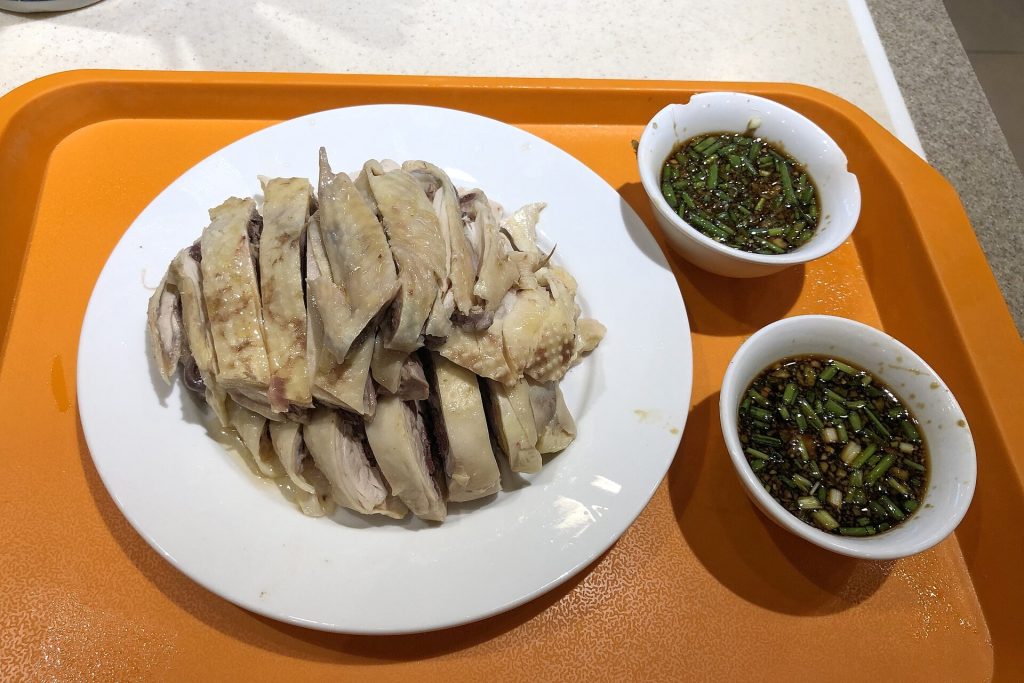
Shaoxing drunken chicken (绍兴醉鸡, Shàoxīng zuì jī) is a cold poultry dish that tastes of Shaoxing wine, a little salt, and the clean flavour of the chicken itself. Slices are usually arranged on a platter, often with a pale jelly or a wine-scented marinade still clinging to the meat. It is a classic Jiangnan starter, and it is easy to misunderstand on the first try: people expect a hot, battered “drunken” stir-fry, or they treat the wine aroma as a problem to wash off.
This is a first-timer guide to recognising the dish, ordering it under its Chinese name, and eating it so you get the meat and the fragrance rather than a confused comparison with roast chicken. It is not a restaurant ranking, and it will not invent prices. If you already know Hangzhou Dongpo pork for first-timers or Hangzhou beggar’s chicken for first-timers, you are in the right regional neighbourhood of the menu, but those are different dishes with different textures and temperatures.
What you are looking at
Zui ji is typically served cold or at cool room temperature, not sizzling. The chicken is cooked, then steeped in a Shaoxing-wine marinade so the meat takes on a clear, slightly sweet, slightly fermented aroma. A good plate looks tidy: skin on or partly on, slices even, a little jelly from the cooled cooking liquid or marinade around the edges. The smell should remind you of Shaoxing wine—nutty, mellow, gently boozy—rather than of raw alcohol.
It is savoury more than spicy. Heat is not the point. The pleasure is tender meat, a clean finish, and that wine perfume. If the chicken is dry, coarse, or tastes only of cheap sharpness, that is a kitchen problem, not something you fix by adding chili oil at the table as a reflex.
You may also see closely related “drunken” poultry or drunken crab on some Jiangnan menus. Ask, or read the characters. 醉鸡 is chicken. If you do not eat alcohol in any form, this is probably not your starter. The wine is the method, not a garnish you can always request “without.” A kitchen might offer another cold starter; it is not required to invent a standard alcohol-free drunken chicken. People who avoid alcohol can simply choose a different cold dish and leave zui ji to the rest of the table.
How to order and how to eat it
Say 绍兴醉鸡 or 醉鸡, or point to the characters on the menu. In a Hangzhou, Shaoxing, or Shanghai Jiangnan restaurant, staff will usually know the dish. In a mixed tourist restaurant far from that region, look at the characters anyway; a “drunken chicken” in English might be a different, hotter invention.
It is usually a shared starter, not a whole meal, and it is not typically eaten over rice as a main the way a braise might be. Take a slice, optionally with a little of the jelly or marinade, and eat it as it is. You do not need a dipping ritual, though a restaurant may put vinegar or a light dip on the table. Taste the meat first before you drown it.
Because it is cold, it is a useful counterpoint to a hot braise such as Hangzhou Dongpo pork for first-timers or a richer poultry such as Hangzhou beggar’s chicken for first-timers. On a shared table, serve from the platter with public chopsticks if they are offered, and see chopsticks etiquette for foreigners if you want a calm reminder of those habits. Order something warm and something green beside it so the meal is not only one fragrant, cool plate.
If you are unsure about the wine, say so when you order. Staff can tell you that yes, this dish is wine-marinated, and can suggest a non-wine starter instead. That conversation is easier before the platter arrives than after.
How it should taste, and when to send it back in your mind
The meat should be moist, the flavour rounded rather than harsh, and the wine present but not like a shot glass. A faint yellow or amber tinge in the jelly is ordinary. An aggressively salty plate, or one that smells stale, is not the platonic dish; you can stop eating it and focus on the other courses. This article will not give you a “authentic region only” lecture. Good zui ji appears in Shaoxing, Hangzhou, and many Jiangnan restaurants elsewhere. A tourist menu can still do it well, and a famous address can still serve a dry bird.
Allergies and alcohol sensitivity are real. If you cannot have wine, skip the dish. If you can have a little, a few slices in a mixed meal are what most diners do; you do not have to finish the platter as a dare.
Pay as you would in any restaurant: a tested official wallet, a card if a terminal exists, or help from staff at a kiosk. restaurant self-order kiosks for foreigners and Alipay and WeChat Pay hub cover those mechanics so the table can stay about the food.
You do not need a tasting script. You need the Chinese name, a willingness to eat it cold, and the understanding that the wine aroma is the point. When it is well made, the slices are tender, the jelly is clean, and the first smell of Shaoxing wine tells you why the dish has kept its place on the Jiangnan table.
Related Lovely China reading
For payments, start with Alipay and WeChat Pay hub and WeChat Pay vs Alipay for tourists. For trains, keep high-speed rail first-timers guide and 12306 passport signup for foreigners handy. City hubs: Beijing first-visit guide, Shanghai first-visit guide. Connectivity: roaming vs local SIM honest guide, pocket Wi-Fi vs eSIM for China, offline maps for foreigners. Bookmark China travel tools page.
Practical checklist
- Confirm official rules on the relevant government, park, airline, or bank page near your travel week
- Screenshot bookings, tickets, and QR codes while you still have stable Wi-Fi
- Save hotel and attraction names in Chinese characters in your phone notes
- Carry passport, a backup payment method, and a small cash float (why cash is still needed)
- Test one small mobile payment before you rely on wallets at a gate or taxi
- Keep China travel tools page bookmarked for related Lovely China hubs
FAQ
Is drunken chicken a hot stir-fry?
Usually not. 绍兴醉鸡 is typically a cold or cool, wine-marinated chicken platter. The Shaoxing-wine aroma is the point, not chili heat.
I do not drink alcohol. Can I still order it?
The wine is the method, not always a garnish you can request “without.” Ask when you order, and choose another cold starter if you avoid alcohol in any form. There is no standard alcohol-free drunken chicken.
How do I order it?
Say 绍兴醉鸡 or 醉鸡, or point to the characters. It is usually a shared starter. Taste a slice with a little marinade or jelly before you add any extra dip.
Notes for late 2026 travellers
Late December 2026 and the New Year week into 2027 bring colder mornings, earlier sunsets, and holiday crowds in many city hubs. Pack real winter layers in the north, and leave extra time on weekends and around 1 January.
This article does not invent ticket prices, opening hours, processing times, consular fees, or official statistics. When a number matters, verify it on the official site, app screen, or ticket board near your travel week.
If an official rule page disagrees with this guide, follow the official page. Lovely China orients English-speaking travellers; we are not an immigration, banking, or medical authority.