What Anhui stinky mandarin fish is
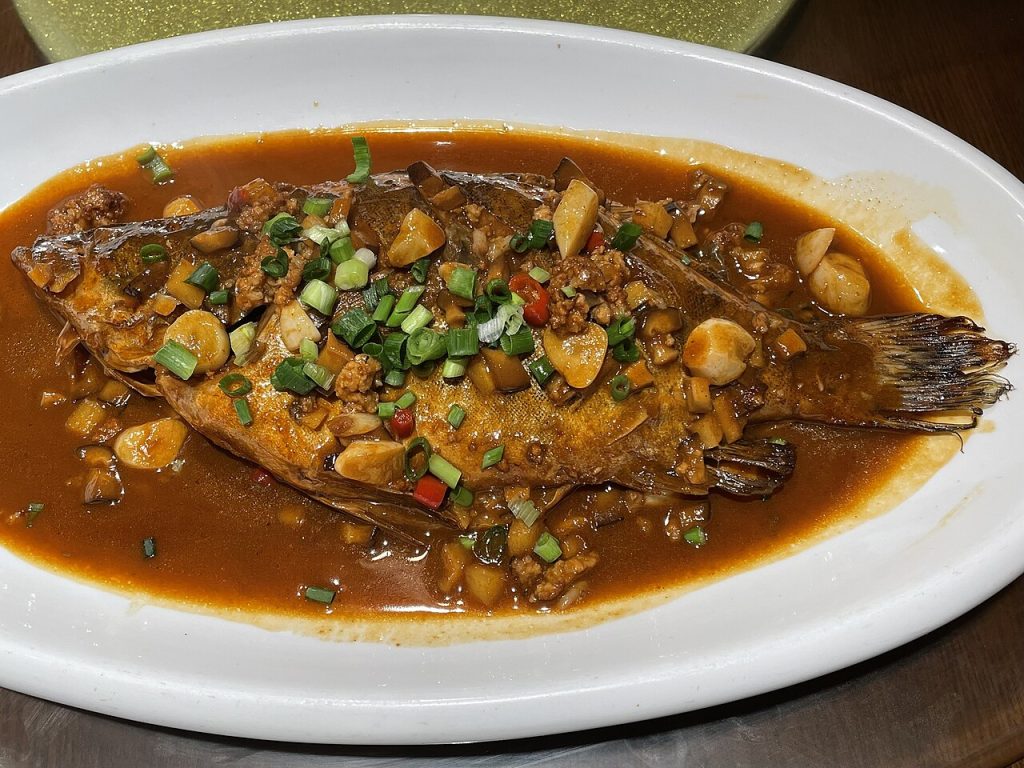
Anhui stinky mandarin fish (臭鳜鱼, chòu guìyú) is a Huizhou classic: mandarin fish lightly cured or fermented until it develops a strong aroma, then braised or steamed with soy, ginger, garlic, and often chilli until the flesh turns tender and the smell softens into savoury depth. English menus may say “stinky mandarin fish,” “stinky perch,” “chou guiyu,” or “Anhui fermented fish.” The “stinky” label scares first-timers; cooked well, the dish smells bold but eats clean and flaky rather than rotten. Point at the whole fish in red-brown sauce if the board is vague.
For first-timers it sits beside other Anhui and Jiangnan fish dishes such as Suzhou squirrel fish: regional, aromatic, and meant for shared tables rather than a solo snack. An earlier note on Anhui stinky mandarin fish covers a related spelling; this guide focuses on Golden Week travel pacing, ordering phrases, and how to handle the aroma without inventing restaurant lists or prices.
Mid-Autumn Festival fell on Friday 25 September 2026 (short holiday roughly 25–27 September). Ordinary workdays were 28–30 September. 1 October 2026 was National Day, the first day of Golden Week. Today 2 October 2026 is day two of Golden Week (roughly 1–7 October 2026), with a makeup workday on Saturday 10 October 2026 per State Council notice 国办发明电〔2025〕7号. Huizhou restaurants fill on holiday evenings after Huangshan and village walks — book or go earlier. Pair dinner with Hongcun and Xidi autumn tips or Huangshan hiking notes when queues ease.
Aroma, texture, and what “good” looks like
Good chou guiyu arrives as a whole fish (or large pieces) in glossy sauce, flesh opaque and lifting cleanly from the bone, aroma strong at first sniff then turning soy-savoury and ginger-warm. Texture should be tender, not mushy or dry. Some houses lean spicier; others keep a milder braise. The famous smell comes from controlled curing — it should not taste of ammonia or spoilage.
Hotel Chinese restaurants in Huangshan and Hefei often serve a polite, milder plate ideal for a first try. Tourist strips sometimes oversalt or drown the fish in sugar — ask for 清淡一点 if you are sensitive. Do not confuse chou guiyu with squirrel-shaped mandarin fish, which is sweet-and-sour and crispy, not fermented. Watch whether locals dig in quickly while the fish is hot. A steady local dining room is a better signal than neon “stinky fish!!!” English boards alone.
How to order without guessing
Useful phrases:
- 臭鳜鱼 — stinky mandarin fish
- 一份臭鳜鱼 — one portion (usually shared)
- 微辣 / 少辣 / 不辣 — mild / less spice / no chilli
- 清淡一点 — lighter seasoning
- 不要太咸 — not too salty
- 鱼刺多吗 — are there many bones? (there will be some)
- 两人份够吗 — is one fish enough for two?
Point at wall photos if English boards are thin. Confirm whether the price on the board is for a whole fish sized by weight — ask staff to show the fish size if you are unsure, without needing exact numbers written here. One fish usually feeds two to three with rice and vegetables.
Payments: Alipay / WeChat Pay. Maps need data in mountain towns. Didi for foreign visitors helps between hotel and old-street restaurants after dark.
Taste notes for first bites
Expect an assertive aroma that fades into soy, ginger, and tender white fish. Heat level varies by house. The flesh should flake; the sauce should cling without tasting only of sugar. Freshly cooked plates beat fish that sat under a heat lamp for photos.
Chou guiyu is a shared dinner centrepiece, not a quick street snack. Order rice, a green vegetable, and maybe tofu so the table balances. Stacking stinky fish, full hotpot, and late-night skewers in one dehydrated holiday hour is ambitious — especially after a Huangshan climb.
Etiquette and practical manners
- Serve elders or guests first if you are dining family-style.
- Use serving chopsticks or the clean end if provided; do not double-dip into shared sauce casually when hosts are formal.
- Watch for bones — mandarin fish has them; eat slowly.
- Leave chopsticks on the rest, not stuck upright in rice.
- One quiet photo is fine; spraying perfume to “cancel the smell” at the table is more awkward than the dish itself.
- Finish what you can; leftover bones on a side plate are normal.
Busy Huizhou rooms are proud of this signature. If the aroma hits hard at first, take a sip of tea, then try a small flake with sauce and rice. Many first-timers are surprised how mild the taste is compared with the smell.
Where to try (types of venues, not a fake list)
Look for Huizhou / Anhui restaurants that list 臭鳜鱼 clearly and show a steady local or tourist-plus-local mix rather than empty rooms with only English “stinky fish” neon. Huangshan gateway towns, Tunxi old street areas, and Hefei Anhui cuisine houses commonly serve it. Hotel Chinese restaurants can be fine for a cautious first plate. Village inns after a long hike may offer a home-style version — eat when you are hungry, not when you are rushed into the nearest door.
One excellent fish does not require a multi-town crawl. Fish, greens, rice, and an early night before a mountain morning can be enough. For Hefei orientation see Hefei for English speakers.
Common mistakes
- Smelling the raw reputation and refusing a single bite of the cooked dish
- Ordering the largest fish for two people already full from snacks
- Expecting boneless fillets like Western restaurant perch
- Confusing chou guiyu with sweet-and-sour squirrel fish
- Scheduling a pre-dawn Huangshan summit shuttle right after a heavy late banquet
- Assuming every “stinky” dish in China uses the same curing method
First-timer checklist
1. Confirm 臭鳜鱼 (fermented/braised mandarin fish), not squirrel fish.
2. Ask for 微辣 or 清淡一点 if you are sensitive.
3. Share with rice and a vegetable.
4. Eat carefully around bones.
5. Keep holiday seating slack near Golden Week evenings.
FAQs
Is it actually rotten? No — it is cured/fermented on purpose, then thoroughly cooked.
Is it spicy? Often mild-to-medium; ask for 不辣.
Kids? Texture can work if spice is low; bones need adult help.
Bones? Yes — eat slowly.
Difference from squirrel fish? Squirrel fish is battered, sweet-sour, and crispy; chou guiyu is cured and braised.
Allergy? Fish is central; soy, garlic, chilli common.
Pairing Anhui days without overload
A classic mistake is morning cable-car rush plus stinky fish banquet plus night snack street before another early hike. Pick a lane: lighter lunch on hike days, signature fish on a rest evening. Tea helps between aromatic courses. Autumn holiday air cools quickly in the mountains; carry a layer for restaurant air-conditioning and night walks.
Allergies, dietary notes, and polite refusals
Fish and soy are central. Chilli, garlic, and ginger are common. Shared woks may contact other seafood or peanuts in some kitchens — ask if that matters.
Polite refusal script: smile and say 我吃一点点试试 (I’ll try a little) or 清淡一点. Staff are used to curious first-timers. Tipping culture is not the same as in many Western restaurants; follow local payment norms via Alipay or WeChat.
Holiday crowds and pacing
On Golden Week day two, Huangshan-region restaurants book up. Build slack into every plan. A delayed bus plus a famous fish house queue plus a timed ticket is the classic stress triangle. Choose two food priorities per day, not five. If rain locks the peaks, indoor Huizhou meals and hotel restaurants are a solid plan B. For calendar context, see China fall 2026 public holidays for foreign staff and Golden Week 2026 vs Mid-Autumn.
Carry tissues, hand sanitiser, and a power bank. Busy venues stretch toilet lines on holidays. Drink water even when the air feels cool. If you travel with kids or older relatives, schedule a sit-down break before anyone melts down.
Screenshot the Chinese name 臭鳜鱼 before you lose signal in an old-town alley. When staff hold up fingers, confirm whether the number is fish size category or wait-time. Smiling confusion is normal; rushing creates wrong orders.
Lovely China was founded in 2025 to publish practical English guides for travellers and expats. Questions or a broken link: [email protected].
Before you go (quick mental rehearsal)
Know the Chinese name, expect a strong aroma and a milder taste, share the fish with rice, watch for bones, and leave buffer before mountain shuttles. That rehearsal prevents most first-timer stress. Lovely China founded 2025 — [email protected].