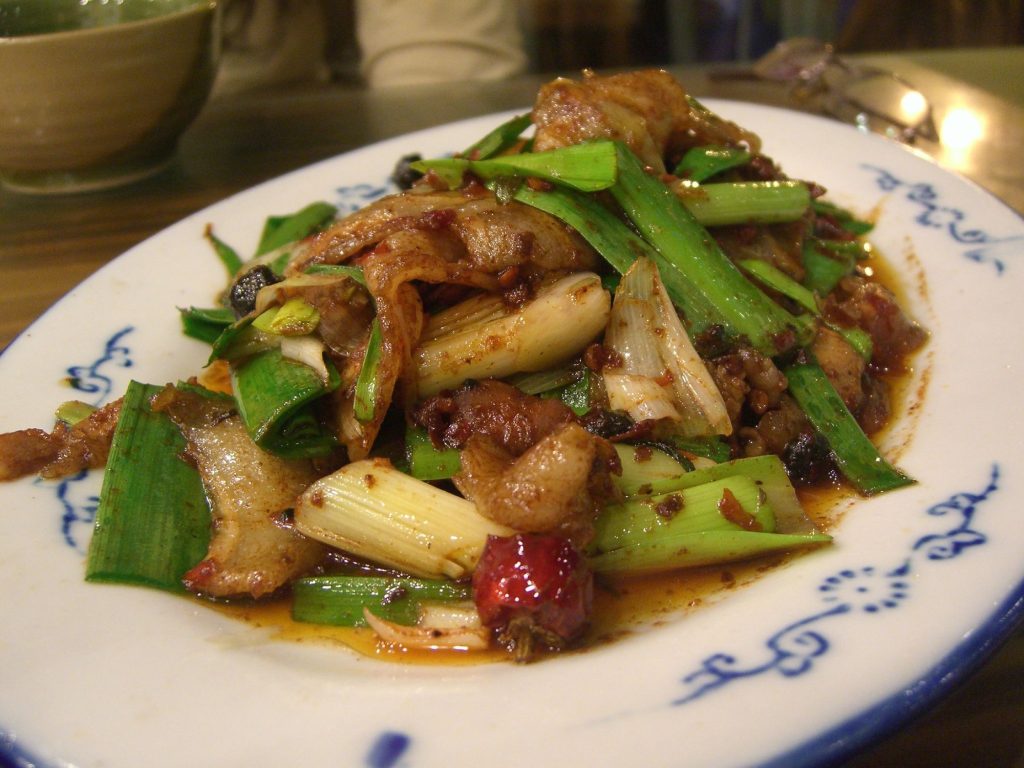
What twice-cooked pork is
Twice-cooked pork, or huiguorou (回锅肉), is a Chengdu home-style classic: pork belly boiled until just cooked, sliced thin, then stir-fried again with fermented chilli bean paste (doubanjiang), garlic sprouts or leeks, and often green peppers until the edges curl and the aroma blooms. The name literally means “meat returned to the wok.” For English-speaking first-timers it sits beside other Sichuan icons such as mapo tofu and kou shui ji: savoury, fragrant, and more about fermented chilli depth than pure numbness — though heat still appears.
A good plate should smell of Pixian-style douban and rendered pork, not only raw chilli powder. Slices should be thin enough to chew easily, with a mix of fat and lean that tastes cooked-through rather than rubbery. If your first serving is a greasy brick of under-sliced belly and salty paste, try another kitchen tomorrow rather than deciding Sichuan home cooking is “just oil.”
Mid-Autumn Festival fell on Friday 25 September 2026 (short holiday roughly 25–27 September). Ordinary workdays return Monday–Wednesday 28–30 September. National Day Golden Week runs roughly 1–7 October 2026, with a makeup workday on Saturday 10 October 2026 per State Council notice 国办发明电〔2025〕7号. Popular Jinli and neighbourhood Sichuan halls get crowded on holiday evenings — go earlier, later, or after a Jinli autumn stroll when queues shorten.
Why “twice,” and what you should taste
The first cook (boil) sets texture and renders some fat; the second cook (stir-fry) builds the signature flavour with doubanjiang, sweet bean paste in some houses, and aromatic vegetables. Edges of the pork should curl slightly — that “flowering” look is a quality cue, not a mistake. Garlic sprouts (suanmiao) bring freshness; green peppers add crunch without turning the dish into a pure chilli bomb.
Heat and salt vary by kitchen. First-timers who fear Sichuan often expect hotpot-level numbness; huiguorou is usually stir-fry fragrant rather than soup-numbing. Still ask for milder if you are sensitive. Do not drown the plate with extra chilli oil before tasting — the house balance matters.
How to order without guessing
Useful phrases:
- 回锅肉 (hui guo rou) — twice-cooked pork
- 一份 — one portion
- 微辣 / 少辣 / 不辣 — mild / less spicy / not spicy
- 不要太咸 / 清淡一点 — not too salty / a bit lighter
- 多点蒜苗 / 少放青椒 — more garlic sprouts / fewer green peppers
- 肥瘦都要 / 瘦一点 — mix of fat and lean / leaner
- 配米饭 — with rice (almost mandatory)
Point to wall photos if English menus are thin. Confirm whether the portion is meant for sharing — many Sichuan plates are family-style. Prices vary by hall; check the menu rather than relying on blog memory.
Payments: Alipay / WeChat Pay. Maps need data — see SIM / eSIM for foreign visitors. For a first Chengdu overview, a park tea morning plus a neighbourhood home-style lunch beats stacking every tourist strip dish in one dehydrated afternoon. Dan dan noodles can be a lighter same-day companion if you keep portions honest.
Taste notes for first bites
Expect savoury fermented chilli aroma, slightly sweet undertones in some houses, tender-chewy pork slices, and vegetables that still have bite. The dish should not taste only of salt and oil. Rice is not optional decoration — it balances intensity. Busy kitchens that cook to order are usually safer than trays that sat under heat lamps.
Huiguorou is often a shared plate for two to four people with rice and a vegetable or tofu side. Ordering it alone as your only dish can feel heavy; pairing it with a cool dish such as kou shui ji or a simple greens plate works better.
Etiquette and table manners
- Use serving chopsticks for shared plates when provided.
- Keep chilli oil drips off shared rice bowls and neighbouring sleeves.
- Phones and red oil mix poorly — wipe hands before photos.
- Do not blow aggressively across the table when cooling bites.
- Finish what you can; leftover oil on the plate is normal — you are not required to drink it.
Busy Chengdu dining rooms are friendly but compact. Keep bags off walkways. If you are unsure how spicy a house runs, ask for 微辣 before the wok starts.
Where to try (types of venues, not a fake list)
Look for Sichuan home-style restaurants (jiachangcai) with steady local turnover rather than empty rooms that only advertise “authentic spicy” in neon English. Hotel Chinese restaurants can be fine for a cautious first plate. Residential neighbourhood spots and long-running local brands often cook closer to everyday style. Tourist strips after a long panda-base morning can be hit-or-miss — eat when you are hungry, not when you are dehydrated and rushed.
Chain Sichuan brands exist; quality varies by outlet. A single excellent huiguorou with rice and greens can teach you more than a twelve-dish banquet of lukewarm tourist spice.
Common mistakes
- Expecting numb hotpot heat and then calling the dish “bland”
- Ordering huiguorou plus mapo plus dry pot plus hotpot the same night
- Skipping rice and then blaming the kitchen for “too intense”
- Scheduling a hard HSR departure immediately after a leisurely dinner without buffer
- Wearing a favourite pale shirt under enthusiastic red oil
- Asking for “not spicy” but then adding table chilli oil without tasting
First-timer checklist
1. Ask for 微辣 if you are heat-sensitive.
2. Order rice.
3. Taste before adding table condiments.
4. Keep holiday timing slack near Mid-Autumn and Golden Week.
5. Pair with one cool dish rather than three more heavy wok plates.
FAQs
Is it very spicy? Often medium; ask for 微辣 or 少辣.
Very fatty? Traditional belly includes fat — ask for 瘦一点 if needed.
Garlic sprouts or leeks? Both appear; houses vary.
Pork only? Classic is pork belly; other proteins are different dishes.
Kids? Possible with milder spice and plenty of rice — confirm heat level.
Pairing Chengdu days without stomach overload
A classic mistake is breakfast spicy noodles, lunch huiguorou plus mapo, afternoon snack skewers, night hotpot. Pick a lane: huiguorou as the lunch centrepiece after a People’s Park tea morning, or a richer evening Sichuan meal — not every icon in twelve hours. Tea and plain rice help. If you still want kou shui ji the same day, keep it as the cool contrast, not a second heavy centrepiece.
Mild autumn days are ideal for indoor wok lunches. Rainy afternoons also suit. Carry a light layer; restaurant AC can feel icy after outdoor humidity.
Allergies, dietary notes, and polite refusals
Pork, soy, fermented bean pastes, and chilli are core. Wheat may appear in pastes and accompanying noodles. Sesame oil or peanut traces can appear in mixed kitchens — ask if you have allergies. Shared woks mean cross-contact with other proteins is possible.
Polite refusal script: smile, point, and say 我不要这个 for a garnish you dislike, or 微辣 for milder heat. Staff are used to spice customisation within reason. Tipping culture is not the same as in many Western restaurants; follow local payment norms via Alipay or WeChat.
Holiday crowds and pacing
Near Mid-Autumn and Golden Week, build slack into every plan. A delayed metro ride plus a full dining room plus a timed panda or museum ticket is the classic stress triangle. Choose two food priorities per day, not five. If rain arrives, home-style Sichuan and tea are an excellent indoor plan.
Carry tissues, hand sanitiser, and a power bank. Busy venues stretch toilet lines on holidays. Drink water even when the air feels cool. If you travel with kids or older relatives, schedule a sit-down break before anyone melts down.
Screenshot the Chinese name 回锅肉 before you lose signal in a basement dining room. When staff write a number on a pad, confirm whether it is price, portion size, or wait-time. Smiling confusion is normal; rushing creates wrong orders.
Lovely China was founded in 2025 to publish practical English guides for travellers and expats. Questions or a broken link: [email protected].
Wok heat, leftovers, and next-day plans
Huiguorou tastes best fresh from the wok. Leftovers can be boxed, but the texture softens — plan to finish most of the plate with rice at the table. If you are spice-shy, start with a small shared portion and add a tofu or vegetable dish before ordering a second wok plate. Next-day plans should not begin with another heavy chilli breakfast unless you truly want that arc.
Chengdu tea culture helps pacing: a morning covered-bowl tea session, a mid-afternoon break, and one serious Sichuan meal often beats three aggressive spicy stops. Keep oral rehydration simple — water and tea — and avoid treating every chilli sheen as a challenge to escalate.
Before you go (quick mental rehearsal)
Know the Chinese name, confirm spice level, order rice, taste before table chilli, and leave buffer before trains or timed tickets. That rehearsal prevents most first-timer stress. Lovely China founded 2025 — [email protected].