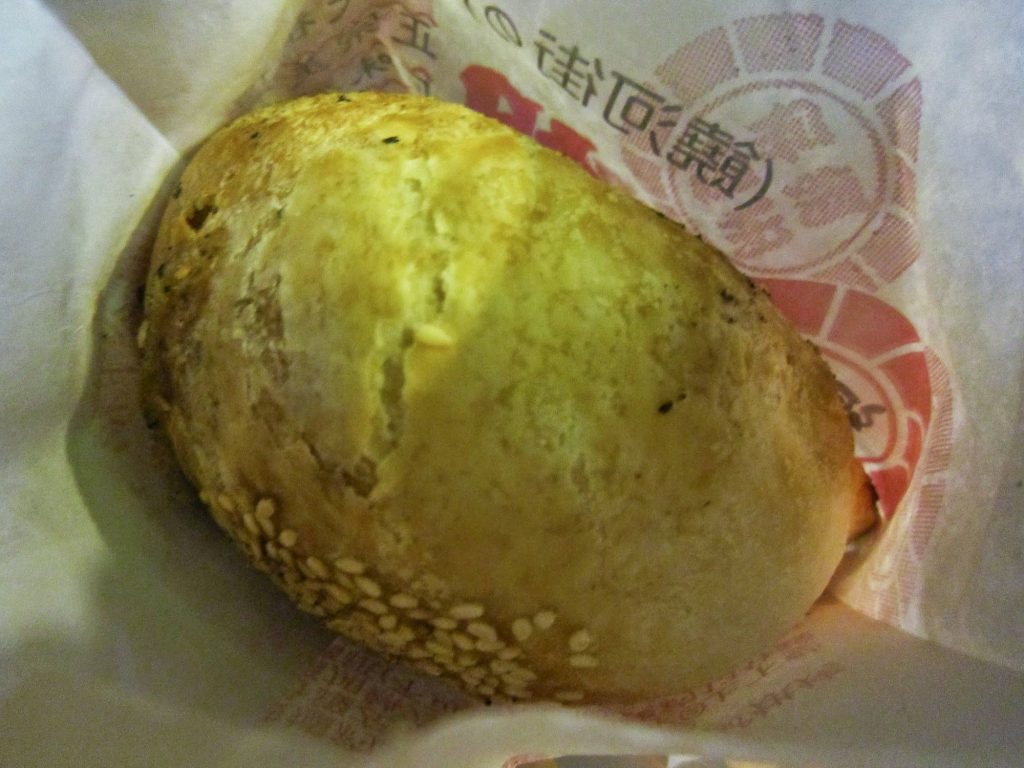
What hujiao bing actually is
Hujiao bing—胡椒饼 (hújiāo bǐng)—are Fuzhou-origin pepper biscuits (also called pepper buns): a flaky, blistered wheat bun stuffed with seasoned minced pork (sometimes with green onion), baked in a barrel-like clay or metal oven until the crust crackles and the filling steams. Cracked white pepper in the seasoning gives the dish its name—not necessarily a mouth-burning chili punch, though some stalls add chili heat.
You will see them at night markets, specialty Fuzhou snack shops, and in Taiwan night-market culture where the bun became famous. English signs may say “pepper bun,” “pepper biscuit,” “black pepper cake,” or “hujiao bing.” Trust 胡椒饼 over creative English.
This guide helps English-speaking travelers and expats buy a first bun without burning fingers, misreading spice, or confusing it with other stuffed breads.
What it is not
- Not a sweet cookie “biscuit” in the British dessert sense—savory bun.
- Not shengjianbao (pan-fried soup buns)—different dough, different cooking, different juice risk.
- Not roujiamo (meat clamped in a flatbread)—hujiao bing is a sealed baked bun.
- Not automatically “mild”—pepper and steam can surprise you.
How a typical stall works
Classic stalls bake buns stuck to the inner wall of a cylindrical oven. Staff peel them off with tongs or a hook when blistered and browned. Flow:
1. Queue and watch one exchange so you know the price display and add-on chili options.
2. Order by count—一个 / 两个 (one / two).
3. Receive the bun in paper; it is extremely hot.
4. Wait one or two minutes before biting, or risk steam burns.
Some shops pre-bake and hold buns in a warmer; texture drops. Fresh-off-the-wall is the goal. Night-market hygiene varies—use ordinary judgment from street food safety notes: busy turnover and hot ovens are better signals than English chalkboards alone.
Payment is often QR scan at the stall—see Alipay and WeChat Pay. Cash-only micro-stalls still exist in older neighborhoods; have a backup plan.
Prices differ by city and whether you are in a tourist night market—check the posted board, do not memorize a fixed RMB figure from a guide.
Taste, texture, and pepper level
A good bun should have:
- Crackly, layered crust with toasted spots
- Juicy but not soup-flooded pork filling
- White pepper aroma and savory seasoning
- Optional scallion brightness
Chili sauce on the side is common. Ask before they slash chili into the bun:
- 不要辣 — no chili
- 微辣 — mild chili
- 辣酱分开 — chili sauce separate
White pepper heat feels different from Sichuan chili oil—more nasal, less mala numbness. If you are sensitive, start without extra chili.
A calm first-timer script
1. Point at the oven buns or the photo of 胡椒饼.
2. Say 两个胡椒饼 (two pepper biscuits)—one is a snack; two is a light meal for many adults when walking.
3. Add 不要辣 if you want control.
4. Hold the paper wrapper, wait briefly, bite from the edge, watch for steam and dripping juices.
5. Step aside from the queue before photographing; stalls hate blocked tongs access.
Pocket line: 两个胡椒饼,不要辣。
If the stall offers cheese, egg, or fusion fillings, treat those as optional experiments after you taste the classic pork version once.
Where you will find them
Fuzhou and Fujian snack shops: Closest to the named origin story; look for specialty bakeries and snack streets.
Taiwan night markets and Fuzhou-heritage shops: The oven-wall image many travelers know from food media. Still authentic hujiao bing even when the stall is outside mainland Fujian—describe what you see accurately (pepper bun / hujiao bing), and enjoy the shared snack culture.
Other mainland cities: Fuzhou diaspora shops, some mall snack counters, and night markets. Quality swings; oven-baked beats microwave reheats.
If a menu only shows generic “meat pie,” ask whether it is 胡椒饼 specifically. Photo translation apps help—see menu photo translation.
What to drink and how to make a mini meal
Hujiao bing is rich and peppery. Pair with:
- Sugarcane juice, soy milk, or light tea at night markets
- Plain water if your mouth is dry from pepper
- A mild sweet drink if you added chili—your call
It can stand alone as a walking snack. For a bigger night-market circuit, alternate heavy buns with lighter bites rather than stacking three greasy items in ten minutes. QR-order restaurants rarely serve true oven hujiao bing; this is mostly stall and specialty bakery territory—different from QR restaurant menus, though some chains experiment.
Etiquette and practical tips
- Do not tip night-market stalls.
- Give tongs space; do not reach into the oven zone.
- Hot oil/steam burns are the main hazard—patience beats bravado.
- Solo snacking is normal; no need for a group order.
- Peak times: evening markets. Daytime specialty shops may bake on batches—ask which tray is freshest.
- Trash the wrapper in bins; night-market streets already fight litter.
Common first-timer mistakes
- Biting immediately and scalding the roof of the mouth.
- Assuming “pepper” means Sichuan mala—or assuming it means zero heat.
- Confusing it with shengjian and expecting soup squirts (different risk profile, still juicy).
- Ordering five “for later”—crust softens badly.
- Blocking the stall for a photoshoot while the queue grows.
Allergies and diet notes
Wheat dough and pork filling are standard. Lard may appear in dough or filling. Vegetarian versions are uncommon at classic stalls—do not assume “no visible meat” means vegetarian. Egg washes or dairy are possible in fusion variants. Sesame may dust some buns—ask if allergic (有芝麻吗?). Chili sauces may share spoons; request sauce on the side.
Regional note on naming and photos
Travel media often shows Taipei night-market ovens. Those are genuine hujiao bing in the pepper-bun tradition even when your trip is mainland-focused. Fuzhou remains the culinary hometown reference. When you post or journal, say what you ate (Fuzhou-style pepper biscuit / hujiao bing) and where you bought it—accuracy beats forcing every bun into one city’s postcard.
Oven cues: how to spot a serious stall
Look for:
- A vertical cylindrical oven with buns baked on the inner wall
- Steady queue turnover (buns not sitting for ages under a lamp)
- Staff who can state pork vs other fillings clearly
- A simple board with 胡椒饼 rather than only English “mystery meat bun”
Warning signs for a first visit: buns stacked cold in plastic, microwave beeps as the main “baking,” or staff unable to confirm ingredients. You can still eat carefully elsewhere—just know texture expectations drop.
If you are comparing starch snacks across cities, keep shengjian for Shanghai soup-bun days and hujiao bing for pepper-crust days. Both reward patience with heat; neither needs a full restaurant reservation.
Mid-Autumn and Golden Week crowds (2026)
Night markets swell before Mid-Autumn Festival (Friday 25 September 2026, roughly 25–27) and during National Day Golden Week (1–7 October 2026), with makeup workdays on 20 September and 10 October per State Council notice 国办发明电〔2025〕7号. Expect longer queues for famous oven stalls. Go earlier in the evening, or find neighborhood Fuzhou snack shops away from the loudest tourist strips. The bun itself does not change for the holiday—only the wait time does.
Bottom line
Order one or two 胡椒饼, refuse extra chili until you taste the pepper seasoning, wait for the steam to settle, and eat while the crust still crackles. It is one of the most portable introductions to Fujian snack culture—and one of the easiest night-market wins once you respect the heat of the oven and the punch of white pepper.