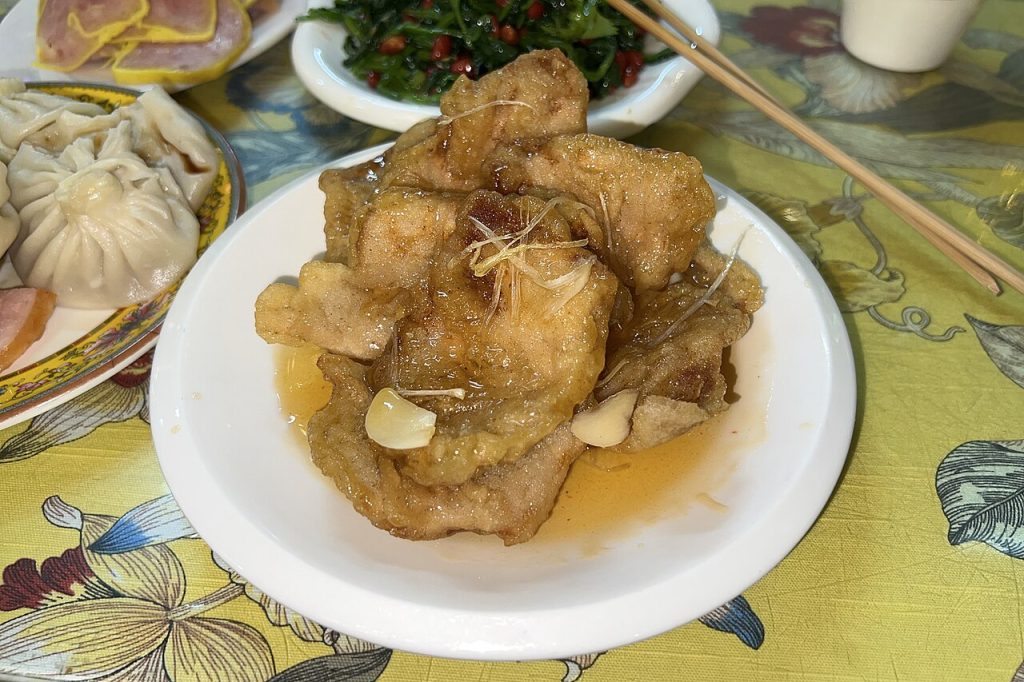
What Harbin-style guobaorou is
Guobaorou (锅包肉, guōbāoròu) is Northeast China’s famous sweet-and-sour fried pork: thin slices of pork loin battered and fried until shatter-crisp, then tossed in a bright vinegar-sugar sauce that should smell sharp and clean. Harbin and broader Heilongjiang cooking usually emphasise potato starch crunch and a clear sweet-sour glaze — not a thick red tomato-ketchup coating common in some Liaoning restaurant versions or in Cantonese-American “sweet and sour pork.” English menus may say “guo bao rou,” “fried pork in scoop,” “Northeast sweet and sour pork,” or “Harbin-style pork.” Point at the glossy pale-amber or light golden fried slices if the board is vague.
For first-timers it sits beside other Dongbei classics covered in Dongbei guo bao rou and Northeast guo bao rou: shared, crispy, and meant for rice. This guide focuses on Harbin / Heilongjiang style cues, ordering phrases, and Golden Week pacing without inventing prices or restaurant rankings.
Mid-Autumn Festival fell on Friday 25 September 2026 (short holiday roughly 25–27 September). Ordinary workdays were 28–30 September. 1 October 2026 was National Day, the first day of Golden Week. Today 2 October 2026 is day two of Golden Week (roughly 1–7 October 2026), with a makeup workday on Saturday 10 October 2026 per State Council notice 国办发明电〔2025〕7号. Northeast restaurants fill on holiday evenings — go earlier or share a set of cold dishes while you wait. Pair dinner with Harbin late-October travel tips or a Shenyang first-visit guide when dining rooms breathe.
Crunch, sauce, and what “good” looks like
Good Harbin-style guobaorou looks pale-gold and crisp, with sauce that coats without turning the crust soggy in the first minutes. Aroma should read vinegar, sugar, and fried starch — bright, not muddy tomato. Texture should shatter, then stay juicy inside. Carrot or coriander shreds sometimes appear as garnish; pineapple chunks are not required for the classic local plate.
Hotel Chinese restaurants may serve a milder, saucier plate ideal for a first try. Tourist strips sometimes drown the pork in sticky red syrup — ask whether the house style is 哈尔滨 / 黑龙江 or tomato-based if you care. Do not judge all “sweet and sour pork” in China by one ketchup-heavy plate. Watch whether locals eat quickly while the crust still sings. A busy Dongbei dining room is a better signal than neon English alone.
How to order without guessing
Useful phrases:
- 锅包肉 — guobaorou
- 一份锅包肉 — one portion (usually shared)
- 哈尔滨口味 / 老式的 — Harbin / old-style if they offer variants
- 脆一点 / 现炸的 — crisp / freshly fried
- 少糖 / 醋多一点 — less sugar / a bit more vinegar when staff can adjust
- 不要番茄酱 — without tomato sauce (if you want the vinegar-sugar style)
- 微辣 — mildly spicy only if a house variant adds chilli
Point at wall photos if English boards are thin. Confirm it is a shared plate, not a tiny single serve, when dining as a group. Order rice (米饭) immediately — guobaorou wants starch.
Payments: Alipay / WeChat Pay. Didi for foreign visitors helps between hotel and restaurant streets after dark.
Taste notes for first bites
Expect sharp-sweet vinegar brightness, crisp batter, tender pork, and a clean finish. Heat level is usually mild unless the house adds chilli. The plate should not taste only of sugar syrup. Freshly tossed portions beat piles that sat waiting under a lamp for photos.
Guobaorou is a shared table star, often with cold starters, dumplings, or a vegetable stir-fry. Hungry travellers can add Northeast stews later; stacking guobaorou, full barbecue, and late beer snacks in one dehydrated hour is ambitious.
Etiquette and practical manners
- Serve shared plates toward the centre; use serving chopsticks if provided.
- Eat while crisp — waiting for the perfect photo softens the crust.
- Leave chopsticks on the rest, not stuck upright in rice.
- Keep bags off narrow banquet chairs in busy holiday rooms.
- One quiet photo is fine; hovering over the wok pass is not.
- Finish what you can; a little leftover sauce on the plate is normal.
Busy Dongbei rooms are loud and friendly. If sweetness hits hard, pair bites with plain rice or ask for a vinegar-forward next order. Cool autumn holiday air outside contrasts with warm dining rooms — carry a light layer.
Where to try (types of venues, not a fake list)
Look for Heilongjiang, Harbin, or broader Northeast (东北菜) restaurants that list 锅包肉 and keep a steady local turnover. Hotel Chinese restaurants can be fine for a cautious first plate. Tourist strips near ice-and-snow attractions later in the season can be hit-or-miss — on Golden Week day two, eat when you are hungry, not when you are herded into the nearest neon door.
Chain Northeast brands exist in many cities; quality varies by outlet. One excellent plate does not require a city-wide crawl. Guobaorou, greens, rice, and an early stroll can be enough. For regional context see Heilongjiang travel guide.
Common mistakes
- Expecting bright red ketchup sauce and then calling vinegar-style “wrong”
- Letting the plate sit until the crust turns soft for photos
- Ordering only meat dishes with no rice or vegetables
- Scheduling a hard HSR departure right after a long banquet
- Confusing guobaorou with Cantonese sweet-and-sour pork balls
- Assuming every Dongbei house uses the identical recipe
First-timer checklist
1. Confirm 锅包肉 and ask if the house is vinegar-sugar (Harbin-leaning) or tomato-style.
2. Order rice.
3. Eat while the crust is crisp.
4. Share with a vegetable dish.
5. Keep holiday seating slack near Golden Week evenings.
FAQs
Is it spicy? Usually no; sweet-sour is the point.
Kids? Often popular — check sugar level and cut pieces smaller.
Pork? Yes — ask about 清真 alternatives separately; classic guobaorou is pork.
Gluten? Batter and soy sauce may contain wheat — ask if sensitive.
Difference from Tangsu pork / Korean tangsuyuk? Related fried sweet-sour family, not identical recipes.
Tomato or not? Harbin / Heilongjiang lean vinegar-sugar; some Liaoning restaurants use tomato sauce.
Pairing Northeast days without overload
A classic mistake is guobaorou plus dumpling feast plus barbecue skewers before a timed museum visit. Pick a lane: crisp pork as the dinner centrepiece, lighter lunch earlier. Tea or plain water helps after sweet-sour. Autumn holiday winds in the Northeast can feel sharp; dress in layers between outdoor queues and warm rooms.
Allergies, dietary notes, and polite refusals
Pork, wheat starch/batter, soy, vinegar, and sugar are central. Egg may appear in some batters. Shared fryers contact other dishes.
Polite refusal script: smile and say 少糖 or 我不要番茄酱 if you want adjustments. Staff are used to curious first-timers. Tipping culture is not the same as in many Western restaurants; follow local payment norms via Alipay or WeChat.
Holiday crowds and pacing
On Golden Week day two, build slack into every plan. A delayed metro ride plus a famous Dongbei restaurant queue plus a timed ticket is the classic stress triangle. Choose two food priorities per day, not five. If rain or wind arrives, indoor Northeast dining rooms are a solid plan B. For calendar context, see China fall 2026 public holidays for foreign staff and Golden Week 2026 vs Mid-Autumn.
Carry tissues, hand sanitiser, and a power bank. Busy venues stretch toilet lines on holidays. Drink water even when the air feels cool. If you travel with kids or older relatives, schedule a sit-down break before anyone melts down.
Screenshot the Chinese name 锅包肉 before you lose signal. When staff hold up fingers, confirm whether the number is portions or wait-time. Smiling confusion is normal; rushing creates wrong orders.
Lovely China was founded in 2025 to publish practical English guides for travellers and expats. Questions or a broken link: [email protected].
Before you go (quick mental rehearsal)
Know the Chinese name, prefer vinegar-sugar Harbin-leaning style if offered, order rice, eat while crisp, and leave buffer before trains. That rehearsal prevents most first-timer stress. Lovely China founded 2025 — [email protected].