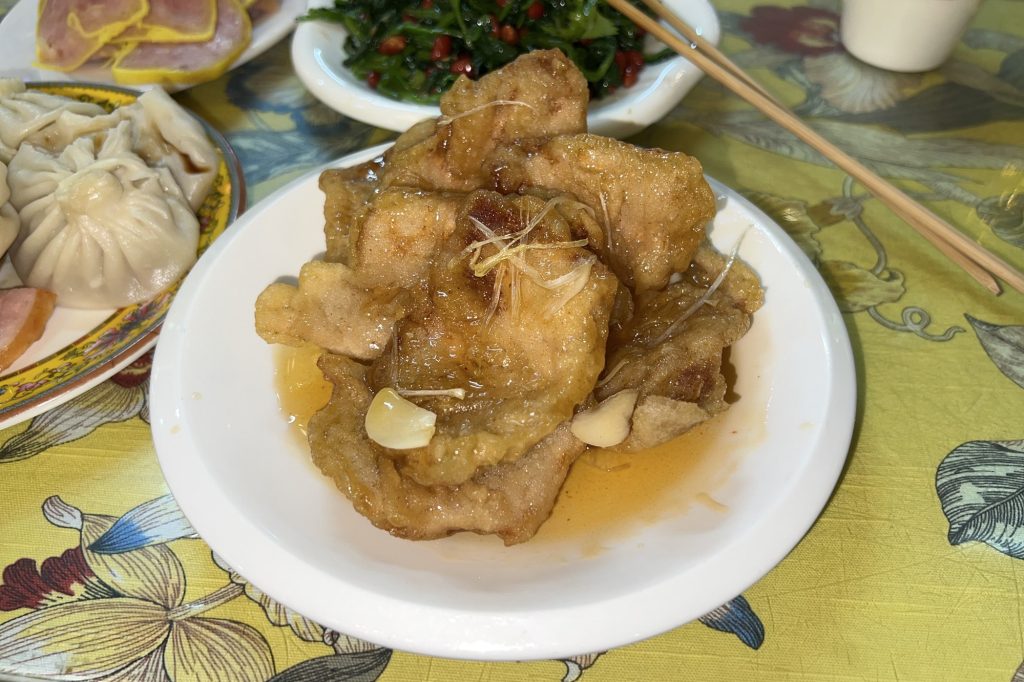
What guo bao rou actually is
Guo bao rou—锅包肉 (guōbāo ròu)—is a Northeast China (Dongbei) classic: pork slices coated in a thin starch batter, fried until crisp, then quickly tossed in a bright sweet-and-sour sauce with vinegar, sugar, and often carrot, onion, or wood-ear accents. Done right, the exterior stays crackly while the sauce clings in a glossy sheet—not a heavy batter sponge swimming in syrup.
English menus may say “sweet and sour pork,” “crispy pork in sweet sour sauce,” “guo bao rou,” or “Northeast sweet sour pork.” That English overlap is dangerous: Cantonese 咕噜肉 / American-Chinese sweet-and-sour pork is a cousin, not a twin. Look for 锅包肉 on Dongbei or northern home-style menus. Photo-translate when needed—see reading Chinese menus with photo translation apps.
This guide helps English-speaking travelers and expats order a first plate calmly: texture expectations, sweetness level, what to eat with it, and how it fits beside other Dongbei comfort food.
Why first-timers should care
Guo bao rou is one of the most approachable “wow” dishes for visitors who fear chili oil lakes. It is not mala. Heat is optional and usually mild if present at all. The drama is crunch plus vinegar-sugar balance. For groups with mixed spice tolerance, it is a peacekeeper plate next to something spicier.
It also corrects a stereotype: “Chinese sweet-and-sour” is not one recipe. Northeast kitchens take pride in a sharper vinegar edge and a thinner, crispier coat than many takeout stereotypes abroad.
What should arrive on the plate
Expect irregular thin-ish fried pork pieces (not giant breaded nuggets), a translucent amber-red sauce, and vegetable accents. The sound matters: a good plate still crackles faintly when it hits the table. Within minutes, steam softens the crust—eat sooner rather than later.
Good signs:
- Audible crisp when chopsticks break a piece
- Sauce that coats rather than floods a soup bowl
- Balanced sour-sweet—your jaw should notice vinegar, not only sugar
- Pork cooked through but not jerky-dry inside
Weak signs: soggy batter collapsed into paste, neon syrup with no acidity, or thick breadcrumb-style crust that tastes like fried dough first and pork second.
Portion sizes are generous in many Dongbei restaurants—check the menu, do not assume a tiny tapas plate. Prices vary by city and pork cut.
Sweet, sour, and “is it spicy?”
Classic guo bao rou is sweet-and-sour, not spicy. Some modern shops add a little chili for color or trendiness; ask if you are sensitive:
- 不要辣 — no spicy
- 少放糖 — less sugar (not all kitchens adjust, but worth asking)
- 酸一点 — a bit more sour (sometimes possible)
- 锅包肉 — the dish name itself
If you dislike very sweet sauces, say so early. Coastal tourist restaurants sometimes sugar-forward the plate for “foreigner-friendly” assumptions. Busy Dongbei kitchens for local customers often keep a proud vinegar spine.
Taste with rice immediately. Sauce alone on a chopstick tastes sweeter than sauce-on-rice.
How to order (portion and table logic)
For two people, one guo bao rou plus a vegetable and rice can be enough if the pork portion is large. For three to four, it becomes a shared centerpiece beside dumplings, stewed dishes, or cold appetizers.
On QR menus, search 锅包肉 or look for crispy golden pork photos with red sauce. Pointing works. See QR menu tips for foreigners.
Calm script:
1. Confirm the characters 锅包肉 (not a random “sweet sour pork” photo that might be another style).
2. Ask 不要辣 if you want zero chili drift.
3. Order 米饭—this dish exists to flavor rice.
4. Add a simple green vegetable or tofu stew for balance.
5. Eat while crisp; do not let it sulk under a lid while you finish speeches.
Pocket line: 一份锅包肉,两碗米饭,不要辣。
What goes with guo bao rou
Plain rice is the partner. Dongbei meals may also bring:
- Cold dishes (cucumber, wood ear, potato salad variants)
- Dumplings or boiled proteins
- Stewed sauerkraut or soybean dishes in colder months
- Sorghum drinks or beer if the table drinks—optional
Avoid ordering guo bao rou and another heavy fried sweet dish in the same first meal unless the group is large. Pairing it with a clean soup helps.
If your table also wants Cantonese roast meats the same week, that is a different tradition—see char siu and siu yuk—save comparisons for a second night.
Guo bao rou vs other “sweet and sour pork” labels
- 锅包肉 — Northeast crispy starch-fried slices, vinegar-sugar sauce
- 咕噜肉 — Cantonese sweet-and-sour pork, often denser batter cubes, ketchup/pineapple profiles in many restaurants
- 糖醋里脊 — sweet-and-sour tenderloin; related northern idea, presentation varies
- 荔枝肉 — Fujian-influenced sweet-sour pork ball style in some menus
If the English says only “sweet and sour pork,” ask staff which Chinese name it is, or show 锅包肉 on your phone.
Regional and restaurant variations
Harbin / Jilin / Liaoning restaurants often treat guo bao rou as a signature—sauce recipes are house points of pride. Beijing and other cities’ Dongbei restaurants are the easiest places for travelers to find it outside the Northeast. Mall food courts may serve a softer, sweeter version.
Some chefs finish with colorful vegetable shreds; others keep the plate pork-forward. Pineapple appears in some modern or fusion plates—more controversial among purists, still common enough that you should look at the photo before ordering if you dislike fruit in savory sauces.
Autumn and winter Dongbei meals lean hearty; guo bao rou fits that mood without requiring chili endurance.
Practical tips and etiquette
Shared plate: use serving utensils if provided. Eat soon for crunch. Do not tip in ordinary restaurants. Solo diners can ask for 小份 where offered; otherwise plan leftovers (crisp will fade—still tasty, different texture).
Peak dinner hours in popular Dongbei spots mean waits; the fry-and-toss step is fast once your turn hits the wok, so delays are usually queue, not long braising.
Payment is QR-heavy in cities—keep Alipay and WeChat Pay for visitors ready.
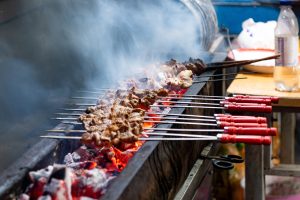
For street-stall fried foods generally, use standard caution; guo bao rou is more often a sit-down restaurant dish than a skewer-stick snack—see street food safety notes if you do find a market version.
Common first-timer mistakes
- Expecting Cantonese takeout flavor and calling Dongbei “wrong”
- Letting the plate sit ten minutes while photographing, then blaming the chef for sogginess
- Ordering without rice
- Stacking it with three other deep-fried dishes on a first Dongbei night
- Assuming it will be spicy because many Chinese meat dishes are
- Confusing the name with 锅包肉 vs similarly romanized dishes—show characters
Allergies and diet notes
Pork and wheat/starch batter are core—not gluten-free. Egg may appear in some batters—ask (有鸡蛋吗?). Sauce may include soy. Sesame is less central than in many Sichuan dishes but can appear as garnish oil. Cross-contact in a busy fryer line is possible.
There is no classic vegetarian guo bao rou; tofu “sweet sour” dishes are different items. If you avoid pork, skip rather than forcing a substitute under this name.
A calm first-timer plan
1. Find a Dongbei or northern home-style restaurant with 锅包肉 on the menu.
2. Order the pork + rice + one vegetable.
3. Confirm not spicy if needed.
4. Eat promptly for crunch; discuss vinegar balance after the first few bites.
5. Save spicier experiments (hotpot, mala) for another meal—this plate is your non-chili win.
If the table loves the sweet-sour idea and wants a Cantonese brunch contrast later, dim sum rice rolls and roast meats scratch a different itch—do not force one region to taste like the other.
Bottom line
Guo bao rou is Northeast China’s crisp sweet-and-sour pork: thinner batter, proud vinegar, rice-ready, and usually chili-optional. Order it by Chinese name, eat it while it crackles, and use it as a friendly gateway to Dongbei tables when your group’s spice tolerance does not match. Once you know how a house balances sugar and vinegar, you will recognize good versions across China’s many “Northeast kitchen” signs.