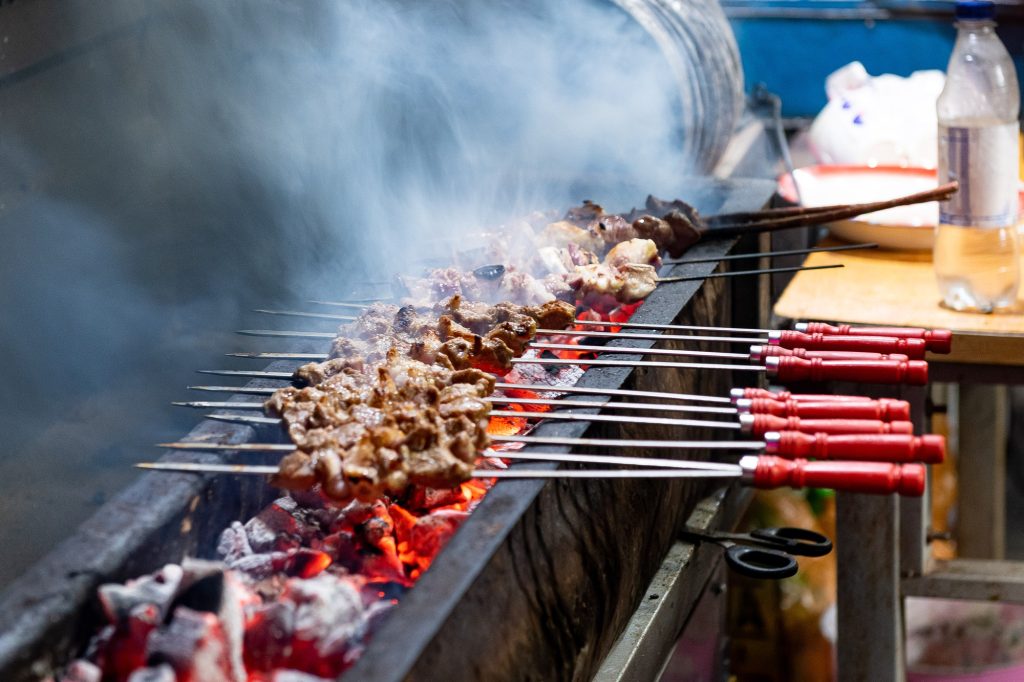
What yangrou chuan actually is
Yangrou chuan—羊肉串 (yángròu chuàn)—are lamb (or mutton) skewers seasoned with cumin, chili flakes, salt, and sometimes egg wash or sesame, grilled over charcoal or gas until the edges crisp and the fat drips. In Xinjiang and across Chinese cities, they are evening social food: order by the stick, stand or sit near the grill smoke, and keep a count going until the table is full of empty skewers.
English menus may say “lamb kebab,” “mutton skewers,” “chuanr,” “BBQ skewers,” or “Xinjiang lamb.” Locals say 羊肉串 or simply 串 (chuàn). Photograph the characters when neon English fails—see reading Chinese menus with photo translation apps.
This guide is for travelers and expats ordering calmly on night one: spice language, how many sticks to start with, what else to eat, how city “Xinjiang” grills differ from a trip inside Xinjiang, and how this genre relates to broader Chinese BBQ skewers (chuanr).
Why first-timers should try them
Yangrou chuan teach cumin-chili grilled lamb in its most approachable format—no whole roast animal, no banquet etiquette beyond not wasting sticks. They are easier than navigating a full Xinjiang big plate chicken portion for a solo diner, and more focused than a mixed skewer binge of squid, gluten, and garlic shoots on night one.
They are also everywhere: university neighborhoods, night markets, dedicated Xinjiang restaurants, and late-night alley grills. Once you can order 十串羊肉 without panic, a large slice of China’s night-food culture opens.
What a good skewer looks like
Expect chunks of lamb with some fat (fat = flavor on the grill), visible cumin and chili speckles, and slight char. Pure lean cubes dry out. Wire or bamboo sticks are both common; Xinjiang-style metal skewers are classic in many dedicated shops.
Good signs:
- Active grill, short wait between order and serve
- Cumin aroma, not only generic “BBQ sauce” sweetness
- Mix of lean and fat on the stick
- Chili offered as a variable, not a mystery sludge
Weak signs: grey steamed-looking meat under a heat lamp, sticky sweet glaze with no cumin, or mysterious “lamb” that smells only of oil. Busy evening grills beat empty afternoon displays.
Prices are per stick or per set—read the board or ask before you pile a mountain on the tray. Ranges vary wildly by city and cut.
Spice levels and seasoning words
Default seasoning is cumin + chili heat, not Sichuan peppercorn numbness. You can usually ask the grill cook to adjust:
- 不要辣 / 不辣 — no spicy
- 微辣 — mild
- 中辣 — medium
- 加孜然 — more cumin
- 少辣椒面 — less chili flakes
- 胖的 / 瘦的 — fattier / leaner pieces (shop-dependent slang and gestures help)
- 羊肉串 — lamb skewers specifically (vs chicken, beef, or veggie sticks)
If you only say “BBQ,” you may get a mixed assortment. Point at lamb or say 只要羊肉串.
Taste one skewer before dumping extra chili powder from the table shaker. Table chili can be hotter than the grill dust.
How many to order (portion logic)
For a first solo try, start with eight to twelve small sticks—or fewer if the shop’s skewers are huge “jumbo” pieces. For two people, twenty sticks plus bread or noodles is a common opening, then reorder. Watch neighboring tables: stick size lies on menus.
Do not race the grill by ordering fifty at once on night one. Batches taste better fresh; you can always say 再来十串.
Useful companions:
- 囊 (náng) — baked flatbread for wrapping meat and catching juices
- 啤酒 — beer, if you drink (classic pairing; not mandatory)
- 酸奶 or soft drinks — cooling contrast
- 拉面 or 拌面 — if the same Xinjiang shop serves laghman noodles
- Vegetable or gluten skewers for variety—after you understand the lamb baseline
A calm script:
1. Confirm 羊肉串 (lamb).
2. Ask 微辣 or 不辣 if chili-shy; emphasize 孜然 if you love cumin.
3. Order a modest first round + bread if available.
4. Eat while hot; reorder what you liked.
5. Pay by stick count; keep a rough tally so the bill matches memory.
Pocket line: 十串羊肉串,微辣,加孜然。
Grill formats: street, restaurant, night market
Street charcoal grills deliver smoke and speed; standing is common. Use ordinary first-month judgment—see street food safety notes.
Sit-down Xinjiang restaurants offer skewers plus noodles, big plate chicken, and salads—easier with groups and luggage. Smoke may still exist indoors or in courtyards.
Night markets mix lamb sticks with everything else on skewers. Specify lamb; do not grab random sticks from a communal “pick your raw skewer” freezer without checking the label if you avoid certain meats.
Gas grills in malls are cleaner and milder in smoke flavor—acceptable first try, less romantic.
QR menus appear in restaurants; alley grills often use shouting and fingers. For QR patterns, see Chinese restaurant QR menus for foreigners. Payment is usually Alipay/WeChat—see foreign visitor pay setup.
Regional notes
In Xinjiang (Ürümqi, Kashgar, and beyond), lamb skewers sit inside a wider Uyghur and regional food culture—bread, noodles, polo rice, dairy. Seasoning can be confident and cumin-forward. In coastal megacities, “Xinjiang wind” restaurants adapt heat and fat levels for mixed customers; some skewers are smaller and pricier. Northeast and north China night grills may sell excellent lamb sticks beside more generic chuanr culture.
Not every “Muslim restaurant” (清真) is Xinjiang-style, and not every Xinjiang restaurant is identical—read the room, the script on the wall, and the grill.
If you want noodles more than sticks, laghman or polo / laghman first-timer notes may fit better the same week.
How to eat and small etiquette points
Pull meat with your teeth or slide it off with chopsticks/bread—avoid stabbing gestures toward other diners. Discard empty sticks in the provided cup or tray, not on the floor unless that stall clearly uses a floor dump (follow locals).
Sharing plates of finished skewers is normal. Do not tip. Watch open flames and oil pops near charcoal—keep bags back.
Lamb fat tastes best hot. Cold leftover sticks are disappointing; reorder instead of stockpiling.
Common first-timer mistakes
- Ordering only ultra-lean cubes and calling lamb “dry”
- Saying “spicy BBQ” and getting mystery meat assortments
- Under-ordering bread when the meat is rich and salty
- Comparing cumin chili to Sichuan mala and deciding one is “wrong”
- Photographing so long the skewer cools
- Assuming every night-market stick is lamb
Allergies and diet notes
Cumin and chili are core. Sesame may appear. Some cooks use egg wash—ask if you have egg allergies (有鸡蛋吗?). Gluten appears in accompanying bread and in many veggie “gluten” skewers (面筋). Cross-contact on a mixed grill is real (chicken, beef, seafood nearby).
If you do not eat lamb or mutton, try chicken skewers deliberately—or skip. Classic yangrou chuan is not a beef dish by default, though beef sticks exist under other names.
Halal labeling (清真) matters to many diners; look for clear signage if that is required for you. Absence of a sign does not automatically mean non-halal, but dedicated shops usually display it.
A calm first evening plan
1. Choose a busy grill with visible lamb and cumin.
2. Order 十串 mild or micro-spicy + 一个囊 if available.
3. Taste, adjust chili/cumin, reorder ten if happy.
4. Add noodles only if still hungry—skewers fill faster than you think.
5. End before you are grease-tired; tomorrow’s breakfast will thank you.
If the group wants more Xinjiang flavors later, big plate chicken is a shareable next step; if they want more Chinese grill variety, branch into the wider chuanr universe after lamb makes sense.
Bottom line
Yangrou chuan are cumin-chili lamb on a stick—simple to order, easy to over-order, and one of the best night-one introductions to Xinjiang-influenced flavors in any Chinese city. Start with a modest count, say what spice level you want, eat them hot with bread, and let the empty-stick cup measure your success.