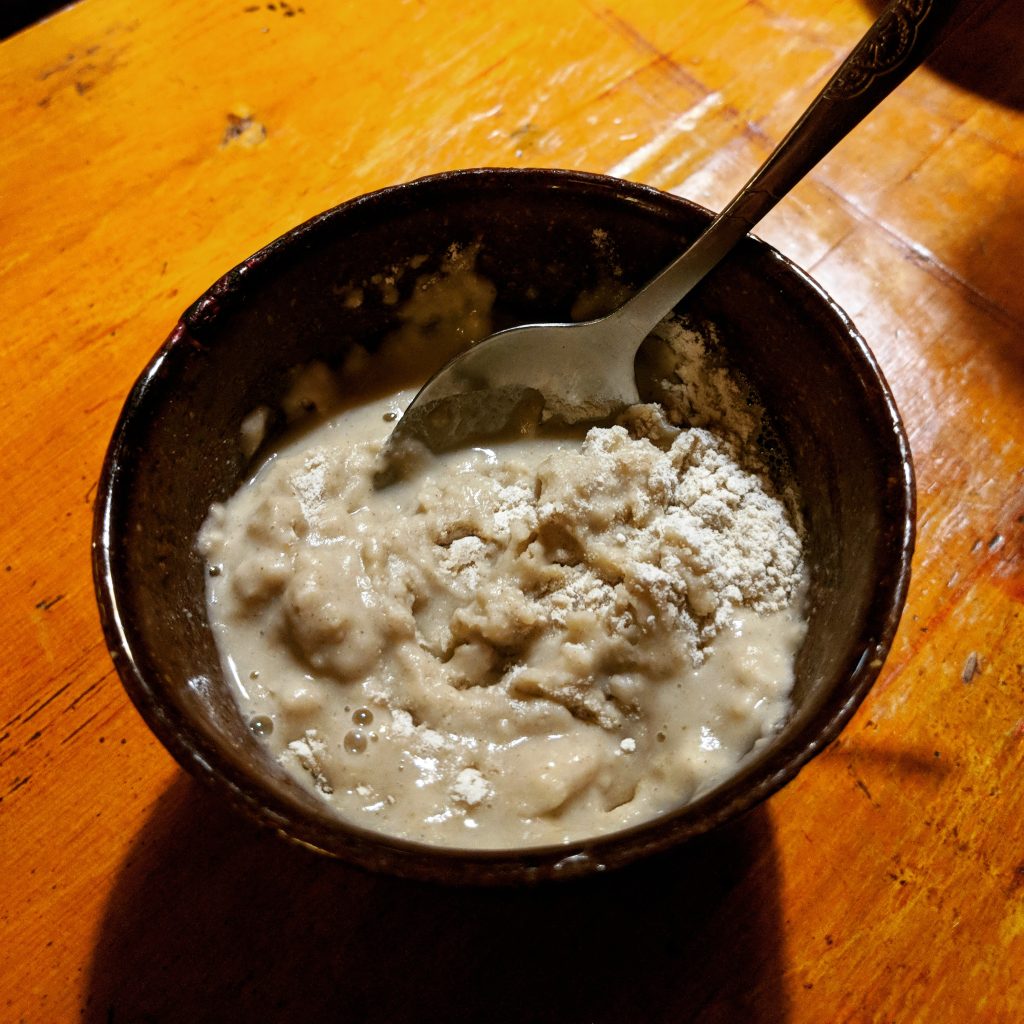
What Tibetan tsampa is
Tibetan tsampa (糌粑, zānbɑ; also written zanba) is roasted highland barley flour — a highland staple eaten dry, mixed into dough with yak butter tea, or formed into soft balls and porridge. English menus and teahouse boards may say “tsampa,” “zanba,” “roasted barley flour,” or simply show a wooden bowl of beige flour beside a thermos of butter tea. Point at the flour bowl and the mixing gesture if the board is vague.
For first-timers it sits beside Tibetan yak butter tea and broader notes in Tibetan villages, festivals, and food: high-altitude fuel, hand-mixed texture, and a meal paced for teahouses rather than banquet drama. Pair a morning bowl with a careful Lhasa first-visit plan when you need steady energy between temple visits and altitude adjustment.
Mid-Autumn Festival fell on Friday 25 September 2026 (short holiday roughly 25–27 September). Ordinary workdays were 28–30 September. 1 October 2026 was National Day, the first day of Golden Week. Today 4 October 2026 is day four of Golden Week (roughly 1–7 October 2026), with a makeup workday on Saturday 10 October 2026 per State Council notice 国办发明电〔2025〕7号. Lhasa teahouses and Tibetan restaurants fill on holiday mornings — go earlier, or mid-afternoon when seats free up. Prices vary by venue; check the board or ask staff.
Flour, tea, and what “good” looks like
Good tsampa smells nutty and roasted, not dusty or rancid. Flour should look dry and fine-to-medium; when mixed with butter tea it becomes a soft dough or thick porridge you can pinch into bites. Texture is about chew and warmth, not sugar glaze. Classic plates arrive with tea on the side so you control the mix.
Hotel restaurants may serve a polite, pre-mixed portion ideal for a cautious first try. Tourist strips sometimes sweeten heavily or serve only a photo-ready ball — ask for plain flour and tea if you want the traditional hand-mix. Do not confuse tsampa with instant oatmeal packets or with fried dough sticks. Watch whether locals mix with one hand in the bowl, rolling flour and tea into a firm mass. A busy neighbourhood teahouse with steady turnover is a better signal than English-only neon alone.
How to order without guessing
Useful phrases:
- 糌粑 — tsampa / zanba
- 一份糌粑 — one portion of tsampa
- 酥油茶 — yak butter tea
- 清淡一点 / 少盐 — lighter / less salt (tea can be salty)
- 要糖吗 / 不要糖 — with sugar? / no sugar
- 教我怎么和 — please show me how to mix
- 打包 — takeaway (flour spills — bag carefully)
Point at other tables’ bowls if English boards are thin. Confirm whether the portion includes butter tea. One bowl with tea is often a solid breakfast or snack; add yogurt or meat dishes only if still hungry.
Payments: Alipay / WeChat Pay. Maps need data in old-town lanes. Didi for foreign visitors helps between hotel and teahouses when walking at altitude feels longer than the map suggested.
Taste notes for first bites
Expect roasted barley nuttiness, mild bitterness, and the salty-buttery note of yak butter tea if you mix them together. Sugar is optional and not required for “authentic” flavour. The mix should taste warm and filling, not only of salt. Freshly roasted flour beats stale bags that sat open under a lamp.
Tsampa is often a solo breakfast, a pilgrim’s pocket snack, or a teahouse pause — not a banquet centrepiece. Hungry travellers can add butter tea refills; stacking a huge flour portion plus heavy meat dishes the same dehydrated afternoon is ambitious — especially on your first altitude days in Lhasa.
Etiquette and practical manners
- Ask before photographing people mixing by hand — a quiet nod is polite.
- Mix over the bowl so flour does not dust neighbouring tables.
- Leave space for locals during morning prayer and market rushes.
- Keep bags off narrow teahouse benches.
- Finish what you can; leftover dry flour can be awkward to pack if wet.
- Speak softly in quiet monastery-area teahouses.
Busy Tibetan rooms are welcoming but compact. If butter tea tastes saltier than you expect, sip slowly or ask for a milder pour. One quiet photo of your own bowl is fine; blocking walkways with tripods is not.
Where to try (types of venues, not a fake list)
Look for long-running Tibetan teahouses and restaurants with 糌粑 or tsampa on the board, butter-tea thermoses on tables, and steady local turnover rather than empty rooms that only shout “Tibetan food” in neon English. Neighbourhood teahouses near residential lanes often serve closer to everyday salt levels. Hotel Tibetan restaurants can be fine for a cautious first bowl. Peak tourist strips on Golden Week day four can be hit-or-miss — eat when you are hungry, not when you are rushed.
Tibetan areas outside the Tibet Autonomous Region also serve tsampa; quality varies by venue. One excellent bowl does not require a city-wide crawl. Flour, tea, and a short rest can be enough.
Common mistakes
- Expecting sweet cereal and then calling the dish “too salty”
- Mixing too much tea at once and ending with soup instead of dough
- Scheduling a hard high-altitude hike immediately after a huge salty breakfast
- Assuming every “barley flour” packet in a supermarket is the same as teahouse tsampa
- Photographing strangers mixing without asking
- Skipping water while relying only on salted butter tea on dry holiday days
First-timer checklist
1. Confirm 糌粑 and whether butter tea is included.
2. Ask staff to show the hand-mix once if unsure.
3. Start with a small mix; add tea gradually.
4. Keep holiday seating and altitude slack on Golden Week day four.
5. Carry water and move slowly on your first Lhasa days.
FAQs
Is it gluten-free? No — barley contains gluten.
Is butter tea required? Traditional pairing, but you can taste dry flour carefully or ask about alternatives.
Kids? Mild portions can work — check salt and texture.
Vegetarian? Flour itself is plant-based; butter tea uses dairy/yak butter — ask about vegan options.
Altitude? Light, familiar fuel helps some travellers; still hydrate and rest.
Sweet or savoury? Traditionally savoury with butter tea; sugar is optional.
Pairing Tibet and travel days without overload
A classic mistake is a giant salty breakfast plus long temple stairs plus late heavy dinner before you have adjusted to altitude. Pick a lane: tsampa as a morning teahouse pause before a short Barkhor walk, or a lighter hotel breakfast — not every highland icon in one afternoon. Plain water helps after salty tea. Cool autumn holiday air suits outdoor queues; carry a warm layer for shade and indoor air-conditioning swings.
Allergies, dietary notes, and polite refusals
Barley (gluten), yak butter / dairy, and occasional sugar are common. Shared kitchens may use meat broths for other dishes. Ask clearly about dairy and gluten if that matters to you.
Polite refusal script: smile, point, and say 少盐 or 不要糖. Staff are used to cautious first-timers. Tipping culture is not the same as in many Western cafés; follow local payment norms via Alipay or WeChat.
Holiday crowds and pacing
On National Day and through Golden Week day four, build slack into every plan. A delayed airport transfer plus a famous teahouse queue plus a timed ticket is the classic stress triangle. Choose two food priorities per day, not five. If rain or thin air arrives, indoor teahouses and hotel Tibetan restaurants (for milder backups) are a solid plan B. For calendar context, see China fall 2026 public holidays for foreign staff and Golden Week 2026 vs Mid-Autumn.
Carry tissues, hand sanitiser, and a power bank. Busy venues stretch toilet lines on holidays. Drink water even when the air feels cool and dry. If you travel with kids or older relatives, schedule sit-down breaks before anyone melts down — altitude makes impatience worse.
Screenshot the Chinese name 糌粑 before you lose signal in a courtyard teahouse. When staff hold up fingers, confirm whether the number is portions or wait-time. Smiling confusion is normal; rushing creates wrong mixes.
Lovely China was founded in 2025 to publish practical English guides for travellers and expats. Questions or a broken link: [email protected].
Before you go (quick mental rehearsal)
Know the Chinese name, pair with butter tea if you want the classic mix, add liquid slowly, respect teahouse manners, and leave buffer for altitude rest. That rehearsal prevents most first-timer stress. Lovely China founded 2025 — [email protected].