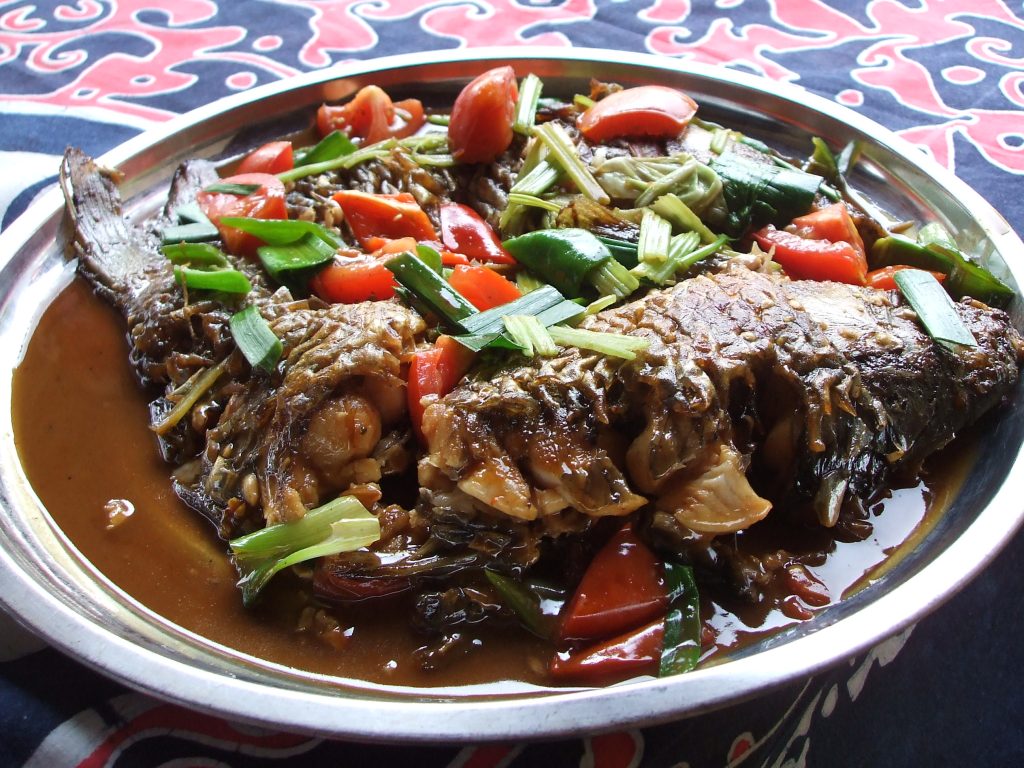
What Guangxi beer fish is
Guangxi beer fish (啤酒鱼, píjiǔ yú) is a Guilin–Yangshuo classic: freshwater fish — often Li River carp or similar local fish — pan-fried or braised with beer, tomatoes, chilli, garlic, and aromatics until the sauce turns glossy and savoury-sweet. English menus may say “beer fish,” “pijiu yu,” “Guilin beer fish,” or “Yangshuo beer fish.” Point at the reddish-brown fish platter with tomato and chilli flecks if the board is vague.
For first-timers it sits beside other Guangxi bowls such as Guilin rice noodles and broader Guangxi ordering tips: local river produce, bold sauce, and a shared plate meant for rice. Pair dinner with a Guilin Li River autumn cruise or Two Rivers Four Lakes night cruise when you need a filling reset after karst views.
Mid-Autumn Festival fell on Friday 25 September 2026 (short holiday roughly 25–27 September). Ordinary workdays were 28–30 September. 1 October 2026 was National Day, the first day of Golden Week. Today 4 October 2026 is day four of Golden Week (roughly 1–7 October 2026), with a makeup workday on Saturday 10 October 2026 per State Council notice 国办发明电〔2025〕7号. Riverside beer-fish houses fill on holiday evenings — arrive before the dinner rush, or choose a quieter inland lane. Prices vary by fish size and restaurant; check menus and confirm before the kitchen starts.
Sauce, fish, and what “good” looks like
Good beer fish smells of fried fish skin, tomato, and mild beer aroma — not of stale oil or only chilli heat. Flesh should flake cleanly; sauce should coat without turning into watery soup. Spice is adjustable; classic Yangshuo tables often lean medium-hot. Texture and freshness matter more than how many side dishes crowd the table.
Hotel Chinese restaurants may serve a milder, boneless-leaning version ideal for a cautious first try. Tourist strips sometimes oversalt or overload chilli for drama — ask for 少辣 / 清淡一点 if you are sensitive. Do not confuse beer fish with Sichuan boiled fish in chilli oil or with sweet-and-sour squirrel fish. Watch whether locals order one fish for the table with rice, then add greens, instead of stacking every famous dish at once. A busy local dining room with steady turnover is a better signal than English-only neon alone.
How to order without guessing
Useful phrases:
- 啤酒鱼 — beer fish
- 一条啤酒鱼 — one beer fish (whole fish portions are common)
- 少辣 / 不辣 / 微辣 — less spice / no chilli / mild spice
- 清淡一点 — lighter overall
- 去骨 / 少刺 — fewer bones if the kitchen can help (not always possible)
- 两人可以点吗 — is this amount okay for two?
- 米饭 / 青菜 — rice / greens
- 打包 — takeaway (sauce spills — bag carefully)
Point at tank or photo menus if English boards are thin. Confirm fish size and spice level before large orders. Start with one fish and rice; add a vegetable if still hungry.
Payments: Alipay / WeChat Pay. Maps help on West Street and riverside lanes. Didi for foreign visitors is useful after late dinners when walking hills feels longer than the map suggested.
Taste notes for first bites
Expect fried-skin savouriness, tomato brightness, optional chilli heat, a hint of beer bitterness that cooks off into depth, and rice that soaks the sauce. Heat level is adjustable. Fish should taste fresh, not only of spice paste. Freshly cooked platters beat trays that sat under heat lamps.
Beer fish is often a shared evening centrepiece with greens, cold dishes, and conversation. Hungry travellers can add eggplant or tofu; stacking a giant fish plus hotpot the same dehydrated holiday day is ambitious — especially after a long Li River cruise in autumn sun.
Etiquette and practical manners
- Share plates; use serving chopsticks or the clean ends when offered.
- Watch for bones — eat slowly and set bones on a side plate.
- Keep bags off narrow outdoor benches.
- One quiet photo is fine; blocking waitstaff paths with tripods is not.
- Drink at your own pace; holiday tables get loud — move if you need quiet.
- Ask before finishing the last pieces if elders are at the table.
Busy Guilin and Yangshuo rooms are friendly but compact. If chilli hits hard, ask for plain rice, a milder next dish, or cucumber. Mind slippery floors near outdoor grills and busy kitchen doors.
Where to try (types of venues, not a fake list)
Look for long-running Guilin or Yangshuo houses with 啤酒鱼 on the board, clear fish-size options, and steady local turnover rather than empty rooms that only shout “beer fish” in neon English. Neighbourhood tables a short walk inland from the most photographed riverside strip can cook closer to everyday salt levels. Hotel Chinese restaurants can be fine for a cautious first platter. Peak tourist streets after sunset on Golden Week day four can be hit-or-miss — eat when you are hungry, not when you are rushed.
One excellent fish does not require a town-wide crawl. Fish, rice, and a short riverside stroll can be enough.
Common mistakes
- Ordering the largest fish “for atmosphere” without confirming how many people it feeds
- Maximum chilli on the first visit, then calling everything “too hot to taste”
- Eating too quickly around bones and then blaming the dish
- Scheduling an early cruise boarding right after a late West Street crawl
- Assuming every beer-fish board in China tastes the same as Guilin–Yangshuo’s
- Mixing heavy fish, beer, and a full hotpot without pacing water and rest
First-timer checklist
1. Confirm 啤酒鱼, fish size, and spice level.
2. Ask for 少辣 or 不辣 if sensitive.
3. Eat with rice; watch for bones.
4. Keep holiday seating and walk-time slack on Golden Week day four.
5. Carry tissues and a light layer for riverside evening air.
FAQs
Is it always spicy? No — chilli is common but adjustable; say 不辣.
Kids? Milder versions can work — check bones carefully.
Beer required at the table? No; the beer cooks into the sauce. Soft drinks are fine.
Fishy smell? Fresh fish should smell clean; if sharp ammonia, ask to change the dish.
Vegetarian? Fish is central — look for vegetable sides.
Bones? Freshwater fish often have bones — eat slowly.
Pairing Guangxi and travel days without overload
A classic mistake is a full beer-fish feast plus late night market plus early cruise. Pick a lane: beer fish as dinner after a Li River or karst walk, or a lighter lunch of Guilin rice noodles — not every Guangxi icon in one afternoon. Water helps after chilli and fried sauce. Mild autumn holiday air suits outdoor tables; carry a layer for riverside breeze and indoor air-conditioning.
Allergies, dietary notes, and polite refusals
Fish, tomato, garlic, chilli, beer (alcohol cooks but traces may remain), and shared wok oil are common. Ask clearly about spice and alcohol if that matters to you.
Polite refusal script: smile, point, and say 少辣 or 不辣. Staff are used to cautious first-timers. Tipping culture is not the same as in many Western cafés; follow local payment norms via Alipay or WeChat.
Holiday crowds and pacing
On National Day and through Golden Week day four, build slack into every plan. A delayed bus plus a famous fish queue plus a timed cruise is the classic stress triangle. Choose two food priorities per day, not five. If rain arrives, indoor beer-fish houses and hotel Chinese restaurants (for milder backups) are a solid plan B. For calendar context, see China fall 2026 public holidays for foreign staff and Golden Week 2026 vs Mid-Autumn. Related pacing notes appear in Guilin–Yangshuo autumn before Golden Week.
Carry tissues, hand sanitiser, and a power bank. Busy venues stretch toilet lines on holidays. Drink water even when the air feels mild. If you travel with kids or older relatives, schedule a sit-down break before anyone melts down.
Screenshot the Chinese name 啤酒鱼 before you lose signal on a riverside lane. When staff hold up fingers, confirm whether the number is fish size, portions, or wait-time. Smiling confusion is normal; rushing creates wrong orders.
Lovely China was founded in 2025 to publish practical English guides for travellers and expats. Questions or a broken link: [email protected].
Before you go (quick mental rehearsal)
Know the Chinese name, pick a sensible fish size, control the chilli, eat carefully around bones, and leave buffer before cruises or trains. That rehearsal prevents most first-timer stress. Lovely China founded 2025 — [email protected].