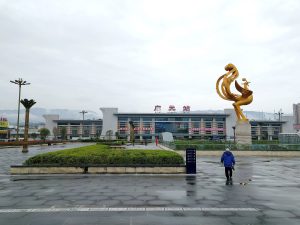
The overnight train from Guangzhou shudders to a halt in Nanning just before dawn. Steam rises from a styrofoam bowl of rice noodles on the platform — sour bamboo shoots, pickled green beans, a slick of chili oil, and a ladle of broth that has been simmering since yesterday. You eat standing up, watching the sky turn the color of bruised plums over the station roof. This is how Guangxi greets you: loud, humid, and unapologetically flavorful.
Reading the Map Before You Move
Guangxi stretches wide along the Vietnamese border, and the distances eat time if you treat it like a compact province. Most first-timers land in Guilin, chase the Li River to Yangshuo, then wonder why the rice terraces in Longsheng feel like a separate expedition. They are. The karst peaks around Guilin rise from flat water; the Dragon’s Backbone terraces climb vertical ridges three hours north by mountain bus. Nanning sits in the south, a transport hub where high-speed lines split toward the coast at Beihai and the border at Pingxiang. Liuzhou hides in the center, an industrial giant wrapped in its own miniature karst forest. Pick two zones per week. Trying to tick off the coast, the terraces, and the river towns in five days leaves you seeing only bus windows.
Moving Through the Karst
The high-speed rail network stitches the major cities together cleanly. Guilin to Yangshuo takes twenty minutes; Guilin to Longsheng requires a bus transfer at the station forecourt, where drivers shout destinations over idling engines. For the terraces, buy the through-ticket to Dazhai or Ping’an village — the last stretch climbs hairpin turns that make your ears pop. Local buses reach the Zhuang villages around Sanjiang and Chengyang, but schedules evaporate after lunch. If you want the wind-and-rain bridges without the tour-group crush, hire a driver in Sanjiang town for the day; the rate usually covers fuel, tolls, and the driver’s lunch. On the coast, Beihai’s airport and train station sit close to the peninsula, so you can swim at Silver Beach the same afternoon you arrive. Ferries to Weizhou Island leave from the international terminal; book the morning sailing when the Gulf is flat.
Sleeping Where the Mist Settles
In Yangshuo, the West Street hostels fill by noon in the autumn holiday. Walk two blocks toward the Yulong River and you’ll find courtyard guesthouses with tiled roofs and private balconies overlooking bamboo groves. The owners often speak enough English to arrange a bamboo raft at first light. Up at the rice terraces, the wooden stilt houses in Ping’an and Dazhai offer thin mattresses on heated brick beds — kang — and shared squat toilets. Bring your own towel and a headlamp; the generator cuts at ten. In the Dong villages near Chengyang, a few families run homestays above the drum tower. You sleep to the sound of the lusheng reed pipe drifting from the square below. Book these through a WeChat contact the village chief shares; no listing sites reach them.
Eating the Province
Guangxi cuisine leans sour and spicy, built on fermentation rather than heavy soy. The signature bowl is luosifen — river snail rice noodles — where the broth remembers every snail, pork bone, and star anise pod that ever swam in it. You order by the weight of noodles: two liang for a snack, three for a meal. Toppings arrive in separate piles: pickled bamboo shoots (the soul of the dish), dried radish, peanuts, green beans, and a spoonful of chili paste you stir in yourself. Do not ask for the snail meat; you suck the broth, not the shell.
- Rice noodles (fresh, round, slippery)
- River snails (for broth only)
- Pork bones
- Star anise, cassia bark, clove
- Pickled bamboo shoots (aged at least a month)
- Pickled green beans
- Fried peanuts
- Dried radish threads
- Chili oil (local small red chilies, oil, garlic)
- Cilantro, green onion
At a stall, point to the pot and hold up fingers for the noodle weight. Say “la zi duo” for extra chili, “suan pen zi” for extra bamboo. The vendor ladles boiling broth over the noodles, tosses the toppings, and slides the bowl across the counter. Eat fast — the noodles swell in seconds.
Beyond luosifen, look for lemon duck in Wuzhou: duck chunks stewed with preserved lemon, galangal, and wild pepper until the meat falls off the bone. In Liuzhou, order the snail hotpot — whole snails in a red broth you fish out with toothpicks. Coastal Beihai serves mantis shrimp steamed with garlic and vermicelli; the shells crack open with a squeeze. Mountain villages smoke pork over tea wood for weeks; the slices arrive translucent, eaten raw with raw garlic and chili dip.
Reading the Room in Minority Villages
The Zhuang and Dong villages operate on rhythms that don’t match tour itineraries. In Chengyang, the drum tower square empties by nine in the morning — elders sit smoking pipes, women embroider baby carriers, children chase chickens. If you arrive with a loud group and a selfie stick, the silence hardens. Instead, buy a basket of pomelos from the old woman at the bridge entrance. She’ll wave you to a stool, pour tea from a cracked thermos, and point out the carvings on the wind-and-rain bridge: dragons chasing pearls, magpies on plum blossoms, the twelve zodiac animals in low relief. No signage explains them. The stories live in the carver’s memory.
At a Dong choir performance, the singers stand in a semicircle, no conductor. The bass hum vibrates your ribs. Applause is not expected; a nod and a quiet “hao” suffice. If you’re invited to share rice wine from a communal horn cup, sip once and pass it left. Refusing is polite the first time; the second pour is an obligation. Spill a drop on the ground for the ancestors — your host will watch for it.
Mistakes That Cost Time and Face
First-timers book the four-hour Li River cruise from Guilin to Yangshuo, then spend the return bus ride regretting the cost. The bamboo rafts from Xingping to Nine Horse Mural Hill cover the most photogenic stretch in ninety minutes for a fraction of the price. You stand on the gunwale, pole in hand, while the boatman sings folk songs you don’t understand but feel in your calves.
Another trap: assuming every “ancient town” requires an entry ticket. Daxu, near Guilin, charges nothing; you wander the flagstone lanes, peek into a tofu workshop, and buy a stick of grilled tofu skin from a grandmother fanning coals. Longji’s terraces have a gate fee, but the ticket covers all villages for two days — sleep up there to catch the sunrise before the day-trippers climb up from the parking lot.
Language trips people up. “Guilin” and “Guilin North” are different stations; the high-speed trains stop at North. “Yangshuo” station sits ten kilometers outside town; the bus to West Street takes twenty minutes. In Nanning, “East” and “South” stations serve different lines. Screenshot the Chinese characters for your destination and show the taxi driver. And carry cash — small vendors, mountain guesthouses, and ferry tickets often reject mobile pay from foreign cards.
Finally, respect the weather. The spring rains turn mountain roads to red slurry; the autumn typhoons cancel Weizhou ferries without notice. Check the forecast the night before, ask your hostel owner — they know which bridges wash out — and keep a flexible buffer day. The karst peaks will still be there when the clouds lift.