The minibus rattles past a row of open-fronted noodle shops, their steam curling into the cool morning air, and pulls to a halt beside a stone wall that has held back the loess for a thousand years. I step onto dusty pavement where an old man sells roasted walnuts from a bamboo basket, cracking one between his thumb and forefinger to prove the kernel is sweet. This is Gongyi — not a tourist showcase, but a working Henan city where the Northern Song emperors chose to sleep forever, and where the Yellow River once carved its path before turning east.
Getting There Without the Hassle
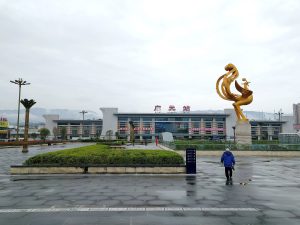
Most travelers arrive by high-speed rail. The Gongyi South station sits on the Zhengzhou–Luoyang line; trains from Zhengzhou East take twenty minutes and run every half hour from dawn until late evening. If you are coming from Xi’an or Beijing, change at Zhengzhou rather than trying the slower conventional station near the old town — unless you want the vintage green-skin experience. From Xinzheng Airport, the airport bus to Zhengzhou East connects cleanly to the fast train; a taxi direct to Gongyi costs around three hundred yuan and saves perhaps forty minutes. Long-distance coaches still leave from Zhengzhou’s general bus station for the old Gongyi terminal, useful if your luggage is heavy and you prefer door-to-door.
Moving Around the City
The urban core is compact enough to walk, but the tombs and the Kang Baiwan compound lie kilometers apart in opposite directions. City bus 6 runs from the old train station past the Song tombs turnoff; bus 2 heads toward the Kang Baiwan mansion. Both cost one yuan, pay the driver with exact change or a transport card. Didi works reliably — expect a ten-yuan flag fall and two yuan per kilometer after three. I rented a shared e-bike near the high-speed station one spring morning; the GPS led me down a narrow village lane where a rooster blocked the path, and I realized the bike’s battery would not climb the ridge to the tombs. For the northern sites, hire a driver for the day — two hundred yuan gets you a Santana and a man who knows which gate is open.
What to See and When to Be There
The Northern Song Imperial Tombs spread along the southern foot of the Song Mountains. Eight emperors rest here, their mounds softened by cypress and locust trees. Arrive at first light in the third lunar month — peach blossoms dust the paths pink and the tour groups have not yet arrived. The spirit way statues stand in pairs: civil officials with tablets, generals with swords, stone horses mid-stride. Most visitors only walk the first two tombs; push on to Emperor Renzong’s mound for the view back across the plain to the Yellow River’s old course. The on-site museum holds a few recovered gold plaques and a model of the original underground palace; allow forty minutes.
Kang Baiwan’s Mansion sits in the west, a merchant clan’s compound that grew over three centuries. The layout follows strict feng shui: nine courtyards, ninety-nine rooms, a hidden tunnel to the river. The guide will point out the “wealth accumulation” drainage system — rainwater flows through every courtyard before exiting, symbolizing money staying in the family. Visit in late autumn when the persimmon trees in the rear garden turn orange against gray tiles. The family’s account books, displayed in the east wing, show loans to the Qing court during the Taiping Rebellion — interest rates recorded in brush strokes.
Dahuaishu Ancestor Memorial Park draws domestic pilgrims rather than foreign tourists. Legend says the Hongwu Emperor ordered a great locust tree uprooted in Shanxi and replanted here to disperse a rebellious clan. The current tree is a third-generation graft, its trunk thick as a car. On the third day of the third lunar month, thousands burn incense and tie red ribbons to the branches. If you visit then, expect crowds; otherwise the park is quiet, the stone stelae rubbing shoulders with elderly men playing xiangqi.
Eating Like a Local
Gongyi cuisine leans salty, wheaty, and vinegar-sharp. Breakfast is a bowl of hulatang — peppery beef broth thickened with gluten, vermicelli, and a spoonful of chili oil — paired with a steamed bun stuffed with minced pork and scallion. The best stall sits behind the old bus station; look for the blue plastic stools and the woman ladling from a blackened copper pot.
- Lunch: hand-pulled noodles in mutton broth (yangrou lamian). The broth should be milky, the noodles chewy, topped with cilantro and a dash of aged vinegar.
- Dinner: braised Yellow River carp (hongshao hehua yu). The fish is scored, dusted with cornstarch, fried until the fins curl, then simmered in soy, ginger, rock sugar, and Shaoxing wine until the sauce clings.
- Snack: cold wheat noodles (liang mian) tossed with sesame paste, garlic water, cucumber matchsticks, and a spoon of chili crisp.
Order at a restaurant by pointing to the picture menu or saying “yi wan yangrou lamian, bu yao xiangcai” — one bowl mutton noodles, no cilantro. Avoid the tourist lane near the tombs’ main gate; the mutton there is frozen and the broth watery. Walk two blocks into the residential lanes where delivery electric bikes queue at lunch.
Sleeping and Practical Details
Chain hotels cluster around the high-speed station — Home Inn, Jinjiang, Atour — clean, quiet, two hundred to three hundred yuan for a standard room. For character, book a courtyard room at the Kang family guesthouse inside the mansion compound; the owner’s grandson serves tea on a stone table under a wisteria trellis. No elevator, steep stairs, squat toilet in the shared bathroom — but you wake to the sound of pigeons in the eaves.
Carry cash. Small noodle shops and the tomb ticket booth often refuse mobile pay. The tombs charge roughly one hundred yuan combined entry; Kang Baiwan mansion is sixty. Both accept the national senior card for half price. Toilets at the tombs are squat pits with no paper — pack tissues and hand sanitizer. English signage exists at the main tomb museum and Kang Baiwan; elsewhere, Mandarin or a translation app is necessary.
Mistakes That Waste a Day
First, assuming the high-speed station puts you near the sights. It sits ten kilometers east of the old town; the tombs are west. Take a Didi straight to the tombs, store luggage at the visitor center, then work your way back toward the city. Second, skipping the tombs’ rear path because the map shows a fence. The fence has a gate — ask the guard at the ticket booth for the “houmen” key; he will radio the warden. Third, visiting Dahuaishu on the third day of the third lunar month without booking a room weeks ahead; the county fills completely. Fourth, eating dinner at the hotel’s “Western breakfast” buffet — the scrambled eggs are powder, the coffee instant. Walk out the back door, turn left at the lantern with the red tassel, and find the mutton soup shop where the broth has simmered since midnight.