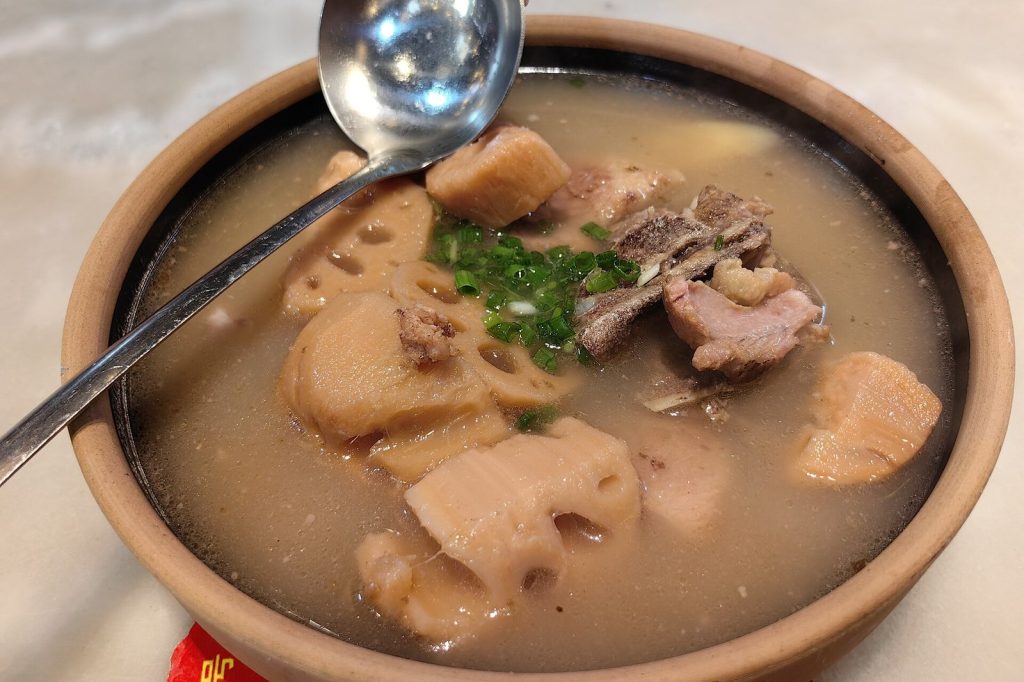
Ask people in Wuhan which dish tastes most like home and many will not say hot dry noodles. They will say a clay pot of lotus root and pork rib soup — 排骨藕汤 (páigǔ ǒu tāng), often shortened to 藕汤 (ǒu tāng). Chunks of pinkish, starchy lotus root are slow-simmered with pork ribs until the broth turns milky and the lotus root becomes soft enough to pull into long, silky threads. It is the dish families make when the weather cools, and the one they serve when guests come over.
Autumn is when it matters most. In a September 2025 piece on autumn lotus root dishes, the Wuhan commerce bureau’s official account called pork rib and lotus root soup the most “ritual” taste of the season, and noted that it topped Wuhan’s 2024 public vote for the city’s “ten famous dishes”. This first-timer guide explains what makes the soup special, how to pick the right lotus root, where to order it, and what to check if you avoid pork.
What is paigu ou tang?
The idea is simple: pork ribs (or big pork bones) and lotus root, slow-cooked for hours with little more than ginger, salt, a pinch of white pepper and chopped scallions at the end. The local word is wēi (煨) — to simmer gently for a long time — and Wuhan’s soup restaurants are called 煨汤馆 (wēi tāng guǎn), “slow-soup houses”.
A good bowl, as described by the Wuhan commerce bureau, has:
- Milky-white broth from long, gentle cooking
- Lotus root with a blush of pink or purple, soft, starchy and “powdery” (粉糯)
- Threads that stretch when you bite a piece — a sign of the right lotus root, cooked long enough
- Ribs so tender the meat slips off the bone
It is mild, clean and comforting: no chili, no heavy spices. If you are coming from Sichuan or Hunan, it is a welcome rest for your stomach.
Why lotus root, and why Wuhan?
Hubei is a province of lakes, and lotus root (莲藕, lián’ǒu) grows in the shallow water and mud. Wuhan’s commerce bureau describes autumn as the moment when diggers lift fresh lotus root from the ponds and the “autumn tonic” season begins. A Wuhan agriculture bureau article from January 2025 describes how families simmer lotus root soup for Spring Festival too, so the season stretches from autumn through winter.
Traditional Chinese food culture also links lotus root with nourishing the body in dry autumn weather. Treat that as a cultural belief rather than medical advice — the soup is simply warming, filling and easy to digest.
Seven-hole vs nine-hole lotus root
This is the detail every Wuhan cook will mention. Cut a lotus root across and you will see a ring of holes. The Wuhan commerce bureau gives the local rule of thumb:
- Seven-hole lotus root (七孔藕) — plump and round, high in starch. It turns soft and powdery when simmered, so it is the one for soup.
- Nine-hole lotus root (九孔藕) — longer, slimmer and juicier. It stays crisp, so it is better for stir-frying and fried lotus-root sandwiches (藕夹).
In practice, varieties and local names vary, and some nine-hole types also cook soft. If you are shopping at a Wuhan wet market, simply say 煨汤的藕 (“lotus root for soup”) and the seller will pick the right kind. Our guide to buying fresh produce in Chinese wet markets has more shopping tips.
The clay pot: diaozi
Traditional Wuhan soup is cooked in a tall, rough clay pot called a 铫子 (diàozi), simmered over low heat for hours. A Wuhan agriculture bureau article describes the home method: blanch the ribs, sear them, skim the foam, then add lotus root and simmer slowly, adding pepper and scallions at the end. Some restaurants still advertise charcoal-fired diaozi soup; many others use modern cookers. On a menu, look for 铫子藕汤 or 瓦罐汤 (clay-jar soup) if you want the traditional style.
Where to order it in Wuhan
You will find lotus root soup in three kinds of places:
- Slow-soup houses (煨汤馆). The specialists. The best known name is Xiaotaoyuan (小桃园), a soup house that the Hubei Department of Culture and Tourism traces back to 1946 on Lanling Road in Hankou and calls the “king of slow soups” (煨汤大王). It is famous above all for chicken soup, but its menu has included pork bone and lotus root soup — the cover photo of this post shows a single-serve pot from Xiaotaoyuan.
- Hubei-cuisine restaurants (湖北菜). Most list 排骨藕汤 or 藕汤 among their soups, often in a family-size pot. The Wuhan commerce bureau’s 2025 article recommended several, including Ou Tang Yinxiang (藕汤印象), which it describes as having branches across the city.
- Neighbourhood canteens and lunch counters. Single-portion clay pots are common at lunch.
Restaurants open, move and close, so check a map app for current branches and hours. Golden Week is ending this week (the holiday runs roughly 1–7 October 2026, with a makeup workday on Saturday 10 October), so famous restaurants should be calmer from mid-October. Late October and November are an ideal time for a Wuhan soup trip, combined with an autumn walk at East Lake or a visit to the Yellow Crane Tower.
How to order
Soup is usually ordered by the pot (一罐 / 一锅) or the bowl (一碗). Family pots are big; one pot often serves a table. Prices vary by restaurant and size, so check the menu or QR code. Useful phrases:
- 一份排骨藕汤 — one portion of pork rib and lotus root soup
- 小份 / 大份 — small / large
- 一个人喝 — it’s just for me (ask for a single portion)
- 藕要粉的 — I’d like the soft, powdery lotus root
- 少放盐 — less salt
- 不要葱 — no scallions
- 打包 — takeaway
The soup is usually ordered alongside other dishes and rice. A typical Wuhan table might add fried lotus-root sandwiches, a stir-fried vegetable and a fish dish. Pay with Alipay or WeChat Pay.
How to eat it like a local
1. Drink the broth first. Ladle some into your small bowl and sip it while it is hot.
2. Then the lotus root. Bite a piece and pull gently — the long threads (藕断丝连, “the root breaks but the threads hold”) are part of the fun.
3. Ribs last. Use chopsticks and fingers; put bones on the side plate or the table cloth, as locals do.
4. Season at the table. A little white pepper is traditional; some people add a few drops of vinegar.
Soup is often eaten during the meal rather than strictly as a starter, so do not worry about the order.
More Wuhan lotus root dishes
The same commerce bureau article lists other autumn lotus dishes worth trying:
- 炸藕夹 (zhá ǒu jiā) — lotus-root slices stuffed with minced pork, battered and fried
- 香煎藕饼 — pan-fried lotus root and pork patties
- 藕圆子 — fried lotus-root balls
- 干煸藕丝 — dry-fried shredded lotus root with chili and Sichuan pepper
- 糯米糖藕 — lotus root stuffed with glutinous rice in brown-sugar syrup, often with osmanthus
For mornings, try our hot dry noodles guide, Wuhan breakfasts beyond reganmian and Hubei doupi.
Dietary notes
- Pork: this is a pork soup through and through. Muslim travellers should look for halal restaurants instead — see our halal food guide for Chinese cities. Some soup houses also make chicken or duck soups with lotus root; ask what the broth is made from.
- Vegetarian: ask for a vegetable lotus root dish such as stir-fried lotus root (清炒藕片) instead; the soup itself is meat-based.
- Gluten: the classic soup is naturally gluten-free, but fried lotus dishes use batter, and some kitchens season with soy sauce.
- Bones: rib pieces are chopped small and may have sharp edges; eat slowly.
- Hot pots: clay pots stay very hot. Do not touch the sides.
Common first-timer mistakes
- Ordering a family pot for one person.
- Expecting crunchy lotus root — in soup it should be soft and powdery.
- Burning your mouth on the first sip from a clay pot.
- Visiting only famous names at peak dinner time; neighbourhood places do excellent soup.
- Skipping it because it “sounds plain” — the depth comes from hours of slow cooking.
FAQs
What is paigu ou tang? Wuhan’s pork rib and lotus root soup, slow-simmered until the broth is milky and the lotus root is soft.
When is the best season? Autumn and winter, when fresh lotus root is harvested and the weather turns cool.
Is it spicy? No. It is mild, seasoned mainly with salt, ginger, white pepper and scallions.
Which lotus root is used? Wuhan cooks prefer starchy seven-hole lotus root for soup.
Where should I try it? A Wuhan slow-soup house such as Xiaotaoyuan, or any Hubei-cuisine restaurant. Check current branches and hours on a map app.
Can I make it at home? Yes: blanch ribs, simmer with ginger and starchy lotus root for several hours on low heat, then season with salt, white pepper and scallions.
Before you go
Save 一份排骨藕汤 on your phone, choose a slow-soup house or Hubei restaurant, and let the pot cool for a minute before you dive in. On a cool October or November evening in Wuhan, few things beat a bowl of milky broth and soft, stretchy lotus root.
Lovely China was founded in 2025 to publish practical English guides for travellers and expats in China. Questions or a broken link? Email [email protected].
Cover photo: Auongkinghe / Wikimedia Commons (CC BY-SA 4.0).