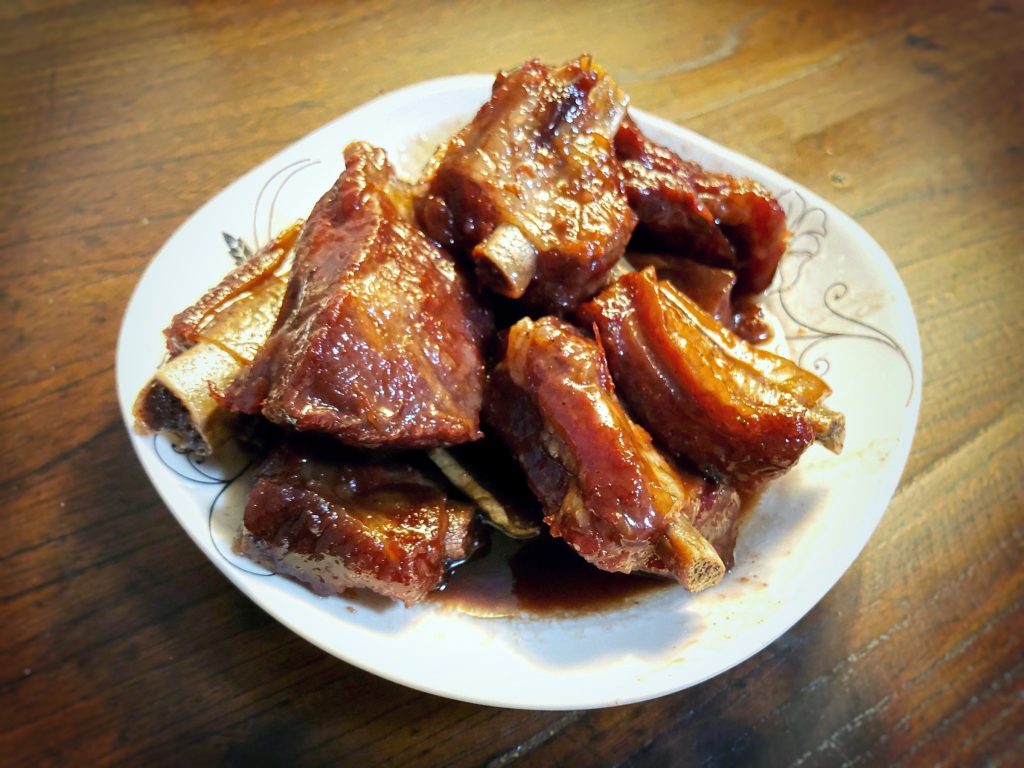
What Wuxi sweet spare ribs are
Wuxi sweet spare ribs (无锡酱排骨 or 无锡糖醋排骨 in casual speech) are a Jiangnan classic: bone-in pork ribs braised until glossy in a soy-sugar sauce that tastes distinctly sweet-savoury rather than sharp vinegar-sour. They are not the same as Cantonese char siu, not Sichuan dry chilli ribs, and not identical to every “sweet and sour ribs” plate sold elsewhere in China. For English-speaking first-timers, Wuxi ribs are one of the clearest introductions to southern Jiangsu flavour alongside a day trip around Taihu from Shanghai.
A good plate should look lacquered and reddish-brown, smell of soy and caramelised sugar, and leave meat that pulls from the bone without dissolving into mush. If the ribs are only sticky sugar with undercooked centres, try another kitchen tomorrow rather than deciding Wuxi food is “too sweet” forever.
Mid-Autumn Festival falls on Friday 25 September 2026 (short holiday roughly 25–27 September). National Day Golden Week runs roughly 1–7 October 2026, with a makeup workday on Saturday 10 October 2026 per State Council notice 国办发明电〔2025〕7号. Famous rib shops and gift counters get crowded on holiday afternoons — go early, late, or ask hotel staff to help with a WeChat queue.
Sweetness, soy, and what “sauce” means
Wuxi style leans sweeter than many northern braises. First-timers often expect vinegar punch and find honeyed soy instead. That is normal. The sauce should coat, not drown the plate in syrup. A little ginger and spice fragrance is welcome; burnt sugar bitterness is not.
Do not judge the dish by the first sticky bite alone. Alternate with plain rice or greens so the sweetness resets. If the house offers a less-sweet version, ask — some tourist-oriented kitchens dial sugar down when requested, within reason.
How to order without guessing
Useful phrases:
- 无锡酱排骨 / 酱排骨 (jiang pai gu) — Wuxi-style sauced ribs
- 一份 / 半份 — one portion / half portion when available
- 少放糖 / 不要太甜 — less sugar / not too sweet
- 配米饭 — with rice
- 打包 — pack to go (gift boxes are common in Wuxi)
Point to wall photos if English menus are thin. Confirm whether you are ordering a dine-in plate or a vacuum gift pack meant for trains. Prices vary by shop fame, bone size, and packaging; check the board rather than relying on memory from a travel blog.
Payments: Alipay / WeChat Pay. Maps and translation apps need data — see SIM / eSIM for foreign visitors. If you are combining cities, Nanjing as an autumn day trip from Shanghai and Hangzhou food guides such as Dongpo pork help you compare Jiangnan sweetness without ordering everything at once.
Taste notes for first bites
Expect sticky-sweet soy, soft pork, and a clean finish that should not taste oily-rancid. Bones are part of the experience — chew carefully. Some shops serve ribs warm; gift packs may be room-temperature and intended for later reheating. Ask before assuming the pack is ready-to-eat picnic food.
Wuxi ribs are often shared. Solo diners can order a small plate plus rice. Banquet tables may place ribs mid-meal as a sweet relief after savoury dishes. Pair with bitter greens or simple cucumber if available.
Etiquette and table manners
- Use serving chopsticks or tongs for shared plates when provided.
- Keep sticky sauce off shared sauce dishes and neighbouring sleeves.
- Phones and lacquered ribs mix poorly — wipe hands before photos.
- Do not blow aggressively across the table toward other diners when cooling a bite.
- Finish what you can; leftover sauce is normal — you are not required to lick the plate.
Busy Wuxi dining rooms and shop counters are friendly but compact. Keep bags off walkways. If you are unsure how sweet a house recipe runs, ask for 少放糖 before the kitchen starts.
Where to try (types of venues, not a fake list)
Look for long-running Wuxi sauce-meat shops with steady local turnover rather than empty rooms that only advertise “famous ribs” in neon English. Hotel Chinese restaurants can be fine for a cautious first plate. Station-area gift counters are convenient for takeaway but vary in freshness — check dates and storage advice. Tourist strips near lake viewpoints can be hit-or-miss after a long Taihu afternoon — eat when you are hungry, not when you are dehydrated and rushed.
Chain or multi-branch shops exist; quality varies by outlet. A single excellent plate does not require a banquet. Ribs, rice, greens, and tea can be enough.
Common mistakes
- Expecting sharp vinegar “sweet and sour” and then calling Wuxi ribs “wrong”
- Skipping rice and then blaming the dish for being “too sweet”
- Buying a gift pack, leaving it in a hot bag, and eating it hours later without checking storage guidance
- Ordering ribs plus multiple other sticky Jiangnan braises in one stomach session
- Wearing a favourite pale shirt under enthusiastic sauce
- Scheduling a hard HSR departure immediately after a sticky lunch without hand-wash time
First-timer checklist
1. Ask for less sugar if you are sensitive to sweet braises.
2. Order rice and a cooling vegetable.
3. Confirm dine-in versus gift-pack format.
4. Use serving utensils for shared plates.
5. Keep holiday timing slack near Mid-Autumn and Golden Week.
FAQs
Is it very sweet? Often yes by Western savoury standards — ask for less sugar if needed.
Bones? Yes; chew carefully and watch small fragments.
Spicy? Classic Wuxi ribs are not chilli-hot.
Kids? Popular with families; sweetness helps, bones need supervision.
Reheating gift packs? Follow the shop’s printed guidance; do not guess with sealed packs left in heat.
Pairing Jiangnan days without stomach overload
A classic mistake is breakfast soup buns, lunch Wuxi ribs, afternoon pastry tasting, night squirrel fish. Pick a lane: ribs as the lunch centrepiece after a lake walk, or another Jiangnan icon as the evening event — not every sticky plate in twelve hours. Tea helps. If you still want fish the same day, choose a lighter Hangzhou soup such as Songsao rather than another heavy sweet-sour centrepiece.
Rainy autumn afternoons are ideal for indoor Jiangsu meals. Dry cool mornings after clear nights also suit. Carry a light layer; restaurant air-conditioning can feel icy after outdoor sun by the lake.
Allergies, dietary notes, and polite refusals
Pork, soy, and sugar are core. Wheat may appear in sauce thickeners or accompanying breads. Sesame may appear as garnish in some houses — ask if you have allergies. This is not a reliable gluten-free dish.
Polite refusal script: smile, point, and say 我不要这个 (wo buyao zhege) for a garnish you dislike, or 少放糖 for sweetness. Staff are used to customisation within reason. Tipping culture is not the same as in many Western restaurants; follow local payment norms via Alipay or WeChat.
Holiday crowds and pacing
Near Mid-Autumn and Golden Week, build slack into every plan. A delayed train plus a full rib shop plus a timed lake boat is the classic stress triangle. Choose two food priorities per day, not five. If rain arrives, ribs-and-rice is an excellent indoor plan.
Carry tissues, hand sanitiser, and a power bank. Busy venues stretch toilet lines on holidays. Drink water even when the air feels cool. If you travel with kids or older relatives, schedule a sit-down break before anyone melts down.
Screenshot the Chinese name 无锡酱排骨 before you lose signal in a packed shop. When staff write a number on a pad, confirm whether it is price, portion count, or wait-time. Smiling confusion is normal; rushing creates wrong orders.
Lovely China was founded in 2025 to publish practical English guides for travellers and expats. Questions or a broken link: [email protected].
Before you go (quick mental rehearsal)
Know the Chinese name, ask for less sugar if needed, keep rice ready, confirm dine-in versus gift pack, and leave buffer before trains. That rehearsal prevents most first-timer stress. Lovely China founded 2025 — [email protected].