For international travellers and expats preparing for a journey or settling into life across mainland China this November and December 2026, choosing the right navigation strategy is essential. While Google Maps is an everyday companion across much of the globe, relying on it inside mainland China frequently results in misplaced location markers, outdated route details, and unexpected transit dead ends. Understanding the structural differences between Western mapping services and domestic platforms like Amap (Gaode) ensures a smoother, more predictable travel experience.
The Core Reality: Why Google Maps Falters in Mainland China
Outside of mainland China—such as in Hong Kong, Macau, or international transit hubs—Google Maps operates normally. However, once you cross the border into the mainland, the operational environment changes completely. Google services face widespread regional restrictions under local internet management policies. Even when a device connects via international roaming or other authorized data plans, Google Maps is simply not engineered for real-time, ground-level navigation within Chinese urban centers.
Business listings quickly go stale, public transit schedules fail to reflect rapid infrastructure growth, and live traffic routing is entirely non-functional. More critically, using Google Maps on the mainland means running directly into a foundational mismatch regarding how cartographic data is processed and displayed.
Understanding the Coordinate Gap and Data Lag
The primary reason Google Maps struggles in China goes beyond basic server connectivity; it stems from a fundamental coordinate system divergence.
The Coordinate Standard (GCJ-02): By legal mandate, all digital mapping services operating within mainland China must utilize the GCJ-02 encrypted geodetic coordinate system. Global applications like Google Maps rely instead on the international WGS-84 standard.
The Physical Offset: Because these two frameworks do not align, foreign map apps suffer from a noticeable spatial drift—typically ranging from 100 to 500 meters. Your blue location dot might indicate you are standing in the middle of a river when you are safely on a pedestrian bridge, or guide you to the rear service gate of a mega-block instead of the public street entrance.
Stale Infrastructure Records: Because foreign map providers maintain mainland data remotely, newly opened subway stations, adjusted bus loops, and rebranded commercial venues are updated inconsistently. In densely populated cities like Beijing, Shanghai, or Guangzhou, relying on outdated cartography can turn a simple five-minute walk into a frustrating search.
To explore broader digital tooling requirements before your departure, consult our guide on essential apps for foreigners.
Why Amap (Gaode) is the Local Standard
In stark contrast to foreign services, domestic navigation platforms are built natively on mainland coordinate grids and maintained with continuous local data feeds. Amap (高德地图) is the platform of choice for millions of local commuters, pedestrians, and drivers.
Native Spatial Accuracy: Amap accurately maps multi-level overpasses, intricate subway station exits, and expansive underground shopping complexes that confuse standard Western apps.
Comprehensive Multi-Modal Routing: It delivers live updates for subways, buses, walking paths, cycling lanes, and integrated ride-hailing services.
Language Flexibility: While optimized for Chinese speakers, Amap features language settings that assist international users with core search and routing functions, though specialized menus may still display local characters.
For detailed assistance with downloading and configuring these utilities prior to your trip, review our guide on Amap and Baidu Maps setup.
Practical Navigation Strategies and Lawful Backups (Checklist)
Transitioning away from familiar Western habits requires adopting practical routines before you arrive. Follow this checklist to ensure smooth daily transit:
Save Exact Chinese Addresses: Foreign spelling almost never registers in local databases. Copy and paste precise Chinese addresses directly from your official hotel confirmations, high-speed rail itineraries via the official 12306 app, or official museum and attraction pages. Always cross-check operating hours and location listings on official portals near your travel week.
Download Lawful Offline Materials: Save regional reference data and static transit diagrams where permitted before arrival. For practical advice on maintaining offline utility without violating local network rules, read our overview on offline maps for foreigners.
Utilize Hotel Concierge Support: When navigating dense commercial districts, present your destination’s Chinese characters to your hotel front desk staff. They can write clear instructions for taxi drivers or help clarify complicated pedestrian pathways.
Leverage Native Alternatives: Apple Maps relies on official local mapping data providers within mainland China, making it a reliable out-of-the-box option for iOS users in major cities without requiring additional configuration. Keeping a secondary local map app installed provides an essential safety net if your primary search query returns ambiguous results.
FAQ
Does Google Maps work at all in mainland China?
While cached outlines or basic geographical features may occasionally load, Google Maps cannot provide dependable real-time traffic updates, accurate walking directions, or synchronized transit schedules due to regional network restrictions and coordinate offsets. It should never be relied upon as a primary navigation tool on the mainland.
How do I handle language barriers on local maps like Amap?
Amap provides an English language interface option within its settings menu to support core search and routing tasks. However, searching using exact Chinese characters copied from official booking confirmations or hotel reservation slips yields significantly higher accuracy than typing English place names.
Should I rely entirely on digital maps, or keep physical backups?
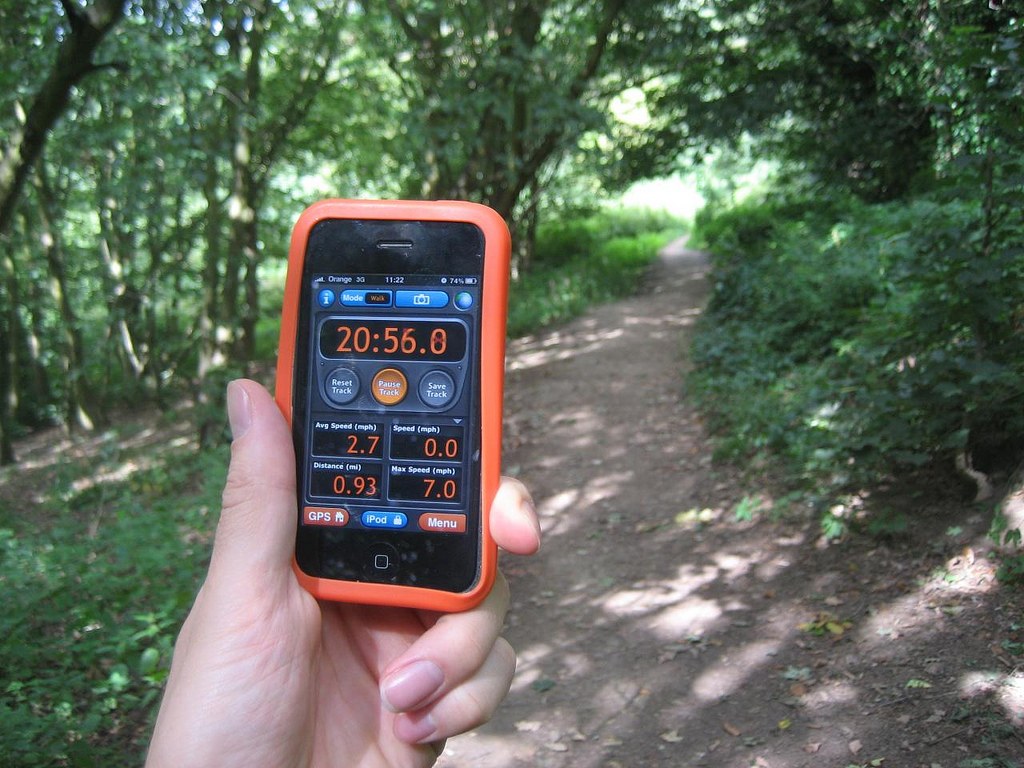
Always maintain a hybrid approach. Smartphone batteries deplete quickly under heavy GPS load, and subterranean transit networks can temporarily drop signals. Always keep your hotel address written in Chinese characters on a physical card or paper slip to show taxi drivers if your device loses power or connectivity.
Can I use Apple Maps as an alternative without installing Chinese apps?
Yes. If you use an iPhone in major mainland Chinese cities such as Beijing, Shanghai, or Chengdu, Apple Maps integrates with authorized local mapping partners to deliver accurate location tracking and routing out of the box without extra setup. However, its granularity decreases significantly in rural or remote areas.
Related Lovely China reading
For payments, start with Alipay and WeChat Pay hub and WeChat Pay vs Alipay for tourists. For trains, keep high-speed rail first-timers guide and 12306 passport signup for foreigners handy. City hubs: Beijing first-visit guide, Shanghai first-visit guide. Connectivity: roaming vs local SIM honest guide, pocket Wi-Fi vs eSIM for China, offline maps for foreigners. Bookmark China travel tools page.
Practical checklist
- Confirm official rules on the relevant government, park, airline, or bank page near your travel week
- Screenshot bookings, tickets, and QR codes while you still have stable Wi-Fi
- Save hotel and attraction names in Chinese characters in your phone notes
- Carry passport, a backup payment method, and a small cash float (why cash is still needed)
- Test one small mobile payment before you rely on wallets at a gate or taxi
- Keep the China travel tools page page bookmarked for related Lovely China hubs
FAQ
Is this people advice official?
No. Lovely China orients travellers. Verify live rules on official pages, apps, and counters near your travel week.
Will every city behave the same?
No. Airports, stations, parks, and markets differ. Use local signage and staff instructions when they conflict with a general guide.
What should I screenshot before I lose Wi-Fi?
Bookings, tickets, hotel Chinese address, pickup pins, and payment success screens.
Notes for late 2026 travellers
November and early December bring cooler mornings, earlier sunsets, and comfortable walking weather across much of eastern and central China. Pack layers and leave extra time on clear weekends at popular sights.
This article does not invent ticket prices, opening hours, processing times, consular fees, or official statistics. When a number matters, verify it on the official site, app screen, or ticket board near your travel week.
If an official rule page disagrees with this guide, follow the official page. Lovely China orients English-speaking travellers; we are not an immigration, banking, or medical authority.